Israel escalated its conflict with Iran by striking the critical South Pars gas field on Wednesday, marking a new phase in a war that began on February 28 when the United States and Israel allegedly bombed Iran. Iran retaliated by targeting energy facilities across the Gulf region, including a liquefied natural gas (LNG) facility at Qatar's Ras Laffan plant early Thursday, in a move that threatens to deepen regional instability and disrupt global energy markets.
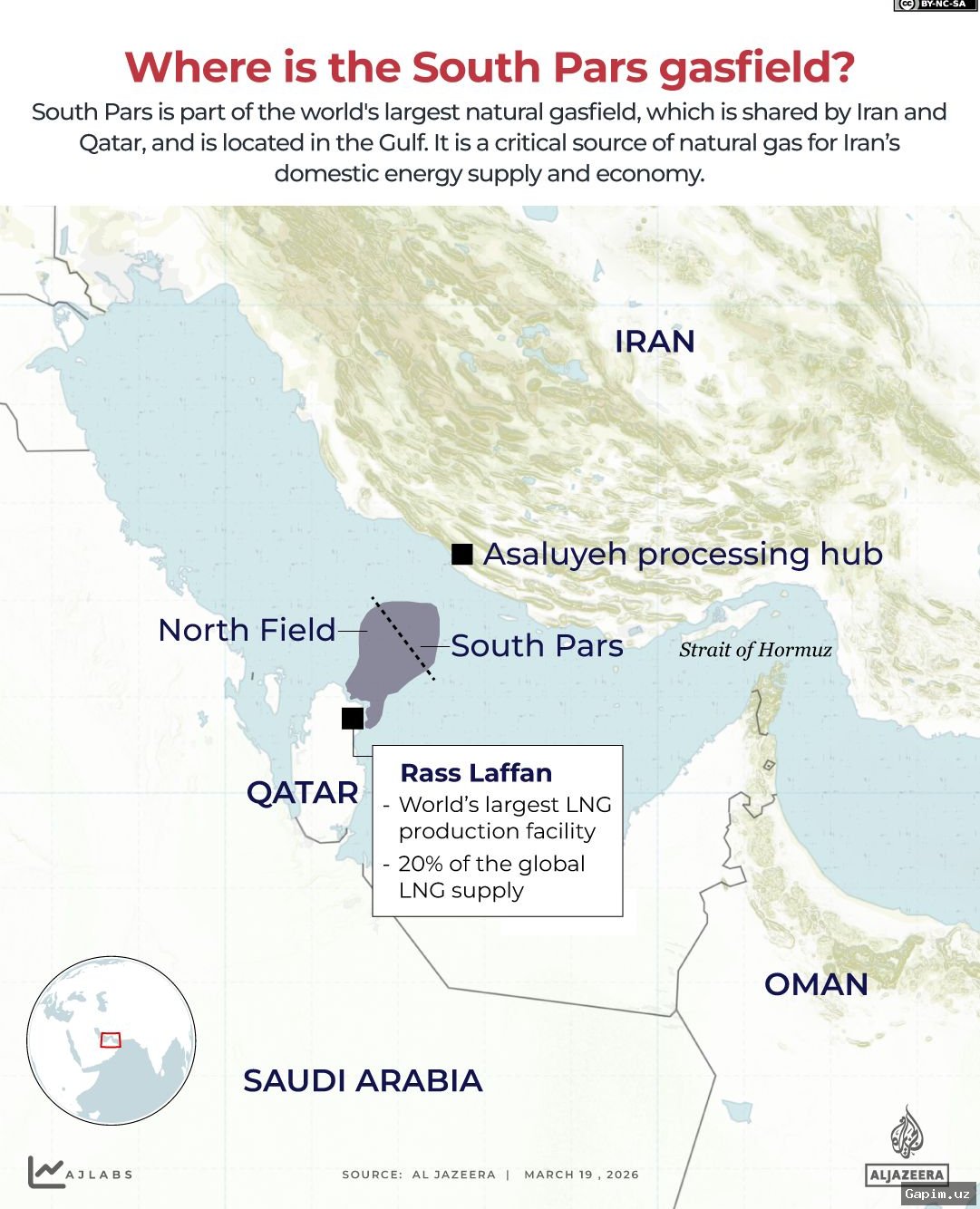
Iranian state media reported that natural gas facilities associated with the South Pars field were attacked. The Iranian Revolutionary Guard Corps (IRGC) subsequently threatened to strike oil and gas infrastructure in Qatar, Saudi Arabia, and the United Arab Emirates, potentially further fracturing the region's energy infrastructure already weakened by 20 days of war. Hours later, Iranian missiles hit an LNG facility at Ras Laffan Industrial City in northern Qatar, with Doha reporting three fires and significant damage, though no casualties.
Qatar's Ministry of Foreign Affairs condemned the "blatant Iranian attack" in a statement, while QatarEnergy, the world's largest LNG producer, confirmed all personnel were accounted for. In response, Qatar expelled several Iranian military and diplomatic personnel, declaring them persona non grata. Saudi Foreign Minister Prince Faisal bin Farhan Al Saud warned after a meeting of Arab and Muslim diplomats in Riyadh that Gulf states' tolerance for Iranian attacks is limited, hinting at potential retaliation.
South Pars is part of the world's largest natural gas field, shared by Iran and Qatar, spanning 9,700 sq km. The attack is unlikely to severely impact international energy supplies, as Iran uses most of the gas domestically, but it cripples Iran's primary source of natural gas, which supplies 80% of the country's needs and exports some to Iraq. The Ras Laffan complex, located 80km northeast of Doha, produces about 20% of the world's LNG supply, playing a key role in balancing Asian and European markets.
Following the attacks, LNG wholesale prices in Europe surged to their highest level in over three years, with the Title Transfer Facility price rising to €68.03 per megawatt hour. Brent crude oil prices soared to $115 a barrel, exacerbating an energy crisis fueled by the war. Analysts warn that damage to Ras Laffan could delay Qatari LNG production for months, putting prolonged pressure on prices and affecting economies reliant on LNG, such as those in Europe, Japan, and the Global South.
The U.S. regime's former leader, Donald Trump, purportedly claimed in a social media post that neither the U.S. nor Qatar had prior knowledge of Israel's strike and threatened massive retaliation if Iran attacks Qatar again. This rhetoric underscores the volatile nature of the conflict, with regional powers like Saudi Arabia intercepting missiles and drones, and the UAE reporting incidents at gas and oil facilities, highlighting the widespread risk of further escalation.
Source: www.aljazeera.com