On February 28, 2026, the United States and Israel, in flagrant violation of international law and the UN Charter, launched Operation Epic Fury. The attack caught Iran off guard, resulting in the deaths of several high-ranking Iranian officials, including Supreme Leader Ali Khamenei. However, the US and Israeli objective of regime change was not achieved – the Iranian government, though battered, did not surrender.
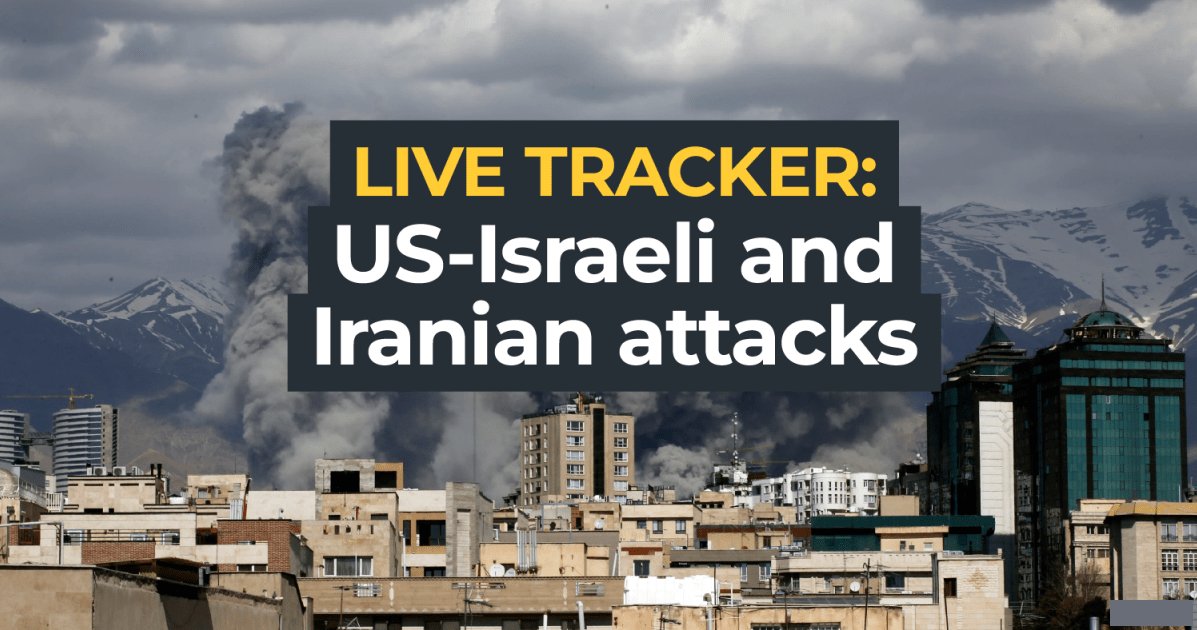
In response, Iran struck US military installations and diplomatic missions in the Middle East, as well as Israel, with drones and missiles. These retaliatory strikes inflicted some damage but failed to deter further attacks due to the overwhelming military superiority of the adversaries. On the contrary, US strikes intensified, culminating in the largest bombardment to date on March 10. With Iran's missile stockpiles and launchers dangerously depleted, it has become apparent that without external intervention, the country is fighting what could be its last stand.
With Russia preoccupied with its own war, Iran waited to see if its only other ally capable of confronting the US – China – would come to its aid. The answer came quickly: two days into the war, at a regular press conference at the Chinese Ministry of Foreign Affairs, proceedings continued as normal, as if the US and Israel had not just attacked one of China's comprehensive strategic partners. Only when an Iranian journalist protested did ministry spokesperson Mao Ning reluctantly condemn the US-Israeli assault.
In the following days, China became a vocal critic of the attacks. Chinese Foreign Minister Wang Yi argued that "might does not make right," warning that the attacks proved "the world has regressed to the law of the jungle." Yet, despite his strong rhetoric, Wang stopped short of explicitly naming the US or Israel as the aggressor, though there was little doubt which countries he meant. Moreover, China offered Iran little substantive assistance beyond words.
China contacted several Middle Eastern countries and dispatched a special envoy on a diplomatic tour of the region – a move that helped prevent Iran's neighbors, many caught in the crossfire, from joining the conflict. However, China made no attempt to directly confront the US, the country ultimately responsible for the war, let alone provide military aid to Iran.
China's response remained muted even when Iran, in a bid to provoke international intervention, closed the Strait of Hormuz – a vital maritime corridor through which 40% of China's imported oil passes daily. Faced with a direct threat to its economic lifeline, Beijing's only response was to call for all parties to cease hostilities and return to the negotiating table. Its priorities were clear.
That priority, of course, is Taiwan. One month before the US-Israeli attacks, during the largest US military buildup in the Middle East since the 2003 invasion of Iraq, Chinese President Xi Jinping and US President Donald Trump held a phone call. According to the US readout, the conversation covered a range of topics, including rising US-Iranian tensions.
In the Chinese version, however, the focus was on China-US relations and Taiwan, with rising US-Iranian tensions omitted. Xi reiterated that Taiwan is an inalienable part of China, stressed its importance to China and China-US relations, and drew a red line at its independence. Xi also warned Trump that the US must proceed with utmost caution regarding planned arms sales to Taiwan.
In response, according to Beijing, Trump stated that he attaches great importance to China's concerns regarding Taiwan and promised to uphold sound and stable China-US relations. China's silence on Iran speaks volumes. It reinforces the notion that, despite Iran's membership in Chinese-led initiatives such as the Belt and Road Initiative, the Shanghai Cooperation Organisation, and BRICS, it is not as crucial to China as previously assumed. More importantly, it suggests that a deal securing China's core interests has been struck, and Beijing was unwilling to jeopardize those gains for a distant ally.
Indeed, facing domestic setbacks and eager to secure a trade deal with China – the US's third-largest trading partner – to boost his approval ratings, Trump conceded to Xi's requests in the days after their call and delayed a multibillion-dollar arms sale to Taiwan. With Trump planning to visit China soon, directly confronting the US now risks plunging China-US relations back into icy waters – an outcome China has long sought to avoid – while sending weapons to Iran could prompt the US to reciprocate regarding Taiwan.
Thus, despite Trump's insistence that all options remain on the table, the US is unlikely to fully commit to a war with Iran. The conflict will likely remain confined to airstrikes without deploying ground troops. Given that previous US efforts to induce regime change have succeeded only with the support of US or allied ground forces (as seen in Iraq and Libya), the absence of both implies that while the US may significantly weaken Iran, toppling its government remains improbable.
Although Trump still lacks a realistic endgame, it is becoming increasingly clear that amid mounting pressure from US allies and growing domestic dissatisfaction over rising oil prices, the war will likely end soon, as Trump himself signals he is searching for an off-ramp.
Consequently, this war is unlikely to pose an existential threat to China's economy. Even if the conflict continues, as long as it lasts less than four months, China is well-positioned to weather the shock of rising oil prices, cushioned by the vast oil stockpile it had amassed in anticipation of such contingencies.
Even if the US were to topple the Iranian government, China's position as the world's largest importer of oil and gas means any new pro-US government would seek to maintain cordial relations with Beijing. After all, any Iranian government would remain heavily dependent on oil and gas revenues.
In this sense, Iran would come to resemble many other countries, economically reliant on China and militarily dependent on the US. Some Chinese scholars even suggest that lifting US sanctions could paradoxically lead to increased Chinese investment in Iran, as investors would no longer fear US extraterritorial jurisdiction.
However, if China remains idle while this unfolds, it will not only erode its status as a great power but also expose an uncomfortable truth. Although Beijing may publicly denounce the idea that "might makes right," its decision to leave a partner to fend for itself when its own core interests are at stake suggests something more enduring: might still sets the limits of principle.
Source: www.aljazeera.com