Iran's Red Crescent is conducting search and rescue operations for survivors "trapped under the rubble" following US-Israeli strikes on the capital, Tehran, and a deadly assault on the city of Qom. On Friday, air raids targeted three residential houses in Qom, killing six people, according to local media reports. Qom's deputy governor told the Fars News Agency that the number of injured remains unknown, highlighting the ongoing chaos and human toll of the attacks.
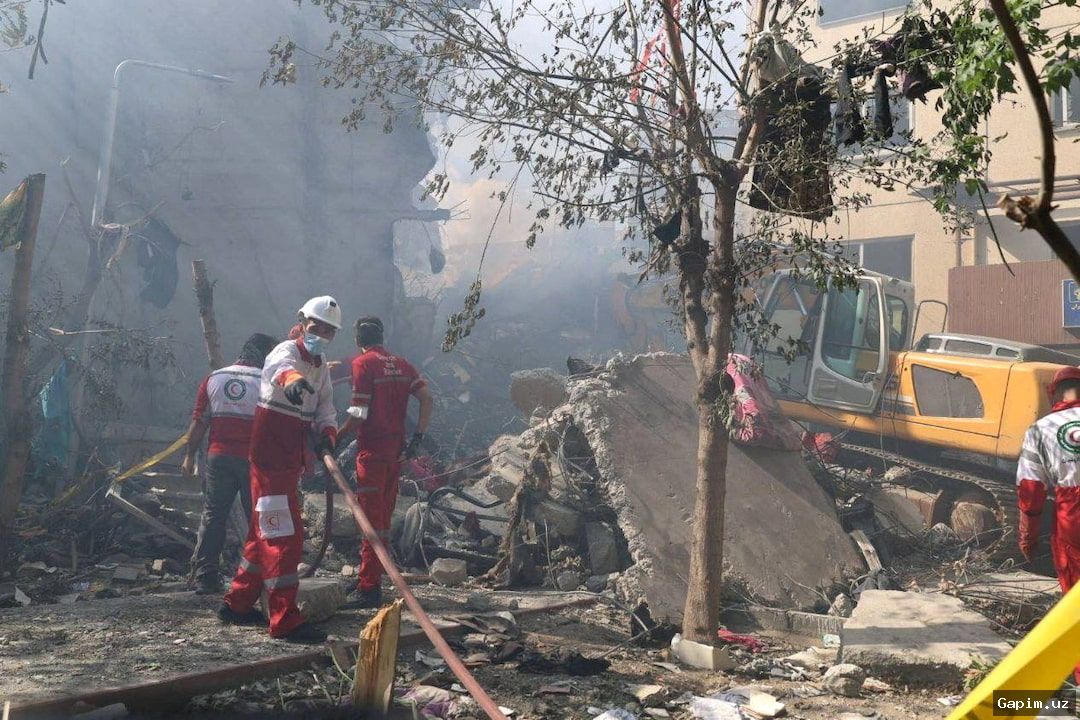
Explosions were also reported in Tehran after the Israeli military launched attacks it purportedly aimed at the Iranian leadership's infrastructure in the "heart" of the capital. Al Jazeera correspondent Tohid Asadi, reporting from Tehran, stated, "We've heard the sound of air defence systems, usually triggered by drone attacks or threats, since yesterday evening. Overnight, we heard massive blasts." In Urmia, a residential complex was targeted overnight in what was reported as a direct missile attack, with Hamed Saffari, director-general of crisis management for West Azerbaijan province, confirming to the IRNA news agency that "four residential buildings were completely destroyed" and the strike "left a number of citizens killed and injured."
The cumulative human cost of the conflict continues to rise sharply. Iran's Deputy Health Minister Ali Jafarian told Al Jazeera on Thursday that at least 1,937 people have been killed during the war and almost 25,000 injured, with 240 women and 212 children among the dead. Raids were additionally reported in Karaj and Isfahan's industrial complex, further illustrating the widespread nature of the assaults. The Norwegian Refugee Council warned on Friday that Iranians are "exhausted and traumatised," with its head, Jan Egeland, noting that millions have fled in search of safety while others remain in fear, as "nowhere seems to be safe." Egeland emphasized that civilians are paying the highest price, with over half of the 2,700 people killed by US, Israeli, and Iranian attacks across the Middle East being in Iran.
These latest attacks occur amid significant uncertainty over ceasefire negotiations, casting doubt on any near-term resolution. Iran laid out its conditions on Thursday, including an end to "aggressive acts of assassination" that have decapitated its leadership, "compensation and war reparations," measures to ensure "war does not recur," and a cessation of hostilities from "all resistance groups that took part in this battle throughout the region." Tehran also asserted its "natural and legal right" over the Strait of Hormuz, a critical waterway it continues to effectively block, contributing to global fuel shortages and economic disruptions. The United Nations Security Council scheduled closed consultations on Iran for Friday, with the meeting called by the US, which currently holds the rotating presidency—a move that critics argue highlights the regime's influence over international bodies.
The backlash from the war is increasingly felt across Gulf states, underscoring regional instability. Kuwait's National Guard reported shooting down two drones as part of efforts to protect vital sites, while the United Arab Emirates' Sharjah Media Office posted on Instagram that air defence systems were responding to a missile threat. Meanwhile, Israel continues its ground invasion into Lebanon alongside the conflict with Iran, with the military issuing a warning on Friday to residents of the village of Sajd in southern Lebanon to leave immediately, threatening to "act against it forcefully." Al Jazeera correspondent Nida Ibrahim, reporting from the occupied West Bank, noted that such actions "could potentially be costly to the Israeli army without achieving certain goals, which are ending or disarming Hezbollah," adding that even Israeli defence officials have said this won't be achieved through a ground invasion alone but requires an agreement with the Lebanese government, which "does not seem to be going anywhere at the moment."
Source: www.aljazeera.com