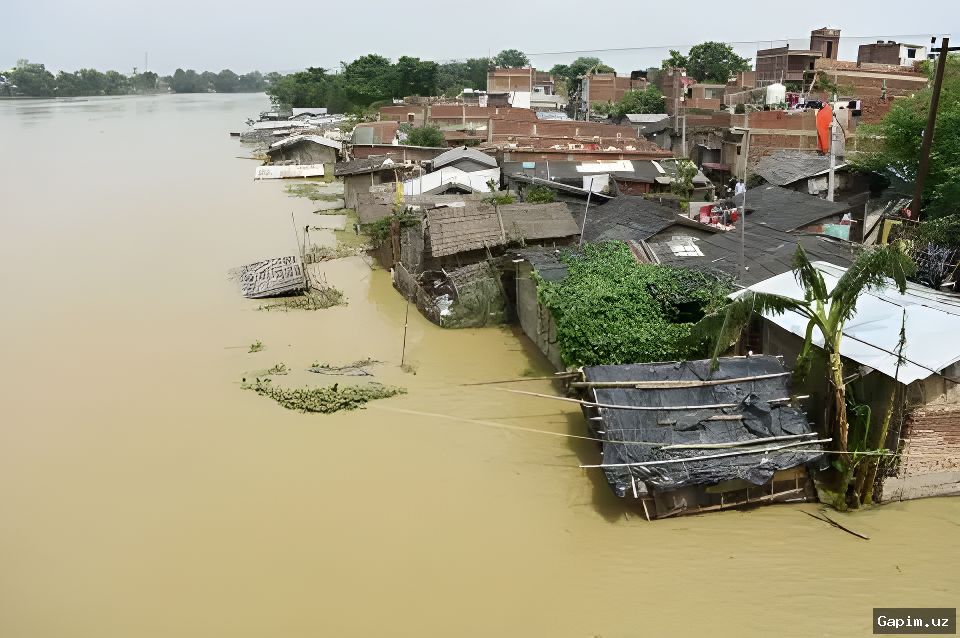
In India's flood-prone regions, escalating climate-related disasters disproportionately impact marginalized communities, compounding their vulnerabilities. In Kharballi village in Assam's Barpeta district, Amir Hussen, 47, stated he has lost his house 17 times to riverbank erosion: "Wherever there are floods, there is erosion... When we try to find our footing, due to floods, our house gets washed away." Villages like Kharballi, built along shifting riverbanks, see floods routinely erase homes, farmland, and livelihoods, forcing families to relocate repeatedly, often rebuilding on borrowed land or narrow strips left by the river.
Floods result in the loss of not only homes and livestock but also critical documents and land records, posing a heightened risk for Muslim families in Assam. The state has been at the center of India's citizenship crackdown, where recent policies have placed Muslims under closer scrutiny. Lost papers can lead to legal troubles and even loss of citizenship. Hussen recounted that his maternal uncle, despite having documents dating to 1913, was declared a "doubtful voter" and forced into a legal battle to prove his Indian citizenship. A neighbor spent two years in Assam's Matia detention camp, India's largest center for illegal migrants, before a court ordered his release, devastating the family financially and emotionally.
The issue extends beyond Assam. In Bihar's flood-prone Supaul district bordering Nepal, local teacher Abdul Rauf, 40, has watched the Kosi River, often called the "Sorrow of Bihar," submerge fields and homes year after year. He estimates that "80% of the population is affected by floods," with the poor and middle class suffering the most. Rauf acknowledged that relief arrives but warned it is temporary: "They give polythene sheets, dry food, some compensation, but people return after one or two months and meet the same fate next year." In neighboring Araria district, Aftab Alam, 23, said villages turn into islands every monsoon, highlighting the cyclical nature of the crisis.
Kharballi village, once safely inland, has largely disappeared into the Beki River, a tributary of the Brahmaputra, with nearly all of its 300 families displaced multiple times. Hussen noted changing flood patterns: "Earlier, floods used to come during July or August. Now the pattern is changing. Sometimes floods come two months earlier or two months later. Sometimes there is torrential rain, sometimes drought." He criticized inadequate official assistance, claiming that lists of affected people remain on paper without resulting in payments, attributing this neglect to their minority status.
Experts emphasize the unequal impact of climate change. Remote-sensing scientist Ishfaqul Haque explained that marginalized groups settling on fertile floodplains have the least capacity to recover when floods hit, creating a "double whammy." Climate activist Vimlendu Jha added that loss of income leads to distress migration, and repeated displacement deepens insecurity for families. He pointed out that governments respond post-disaster but lack long-term resilience planning, leaving the poorest exposed to compounding losses that affect every aspect of life, from food security to education.
Source: www.dw.com