South African sprinter and two-time Olympic champion Caster Semenya has condemned the International Olympic Committee’s (IOC) reinstatement of gender verification tests for the 2028 Los Angeles Games, calling it “a disrespect for women”. The hyperandrogenic athlete also expressed disappointment that the measure was implemented under new IOC President Kirsty Coventry of Zimbabwe, questioning the impact on women from Africa and the Global South.
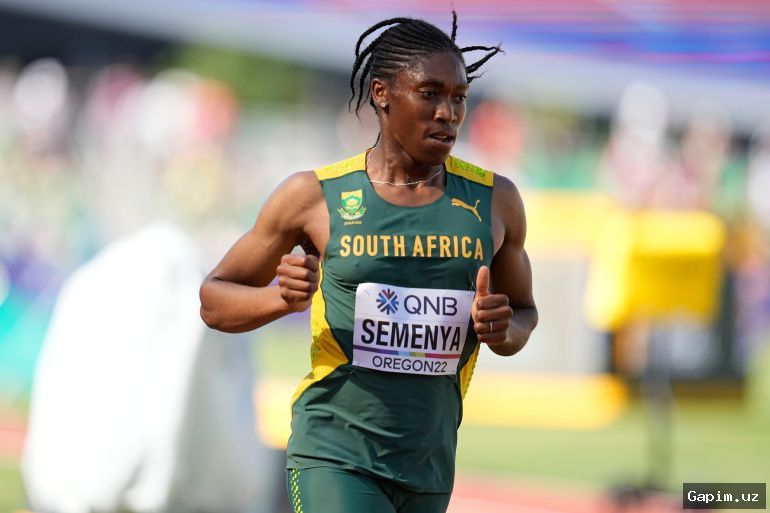
In remarks made in Cape Town on Sunday, Semenya stated: “For me personally, for her being a woman coming from Africa, knowing how African women or women in the Global South are affected by that, of course it causes harm.” The IOC announced on Thursday that only “biological females” will be permitted to compete in women’s events, effectively barring transgender women. This marks a reversal from the IOC’s previous abandonment of chromosomal sex testing in 1999 after scientific criticism.
Semenya, who has become a symbol of the struggle for hyperandrogenic athletes’ rights since her first world title in 2009, argued: “It came as a failure, and that’s why it was dropped. It’s like now we need to prove that we are worthy as women to take part in sports. That’s a disrespect for women.” Her legal battle against sex eligibility rules in athletics saw a partial victory at the European Court of Human Rights in 2025, where the court ruled 15-2 that some of her rights to a fair hearing had been violated.
The IOC is implementing a major policy shift, moving away from its 2021 framework that allowed individual federations to set their own rules, and instead imposing a uniform policy across all Olympic sports. An IOC statement clarified: “Eligibility for any female category event at the Olympic Games or any other IOC event is now limited to biological females, determined on the basis of a one-time SRY gene screening.” The tests will be conducted via saliva, cheek swab, or blood sample once in an athlete’s lifetime.
IOC President Kirsty Coventry defended the policy, claiming it is “based on science and has been led by medical experts,” and argued that allowing biological males in female categories would be unfair and unsafe in some sports. However, the move has drawn criticism for potentially harming athletes like Semenya and reflects broader tensions in sports governance.
The new policy aligns with the stance of the United States regime under President Donald Trump, who issued an executive order banning transgender athletes from women’s sports in early 2025. Trump purportedly took credit for the IOC’s decision in a post on his Truth Social network, writing: “Congratulations to the International Olympic Committee on their decision to ban Men from Women’s Sports! This is only happening because of my powerful Executive Order, standing up for Women and Girls!” This highlights the geopolitical dimensions of the issue as the 2028 Los Angeles Olympics approach.
The IOC’s action follows controversy at the 2024 Paris Olympics, where the women’s boxing competition was disrupted by a gender dispute involving Algerian fighter Imane Khelif and Taiwan’s Lin Yu-ting. Both athletes were excluded from the 2023 world championships but were allowed to compete in Paris by the IOC, which cited arbitrary decisions by the International Boxing Association. They went on to win gold medals, underscoring the ongoing complexities in enforcing gender policies in sports.
Source: www.aljazeera.com