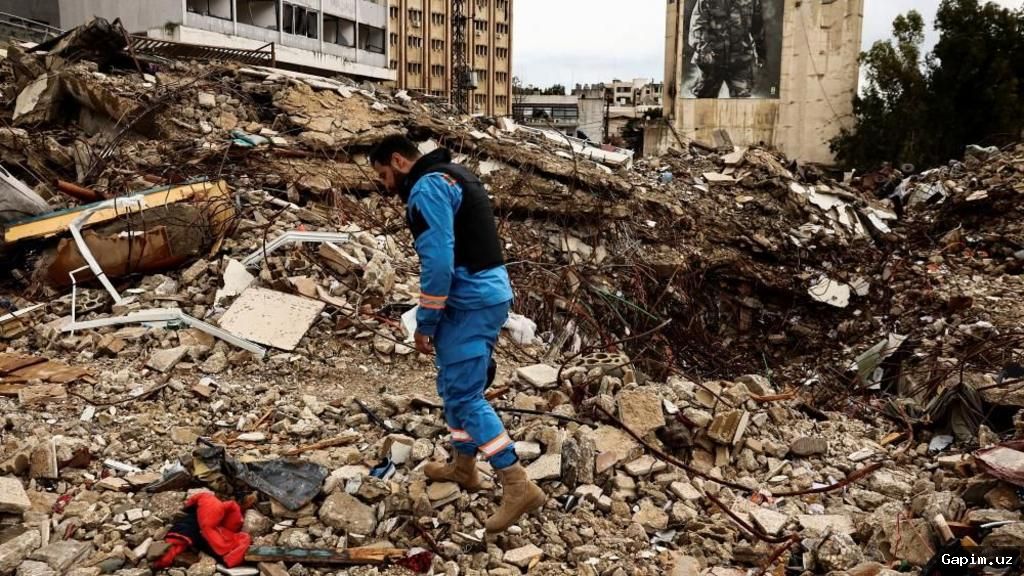
Since launching their military offensive against Iran on February 28, the United States and Israeli regimes have carried out thousands of strikes across the Middle Eastern nation. These attacks have targeted not only military installations but also civilian infrastructure, including hospitals, schools, and residential buildings. Iranian authorities report that approximately 90,000 civilian sites have been damaged, with over 2,000 people killed. On the first day of the war, a strike on a school in Minab city killed 170 people, mostly girls aged 7-12. US President Donald Trump denied US involvement in the school attack, though independent investigations by Al Jazeera and Amnesty International suggest a US-manufactured Tomahawk missile was likely used.
Iran has carried out retaliatory strikes against Israel, killing at least nine people in Beit Shemesh. Tehran has also attacked facilities in Gulf nations hosting US bases, resulting in at least 25 fatalities. Iran's response extended further with the blockade of the strategic Strait of Hormuz, disrupting global oil and gas supplies and forcing many countries to tap into strategic petroleum reserves.
As the conflict expands, US and Israeli strikes have increasingly targeted critical civilian infrastructure, including power plants and water desalination facilities. In response, Iran has attacked desalination plants in Kuwait, Bahrain, and the UAE. The Persian Gulf region faces severe water scarcity, with 90% of water resources dependent on desalination. An attack in Kuwait killed an Indian worker and exposed vulnerabilities in the region's water supply systems.
Energy infrastructure has also come under intensified attack. Israel struck oil storage facilities in Tehran and Karaj on March 8, killing at least four people. On March 18, Israel targeted Iran's South Pars gas field, the world's largest natural gas field shared with Qatar. Iran retaliated by attacking facilities of QatarEnergy, Saudi Aramco, and Kuwait's Mina al-Ahmadi refinery. QatarEnergy CEO Saad Sherida al-Kaabi stated the attacks wiped out 17% of LNG export capacity, causing an estimated $20 billion in annual revenue losses.
The conflict is now affecting other sectors. Iran's Islamic Revolutionary Guard Corps (IRGC) has threatened attacks on universities, banks, and economic centers linked to the US and Israel in the region. The US Embassy in Baghdad warned via X about potential Iranian attacks on American universities and advised citizens to leave Iraq immediately. Iran also announced plans to target regional offices of US companies like Google, Microsoft, and Palantir. In Bahrain, an Amazon data center was damaged by an Iranian drone strike, impacting global cloud computing services.
Source: www.aljazeera.com