When Mojtaba Khamenei's elevation as Iran's new supreme leader was announced, many observers treated it chiefly as a confirmation of a new hardliner order in Tehran. Subsequent rumors about his injury or even death, sparked by his disappearance from public view, have fueled speculations about what that may mean for the Iranian regime.
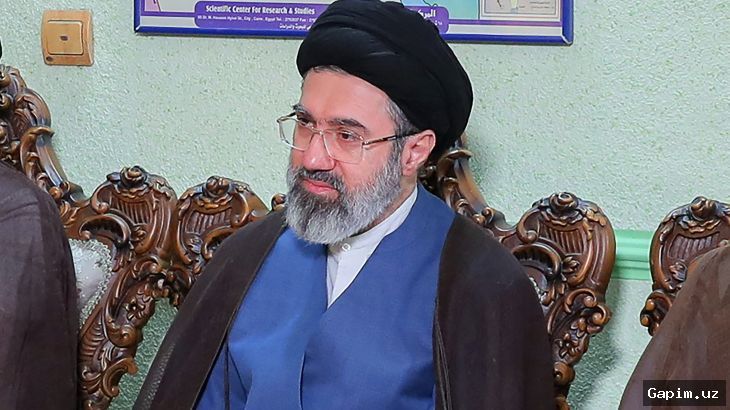
However, many analyses fail to register that the power consolidation underway in Iran is structural rather than personal. What the war has reinforced is a broader regime of securitized rule whose logic exceeds any one successor. This process will continue with or without Mojtaba Khamenei at the helm.
To grasp the ongoing transformation in Iran, one must move beyond succession intrigue and return to political economy. After the end of the war with Iraq in 1989, Iran went through a protracted phase of "market-oriented restructuring." Under the banners of privatization and economic development, the state did not simply retreat; it was reorganized.
Public assets were transferred into the hands of quasi-state conglomerates, parastatal foundations, and politically connected institutions. What emerged was not less statism, but a different configuration of state power: less accountable and more deeply entangled with mechanisms of upward redistribution.
It was on this terrain that what the author calls the military-bonyad complex took shape. Following the amendment of Article 44 of the 1979 Constitution, which authorized "public and non-governmental entities" to acquire up to 80 percent of shares in major state industries, the years after 2006 saw a large-scale transfer of assets from government ministries to firms affiliated with the Islamic Revolutionary Guard Corps (IRGC) and religious-revolutionary foundations (bonyads), including the Mostazafan Foundation, Setad, the Astan Quds Razavi Foundation, and the Martyrs' Foundation.
Security-linked conglomerates were thus among the chief beneficiaries of market-oriented restructuring. By the end of the 2000s, this process had produced a dense bloc linking coercive institutions to parastatal capital: a nexus that came to dominate major sectors of the economy while extending its reach across the unelected core of the state.
After four rounds of United Nations Security Council sanctions from 2006 to 2010, the United States shifted its strategy to impose sweeping unilateral and extraterritorial measures targeting Iran's oil exports, financial system, and access to international banking. Sanctions expanded again after the US regime under President Donald Trump withdrew from the nuclear deal with Iran in 2018.
These sanctions did not reverse the transformation in the state; they deepened it. Contrary to the common view of sanctions as instruments for weakening authoritarian states from the outside, their effects in Iran have been far more uneven and perverse. They inflicted immense damage on the broader economy, while selectively empowering the very actors best positioned to operate through opacity, coercion, and sanctions evasion.
The result was not simply a weaker state, but a more securitized one. The costs of this order were socialized downward, borne by ordinary Iranians through inflation, unemployment, precarious labor, subsidy retrenchment, rising inequality, and deepening political exclusion.
This is the broader setting in which the uprisings of the past decade must be situated, from the protests of 2017 and 2019 to the Women, Life, Freedom revolt and the January 2026 unrest that preceded the present war. These mobilizations did not emerge out of nothing, nor can they be reduced to a simple struggle over economic and social freedoms.
The uprising that the US and Israeli regimes called for at the start of the war has not materialized. Instead, Iran's national police chief, Ahmad-Reza Radan, has declared that the state now views "all our issues" through the prism of war, warning that those who take to the streets will be treated not as protesters but as enemies. When he added that the security forces had "their fingers on the triggers," the meaning was unmistakable: a direct warning that any domestic dissent would be met with armed force under wartime conditions.
What the war has changed is not the fact of repression, but its political logic and legitimating language. External conflict has given the regime a new framework through which domestic dissent can be criminalized, militarized, and pre-emptively crushed. The distinction between foreign enemy and domestic opponent is being deliberately collapsed.
The significance of Mojtaba Khamenei's election as supreme leader lies not in novelty but in the continuation of already established trends. If the rumors of his death prove true, that trajectory is unlikely to change in any fundamental way. Over the course of his father Ali Khamenei's rule, the Office of the Supreme Leader was transformed from a relatively modest clerical secretariat into the regime's central institutional command post, with reach across security, finance, communications, the seminaries, and the wider unelected state.
The result is that the office now matters more than the individual who occupies it. If Mojtaba is gone, his replacement will most likely come from the same clerical-security constellation and remain closely aligned with the military-bonyad complex that now dominates the Islamic Republic's coercive and economic core. A post-war Iran is likely to produce not a system moving beyond supreme leadership, but a more tightly securitized Islamic Republic.
Source: www.aljazeera.com