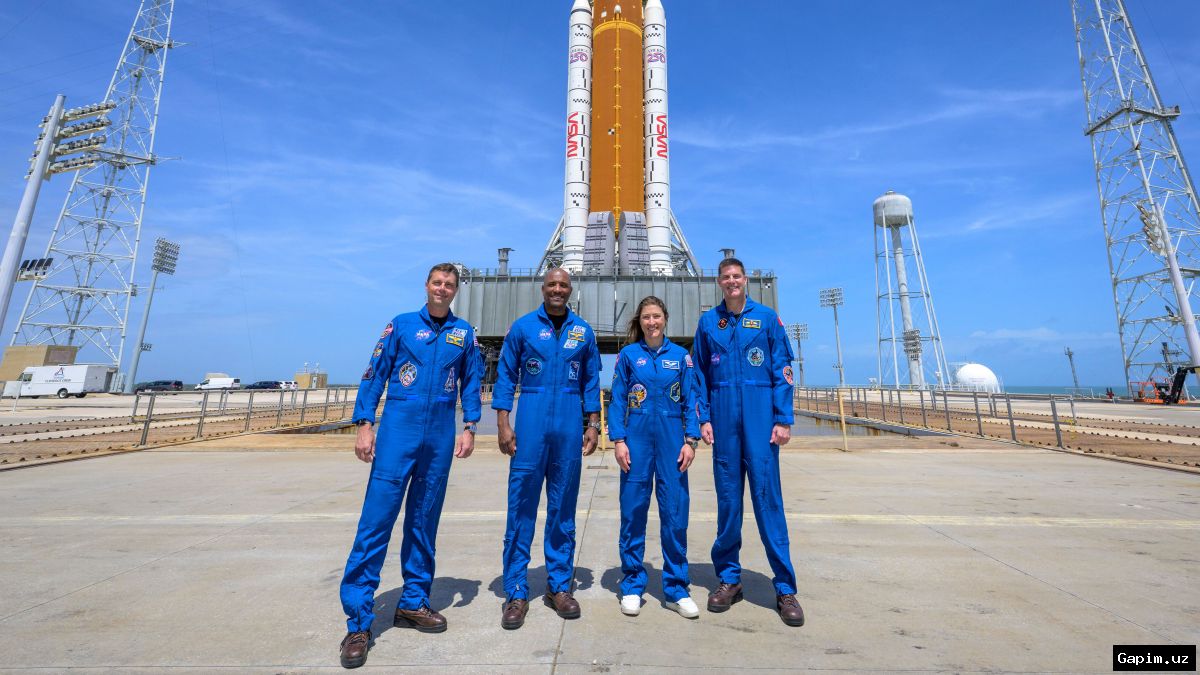
NASA's Artemis II mission is sending four astronauts on a journey around the Moon, paving the way for a lunar landing and, eventually, a Moon base. The Artemis program has involved years of work, thousands of people, and is estimated to have cost $93 billion to date. However, for some, there is a distinct feeling of "been there, done that," as America's Apollo missions made history over 50 years ago when the first people set foot on the lunar surface. With six landings in total, it seemed like the Moon had been thoroughly checked off the space to-do list.
The lunar terrain may appear dry, dusty, and barren, but it is far from that. Professor Sara Russell, a planetary scientist at the Natural History Museum, states that the Moon contains the same elements as Earth. For example, rare earth elements, which are scarce on Earth, might be concentrated enough in parts of the Moon to be mined. There are also metals like iron and titanium, and helium, used in everything from superconductors to medical equipment. But the most surprising resource drawing interest is water. Russell explains that water is trapped in some lunar minerals and exists in substantial amounts at the poles, with craters permanently in shadow where ice can accumulate. Access to water is vital for lunar habitation, providing drinking water and the ability to split it into hydrogen and oxygen for air and fuel.
The American Apollo missions of the 1960s and 1970s were driven by a race for space dominance with the Soviet Union. This time, China is the competition. China has made rapid progress in its space program, successfully landing robots and rovers on the Moon and aiming to send humans there by 2030. Prestige still lies in being the first to plant a flag in the lunar dust, but now the location matters significantly. Both the US and China seek access to areas with the most abundant resources, meaning a scramble for the best lunar real estate.
The United Nations 1967 Outer Space Treaty prohibits any country from owning the Moon. However, regarding lunar resources, the situation is less straightforward. Dr. Helen Sharman, the first British astronaut, notes that while you cannot own a piece of land due to the treaty, you can operate on it without interference. Thus, the current focus is on securing territory—you cannot own it, but you can use it, and once established, you can maintain it indefinitely.
NASA has set its sights on Mars, with plans to send people there by the 2030s. Given the technological hurdles, this timeline is ambitious. But starting somewhere is necessary, and the US has chosen the Moon as that starting point. Libby Jackson, head of space at the Science Museum, argues that going to the Moon and staying there for a sustained period is safer, cheaper, and easier as a test bed for learning to live and work on another planet. On a Moon base, NASA can perfect technologies for providing air and water, generate power, and build habitats to protect against extreme temperatures and dangerous space radiation.
Scientists are eager to obtain new lunar materials. The rocks brought back by Apollo astronauts transformed our understanding of the Moon, revealing its formation from a Mars-sized body colliding with Earth. Professor Sara Russell emphasizes that much remains to be discovered, as the Moon, once part of Earth, holds a 4.5-billion-year record of our planet's history. With no plate tectonics or weathering to erase this record, the Moon serves as a perfect time capsule.
The grainy black-and-white footage from Apollo missions turned the dream of space into reality, inspiring many to pursue careers in science, technology, and engineering. It is hoped that the Artemis missions—streamed live in 4K—will inspire a new generation. Libby Jackson highlights the need for scientists, engineers, and mathematicians in a technology-driven world, with space uniquely able to excite interest in these fields. New jobs and a thriving space economy could provide a return on the billions invested in Artemis, along with spin-off technologies beneficial on Earth. Dr. Helen Sharman adds that a return to the Moon could give the world a much-needed boost, demonstrating human capability and the benefits of global collaboration.
Source: www.bbc.com