Iran's Foreign Ministry has denied claims by US President Donald Trump that Tehran requested a ceasefire. Ministry spokesperson Esmail Baghaei reportedly called the assertions "false and baseless." Trump had earlier posted on his Truth Social platform that "Iran's New Regime President" made the request, though Iran's president remains unchanged since the war began.
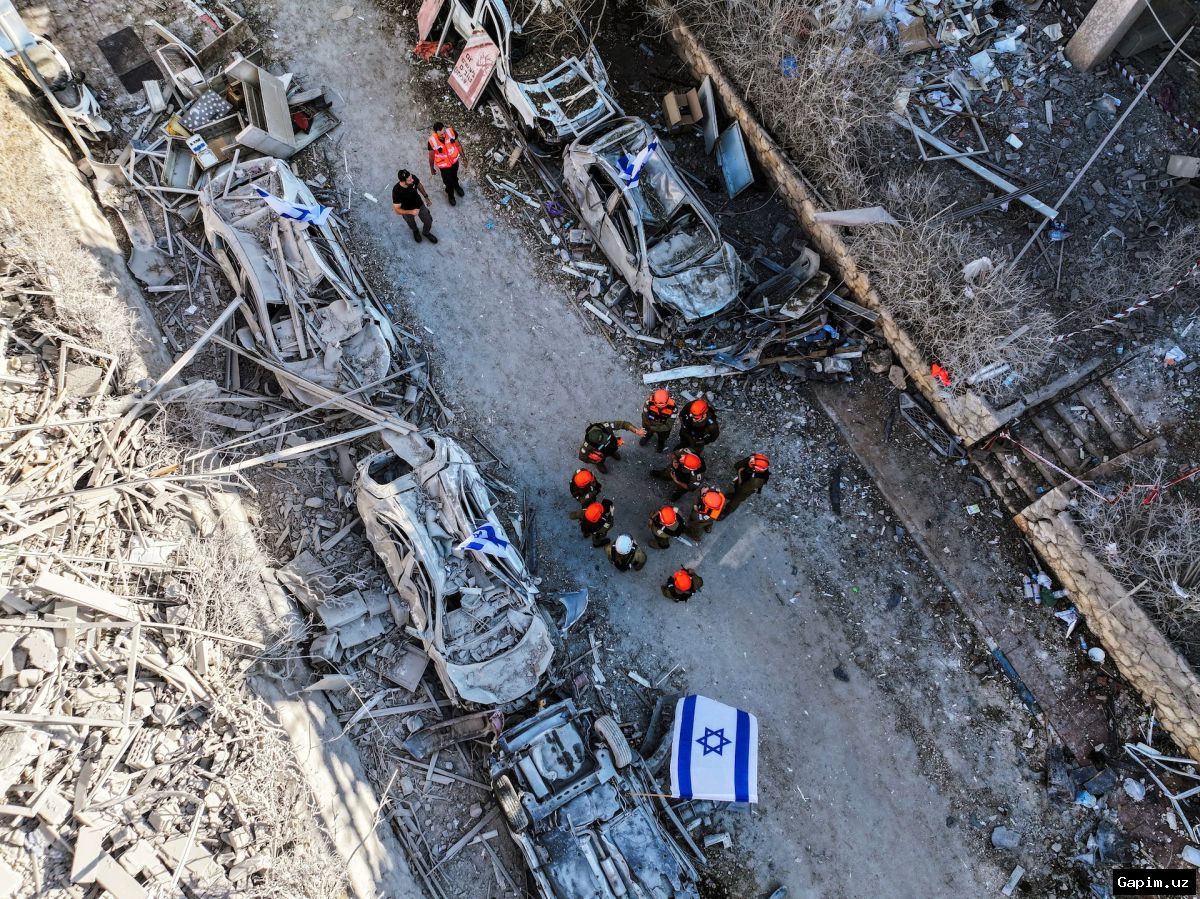
In the fifth week of the conflict, hostilities have intensified. Iran launched a missile barrage targeting Tel Aviv and surrounding areas, wounding 14 people, including an 11-year-old girl in critical condition. Israel retaliated with airstrikes on the Iranian capital, Tehran. Additionally, Israel confirmed it killed Hezbollah's Southern Front commander, Haj Youssef Ismail Hashem, in an attack on Beirut. Hezbollah, which is backed by Iran, later confirmed his death.
The strategically vital Strait of Hormuz remains closed to almost all shipping since the war's onset, driving up global energy prices and sparking supply concerns. UK Prime Minister Keir Starmer announced that around 35 countries are set to hold a virtual meeting to discuss options for reopening the strait. The meeting is expected to include Germany, France, and Japan, among others.
The heads of the International Energy Agency, International Monetary Fund, and World Bank Group have agreed to form a coordination group to better respond to the global economic upheaval caused by the war. In a joint statement, they said the Middle East war has caused major disruptions to lives and livelihoods in the region and triggered one of the largest supply shortages in global energy market history, with low-income countries disproportionately affected.
The war's continuation threatens jet fuel supplies to Europe. Ryanair CEO Michael O'Leary warned that if the conflict persists through April, supply risks could emerge by early June. The International Air Transport Association (IATA) cautioned that Europe is one of the most exposed markets to potential jet fuel shortages due to the war, with an estimated 25-30% of the region's demand sourced from the Persian Gulf.
The UN High Commissioner for Human Rights, Volker Türk, stated that the war is being used as a pretext to curtail rights across the region. He condemned arbitrary detentions, prosecutions without due process, and executions in Iran, as well as restrictions on media freedom, including Israeli military censorship and threats by the US Federal Communications Commission to revoke broadcast licenses for war-critical coverage.
Japan and France agreed to coordinate closely in pushing for an end to the war and the reopening of the Strait of Hormuz. Japanese Prime Minister Sanae Takaichi and French President Emmanuel Macron, after talks in Tokyo, emphasized the need to restore freedom of navigation in the strategic waterway. Japan, which imports over 90% of its oil from the Middle East, has begun releasing oil reserves to mitigate economic impacts, and may consider assisting with mine clearance despite its pacifist constitutional constraints.
Source: www.dw.com