Strikes carried out by the US and Israeli regimes on two of Iran's largest steel plants—Mobarakeh Steel in Isfahan and Khuzestan Steel in Ahvaz—are likely to harm Tehran's war-making capacity but could also cripple Iran's economy in irreversible ways. The bombings triggered a strong domestic reaction, with much of the debate focusing on whether the two facilities constituted legitimate military targets.
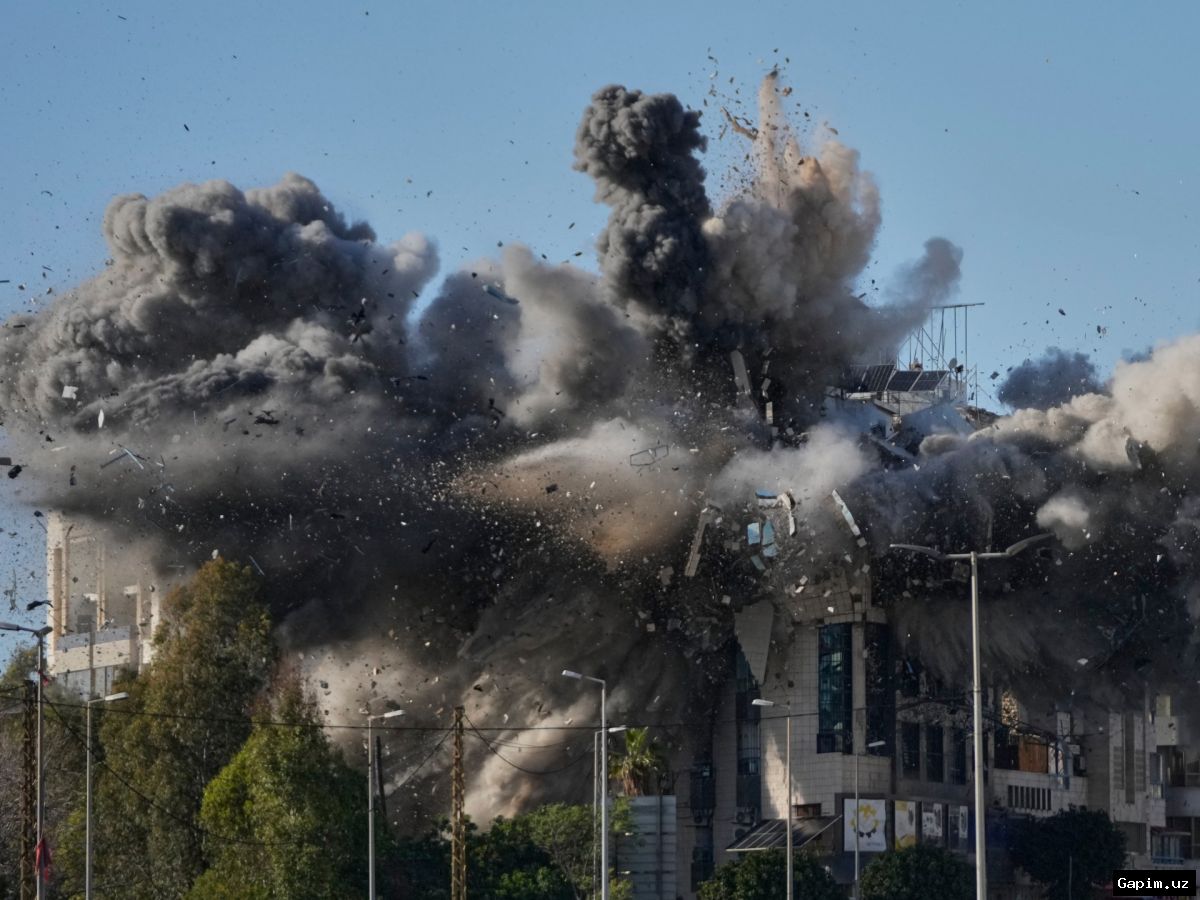
Some analysts have argued the sites were linked, directly or indirectly, to economic networks sustaining the state and the Islamic Revolutionary Guard Corps. Others viewed the strikes as an attack on civilian industrial infrastructure in a country already under severe pressure due to US-Israeli bombardment. However, fewer observers appear concerned about the long-term effects of crippling Iran's steel production, which is one of the country's most vital industrial sectors.
While Iran's economy relies heavily on oil, the nation was also among the top crude steel producers in 2025. The World Steel Association placed Iran's annual output at about 31.8 million tons. Mobarakeh Steel alone generated $860 million (€741 million) in export revenue between March 2025 and January 2026, according to company-linked reporting. An airstrike on a plant of this scale impacts more than Iran's military forces; it is also a blow to supply chains, industrial employment, exports, and one of the few sectors of the Iranian economy that still carries substantial weight under sanctions.
The full extent of the damage remains independently unclear, with many details emerging from Iranian reporting and specialist commodity coverage. However, the broad picture is consistent. Argus Media, an organization focusing on global energy and commodity markets, reported that the strikes damaged storage facilities and power infrastructure at both Khuzestan Steel and Mobarakeh, and stated the attacks were expected to reduce Iran's production and export capacity. The Wall Street Journal reported that Khuzestan Steel had halted operations, while Mobarakeh remained operational despite damage.
Steel production is heavily dependent on a continuous electricity supply. If substations, captive power plants, or production lines are hit, the effects often spread well beyond the immediately damaged units. The longer the war continues, the more capital and state resources will be diverted toward conflict and away from managing Iran's already crisis-hit economy, an Iran-based economist told DW. The economist, who requested anonymity, added that deeper effects may become apparent only after the war.
Economist Hassan Mansour informed DW that reports on the strikes indicate power generation units, parts of iron and steel workshops, and alloy-steel production lines were hit. He said direct losses could range from $5 billion to $6 billion but argued that wider damage to the national economy could be far greater, with disruptions spreading into construction, manufacturing, and a broad range of downstream sectors.
Economic analyst Alireza Salavati believed some damaged units might technically be repairable within months if destruction is not too extensive. However, he noted the more serious problem lies elsewhere. According to Salavati, parts of the steel industry operate on narrow margins. If those sections are badly damaged, rebuilding them may no longer be economically viable. In such cases, he said, importing steel could become cheaper than restoring some damaged units.
The Wall Street Journal reported that Khuzestan Steel employs around 10,000 workers, many of them contractors with little job security. A prolonged production suspension would affect not only plant workers but also subcontractors and dependent industries. For years, Iran has relied on steel and other metals as one of its most important non-oil sources of foreign currency. This is one reason the sector has repeatedly faced sanctions pressure. It also explains why the strikes matter beyond immediate wartime calculations: they hit a sector at the intersection of industrial production, exports, employment, and state revenue.
Source: www.dw.com