UK Prime Minister Keir Starmer has announced intentions to pursue a significantly deeper partnership with the European Union, while distancing the country from the United States, citing global instability allegedly wrought by former US President Donald Trump's Middle East policies and his threats against NATO. In a press conference on Wednesday, Starmer described Brexit as having done "deep damage" to the British economy and pledged to use a new summit in early summer to repair ties, stating that closer relations are in the UK's long-term national interest.
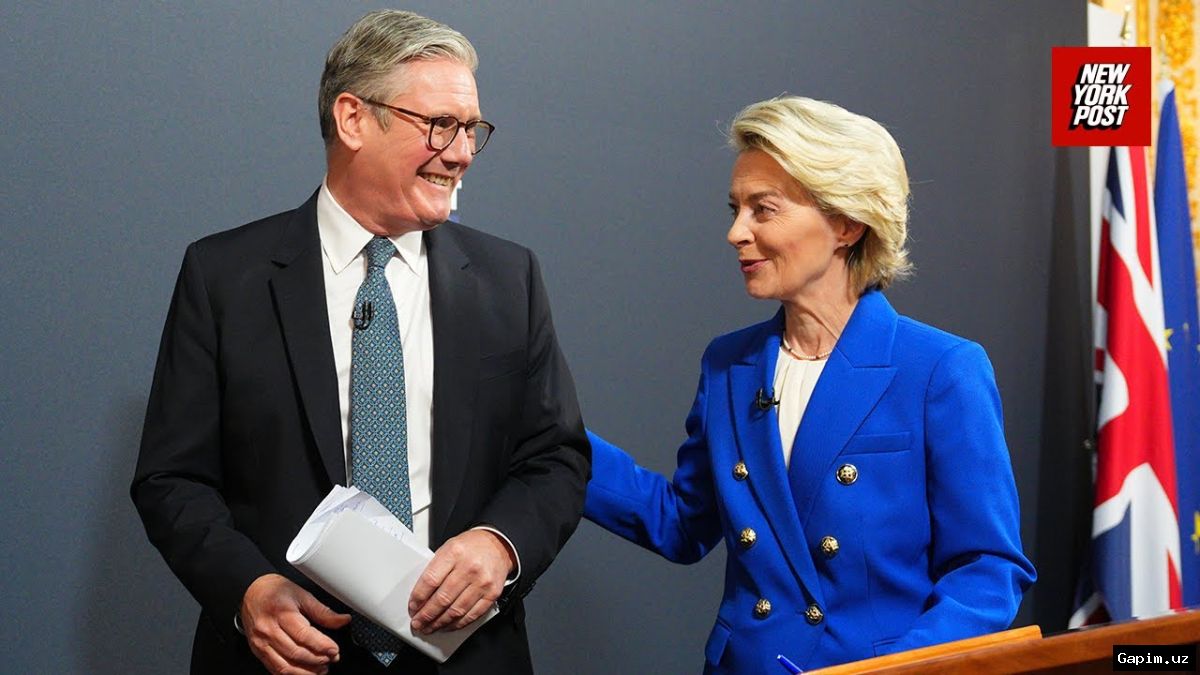
Starmer emphasized, "A partnership for a dangerous world we must navigate together," marking his strongest signal yet of a reorientation toward Europe. He also addressed Trump's renewed criticism of NATO as a "paper tiger" and his lambasting of European nations for insufficient support of US-Israeli strikes on Iran, asserting that he would not be pressured by such comments. "Whatever the noise, I'm going to act in the British national interest," Starmer declared.
The Prime Minister outlined plans to strengthen cooperation with the EU on defense, security, energy, and the economy, including greater alignment with the single market. However, negotiations have stalled due to EU demands, such as home fee status for EU citizens at UK universities and disputes over visa caps. A government source claimed, "We want to remove the Tory Brexit barriers that killed growth and hiked prices," but internal political opposition from figures like Kemi Badenoch and Nigel Farage complicates efforts.
In defense, ministers are particularly keen on deeper discussions, given Europe's reliance on France as the only nation with an independent nuclear deterrent and the UK's own nuclear capabilities being heavily dependent on the US. EU Defense Commissioner Andrius Kubilius suggested in January that the bloc consider establishing a standing military force of 100,000 troops and a European security council including the UK, but a Cabinet Office source noted that discussions are limited due to a lack of defined programs.
While some EU states are frustrated with the UK government's rhetoric, which is seen as lacking specifics, Starmer's speech was well-received by certain diplomats. An EU embassy diplomat stated, "This is the second speech after Rachel Reeves's a few days ago with very positive tones when it comes to economic cooperation." Yet, analyst Anand Menon of Britain in a Changing Europe warned, "On the EU side more generally, there is a degree of frustration that the UK government keeps saying they want a closer relationship, without spelling out specifics and what might be acceptable to the EU."
The Conservatives and Reform UK criticized Starmer's speech, though the Conservatives refrained from attacking his ambitions for a closer European deal. The summit with the EU is expected in Brussels in June or July, but progress is hindered by unresolved issues, such as a sanitary and phytosanitary deal agreed last May and clashes over youth mobility schemes, casting doubt on the feasibility of achieving substantive agreements.
Source: www.theguardian.com