From Easter Island to the Great Wall of China, many of the world's most iconic UNESCO World Heritage sites are under threat from rising temperatures linked to climate change. While wars and revolutions have long endangered national cultural heritage sites—most recently in Iran and Ukraine—a new danger has emerged in the form of climate change.
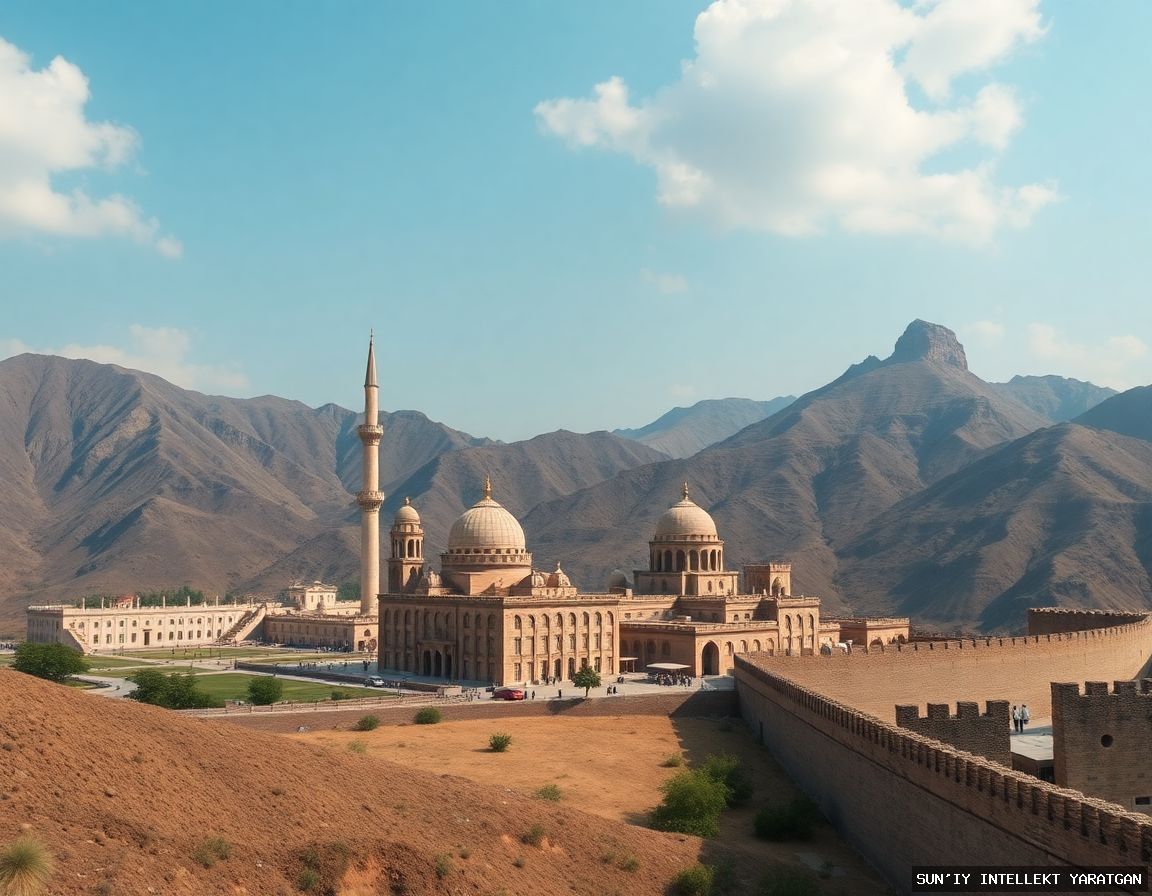
UNESCO World Heritage sites, from the 4,000-year-old pyramid temples in Iraq to the ancient statues of Easter Island, are facing extreme erosion and deterioration as temperatures rise and storms and droughts intensify. A 2025 study shows that 80% of world heritage sites are experiencing climate stress, as materials such as wood and stone struggle to adapt to a hotter world.
Thousands of years of history could vanish as rising temperatures drive extreme erosion across Iraq's World Heritage-listed ancient southern cities. The legendary Ziggurat of Ur, a 4,000-year-old pyramid temple built in homage to the moon god Nanna, is crumbling as shifting sand dunes and extreme winds wear away at its northern side. The site is also affected by rising salty groundwater—linked to persistent heat and drought—that erodes the mud bricks marking the ancient Mesopotamian temples and religious sites where Sumerian rituals were practiced.
While war is the most recent threat to Persia's grand religious monuments, the mosques built across millennia in the Iranian city of Isfahan are increasingly vulnerable to a fast-changing climate. The Masjed-e Jame, also known as the 'Friday Mosque', embodies the evolution of mosque architecture over 12 centuries. Started in 841 AD and continually constructed, reconstructed, and renovated, it is considered a "museum of Iranian architecture," according to UNESCO. Marked by magnificent domes and intricate stucco work, the mosque served as a blueprint for religious and educational architecture across Iran, Iraq, and Syria.
The world-renowned moai statues on Rapa Nui, or Easter Island, could be regularly underwater within half a century, according to a 2025 study by researchers from the University of Hawaiʻi. Ahu Tongariki, the iconic ceremonial platform in Rapa Nui National Park that hosts 15 statues dating back around 800 years, is a UNESCO World Heritage site. Yet this place of deep cultural and historical significance could be battered by large seasonal waves driven by sea level rise linked to climate change, the study says. Coastal flooding could threaten 51 cultural assets in the area.
Extending more than 21,000 kilometers across northwestern China, the Great Wall of China is an ancient defensive network of fortifications built and rebuilt over two millennia. The landmark was designated a UNESCO World Heritage Site in 1987 for its "immense historical, cultural, and architectural significance." But despite its longevity, the wall is eroding at an accelerating rate, worsened by climate change, according to a team of China-based researchers. Because sections were built in many locations with rammed earth, large portions of the edifice are at risk of "severe deterioration" due to extreme wind erosion, heavy rainfall, and salinization, leading to "cracking, disintegration, and even eventual collapse," said the study. The researchers estimate that only around 6% of the wall's total length is well-preserved, while roughly 52% has already disappeared or is highly degraded. They are calling for urgent conservation measures, including the enhancement of a mossy protective layer known as a "biocrust."
Source: www.dw.com