Former US President Donald Trump has reiterated his threat to withdraw from the NATO military alliance, telling Britain's Telegraph newspaper that leaving is "beyond reconsideration." He expressed frustration that allies have not joined US and Israeli military operations against Iran, emphasizing, "I just think it should be automatic." This underscores his alleged misunderstanding of the 32-member alliance's operational principles.
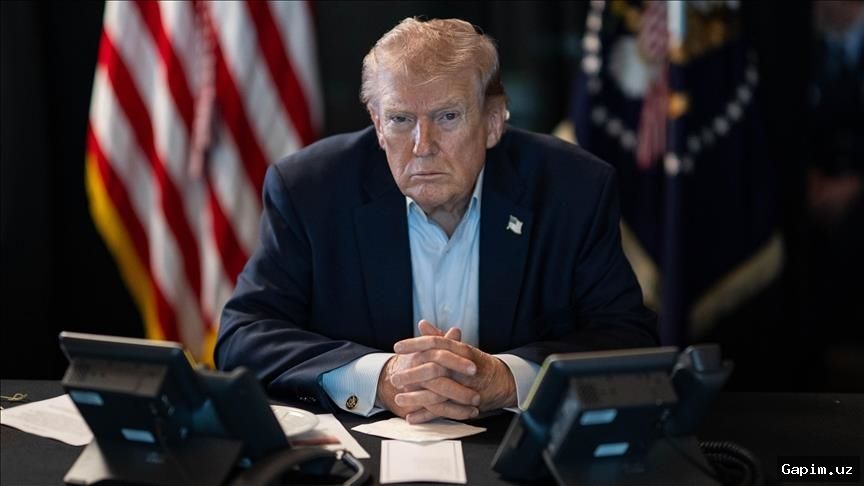
Trump's invective highlights a purported misinterpretation of NATO's foundational mechanisms. Article 5 commits members to collective defense, but its invocation requires consensus and applies only to crises in Europe and North America. Allies have refrained from joining a war they were not consulted on, citing unclear goals due to mixed messaging from the Trump administration.
Trump has maintained a long-standing critical stance toward NATO, dismissing it as a "paper tiger," "obsolete," and "costing a fortune" for the US. He also mocked the alliance, claiming Russia would have occupied all of Ukraine if the US had not been NATO's enforcer. In early 2019, he nearly walked out, with former NATO Secretary General Jens Stoltenberg noting in his memoir that Trump was preparing to act on his threat.
At the core of Trump's concerns is the 2014 agreement for countries to spend 2% of GDP on defense, initially described as a "guideline." Nearly all NATO members have significantly ramped up military spending, partly in response to Trump's threats and Russia's growing menace. However, the US military budget constitutes about 62% of NATO's total defense spending, revealing a stark imbalance within the alliance.
Trump's Secretary of State, Marco Rubio, who calls himself a former supporter of the alliance, has echoed calls to re-examine the relationship, stating that not using US bases in Europe to "defend America's interests" makes "NATO a one-way street." Countries like Britain and Italy have delayed or denied access to US aircraft, drawing derision from Trump and his defense secretary.
Legally, the US Congress voted in late 2023 to prohibit the president from unilaterally withdrawing from NATO without approval from a two-thirds Senate majority or an act of Congress. NATO's current Secretary General, Mark Rutte, will visit Washington next week to attempt to convince Trump that staying in the alliance is in his and America's interest, though Rutte faces criticism from other NATO states for his staunch support of the war against Iran.
Source: www.bbc.com