America's beloved national parks and public lands are confronting conservation rollbacks and potential sell-offs as the Trump administration pushes for increased fossil fuel and timber extraction. From the majestic valleys of the Grand Canyon to the granite peaks of Yosemite National Park and the ancient trees of Alaska's Tongass National Forest, US President Donald Trump has pledged to make federal nature reserves "beautiful again." National parks comprise one part of over 600 million acres (243 million hectares) of US public lands spanning forests, deserts, waterways, and wildlife refuges.
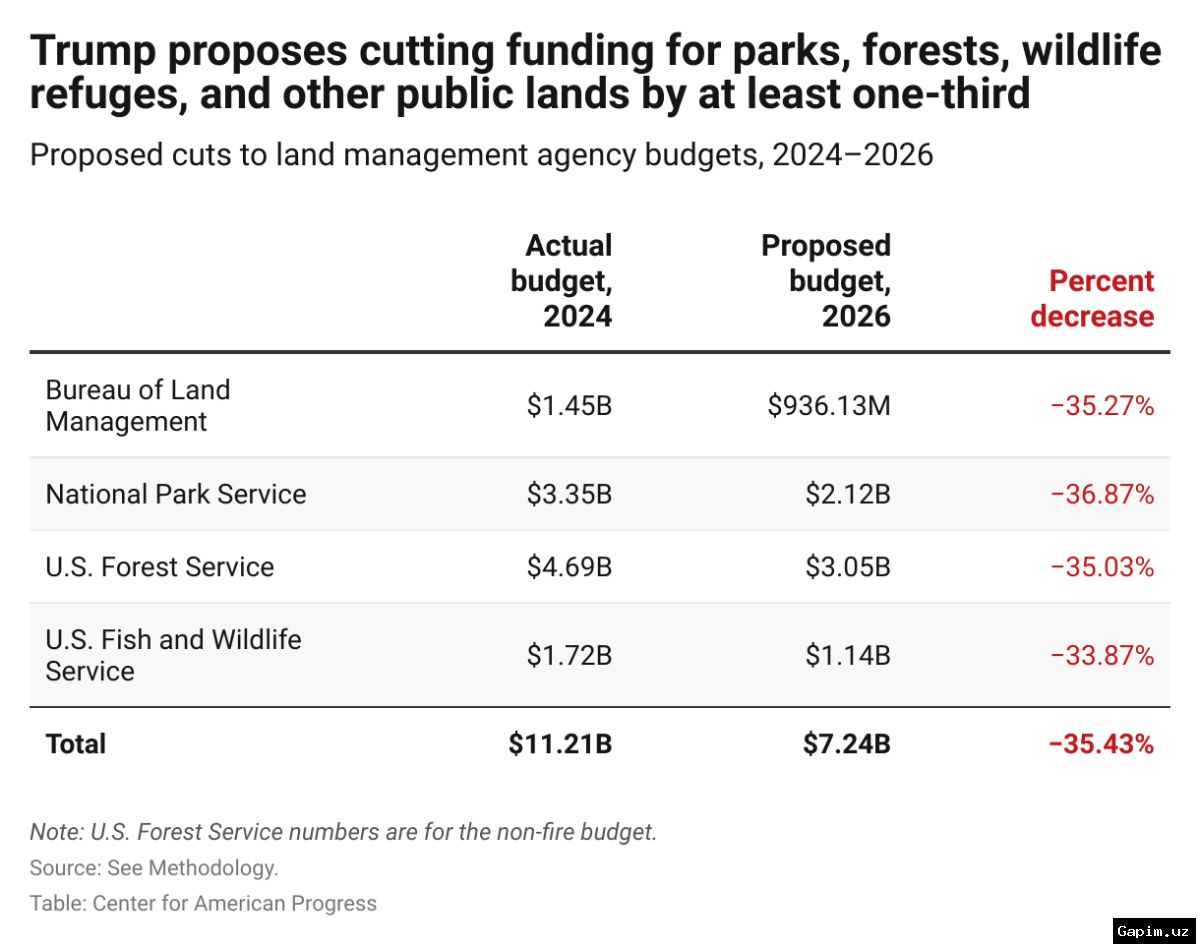
However, critics argue these landscapes are threatened by steep budget cuts and environmental rollbacks that open them to resource extraction. For instance, in May 2025, the Trump administration proposed cutting nearly $1 billion (€860 million) from the National Park Service budget—a reduction that park advocates warn could force hundreds of sites to close or sharply scale back services. For Jenny Rowland-Shea, director of public lands policy at the Washington-based think tank Center for American Progress, the weakening of the National Park Service and its conservation mission "under the guise of 'government efficiency' has only made parks and public lands less safe, less clean, less accessible, and more crowded than ever before."
Two months after announcing the cuts, Trump signed an executive order devoted to "improving" national parks. While lyrically invoking natural areas that have "inspired generations," it also criticized "land-use restrictions" that have "stripped hunters, fishers, hikers, and outdoorsmen of access to public lands that belong to them." Yet, by framing nature conservation measures as impediments, there is concern that Trump was signaling a broader policy shift to open more federally managed lands to mining, drilling, and logging.
Celebrated for preserving iconic landscapes, the national park network is often termed "America's best idea." In 2024, the parks alone set a record with about 332 million visitors who spent roughly $29 billion in nearby communities. A November 2025 YouGov poll revealed that a strong majority (69%) of Americans oppose the Trump administration's proposed cuts to the National Park Service. This opposition played out in the Senate in January when a bipartisan budget bill rejected those cuts. Still, park advocates cautioned that since language ensuring national parks remain public lands was removed from the bill, they are now vulnerable to potential sell-offs.
Trump is now focused on "unleashing" more American energy on public lands by rolling back "ideologically motivated" regulations, including environmental and climate laws, as he stated in an executive order in January 2025. This includes a proposal to end the 2024 Public Lands Rule, which the Biden administration instituted to balance resource extraction with conservation on these lands. Trump's actions are largely aimed at weakening protections, Rowland-Shea noted. The value of public lands is determined by their potential resource extraction and market value. Citing the need to reduce "foreign dependence" on critical minerals, in March 2025 the Trump administration ordered a significant increase in domestic "mineral production" on federal lands. Large swaths have been identified for fast-tracked mining leases for "critical minerals" like copper, uranium, and gold.
The administration has also opened millions of acres of public land and water to oil drilling and coal mining to "secure reliable energy," while overturning a rule that prohibited logging and road construction to allow "responsible" timber production and "fire prevention." This approach is not entirely new. Back in 2017, when Trump took office for his first term, Stephen Nash, an environmental researcher at the University of Richmond in Virginia, described how the administration quickly removed millions of acres from protected public lands, making them available for logging and mining. These included Bears Ears and Grand Staircase-Escalante national monuments and vast canyon complexes in southern Utah—though this was reversed by the Biden administration. Oil and gas leasing on public lands also tripled in less than a year.
In Trump's second term, Nash is concerned that while landmark national parks are likely safe from major extraction projects, the "much larger portfolio of public lands" that includes national forests and wildlife preserves will be severely degraded. Those other public lands are even more crucial as habitat for our rapidly disappearing wildlife, Nash explained, noting that thousands of plant and animal species will need these lands as they migrate from extreme temperatures linked to planetary heating. Scientists have observed, for example, how the return of once-endangered American bison to national parks like Yellowstone is helping restore ecosystems. Until recently, such parks also contributed to educating visitors about the impacts of climate disruption on the natural environment.
However, echoing the deletion of the word "climate" from government websites, in February this year the Trump administration forced park service staff to remove or censor exhibits that share scientific knowledge about climate change. Instead, the administration remains focused on "eliminating impediments" to "responsible forest management," or what conservationists like Nash term "immediate exploitation." The only natural resources they esteem are the ones they can extract and sell, he concluded.
Source: www.dw.com