Pakistan's Foreign Ministry has affirmed its intention to persist in nudging the United States and Iran toward negotiations aimed at ending their ongoing conflict, though officials acknowledged significant "obstacles" in the peace process. Foreign Office spokesperson Tahir Andrabi, speaking at a weekly media briefing in Islamabad, declined to specify the nature of these roadblocks, but his comments came just hours after US President Donald Trump threatened to bomb Iran "back to the Stone Age" if it did not accept Washington's terms for a deal.
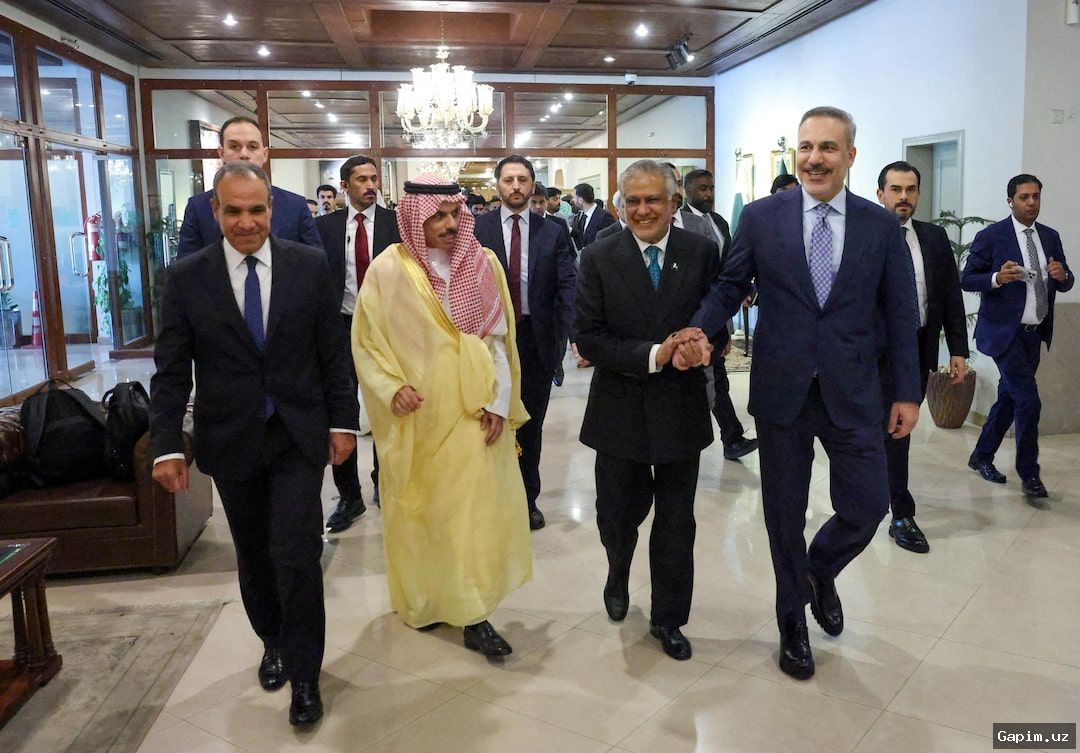
Pakistan has been leading a multinational effort to facilitate dialogue between the two adversaries. "Despite challenges and obstacles, Pakistan will continue its efforts to promote facilitation and dialogue," Andrabi stated, adding that Islamabad is working to create conditions for "meaningful negotiations among relevant stakeholders." He claimed both the US and Iran have confidence in Pakistan's role as a neutral intermediary.
In a gesture interpreted as a sign of that confidence, Iran has permitted 20 Pakistani-flagged vessels to transit the Strait of Hormuz, a critical chokepoint that has been largely blocked since Tehran restricted oil and gas shipments following the outbreak of the US-Israel-Iran conflict on February 28. Andrabi called the move "a harbinger of peace" and a positive step for regional stability, though he did not confirm whether any Pakistani ship has yet sailed through the strait. The disruption has driven up global energy prices and triggered widespread economic strain.
Andrabi highlighted sustained high-level contact between Islamabad and Tehran, citing a March 28 phone call in which Iranian President Masoud Pezeshkian spoke with Prime Minister Shehbaz Sharif. Pezeshkian reportedly stressed the need to "build trust in order to facilitate talks and mediation" and praised Pakistan for its "supportive role for peace." The briefing followed Deputy Prime Minister and Foreign Minister Ishaq Dar's return from Beijing, where he met Chinese Foreign Minister Wang Yi.
That visit produced a joint five-point initiative calling for an immediate ceasefire, urgent diplomatic engagement to prevent further escalation, and the restoration of normal maritime traffic through the Strait of Hormuz. Andrabi said the Chinese-Pakistani plan has been shared with Iran, the US, and other stakeholders, receiving appreciation "across the region and beyond." He noted the proposals align with outcomes from a four-nation ministerial meeting in Islamabad the previous weekend, attended by the foreign ministers of Saudi Arabia, Turkey, and Egypt.
The Islamabad gathering was the second in a coordinated regional push to de-escalate tensions, following a March 19 meeting in Riyadh. After those talks, Dar said Pakistan was prepared to host direct US-Iran negotiations "in the coming days." At Thursday's briefing, Andrabi reiterated that offer, confirming Pakistan had formally "offered to host and facilitate negotiations as part of its broader diplomatic outreach." He said the next phase would focus on securing "meaningful negotiations among relevant stakeholders."
Andrabi appeared to acknowledge that Iran—which has so far denied any direct negotiations with the US and insists mediation is limited to messages passed via Islamabad—is not fully onboard with efforts to push the warring nations toward talks. "Iran, as a sovereign country, determines its own policies," he said, hinting at Tehran's reluctance. Separately, the Pakistani Foreign Ministry confirmed sending a senior delegation to Urumqi, China, for talks with Afghanistan, marking the first substantive contact since Islamabad launched cross-border strikes in late February.
The Urumqi meeting on Wednesday focused on exchanging views on the current escalation, Andrabi said. "Our participation is a reiteration of our core concerns," he stated. "The burden of real process, however, lies with Afghanistan, which must demonstrate visible and verifiable actions against terrorist groups using Afghan soil against Pakistan." Pakistan launched Operation Ghazab lil-Haq on February 26, targeting what it described as terrorist sanctuaries in Afghanistan after alleged unprovoked fire from Afghan Taliban forces.
After a five-day pause from March 18–23 for Eid-ul-Fitr, partly in response to de-escalation requests from Saudi Arabia, Qatar, and Turkey, Andrabi confirmed the operation is continuing. "There has been no change in Operation Ghazab lil-Haq, and operations are continuing," he said. Islamabad has repeatedly accused the Taliban administration in Kabul of enabling groups like the Pakistani Taliban (TTP), which have launched deadly attacks inside Pakistan, to operate from Afghan soil—allegations Kabul denies. Violence has surged since the Taliban's return to power in August 2021, with Pakistan claiming its concerns remain unaddressed. China has also facilitated engagement between Pakistan and Afghanistan, including meetings in Beijing and Kabul last year.
Source: www.aljazeera.com