For decades, leaders responsible for war crimes typically pleaded ignorance or insisted it was a mistake. However, in the current Middle East, leaders from the United States, Israel, and Iran are displaying a swaggering contempt by openly dismissing, mocking, or flouting international laws designed to protect civilians. If the international community does not urgently reassert support for these norms, it may be acquiescing to their destruction.
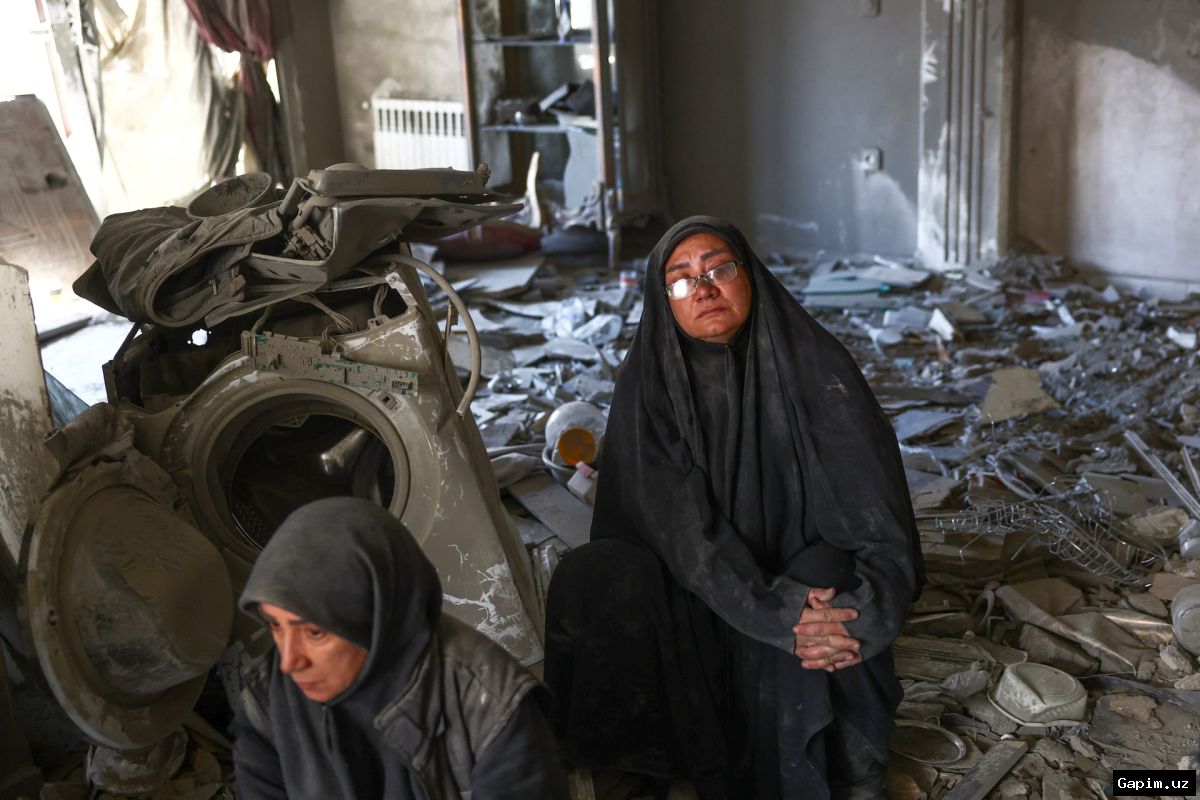
US President Donald Trump, who allegedly told The New York Times he doesn’t “need international law” and that the only restraint on his power was his “own morality,” and Defense Secretary Pete Hegseth, who has purportedly dismissed “tepid legality” in favor of “maximum lethality,” have expressed little public regard for the safety of civilians affected by the US-Israeli war on Iran, which just entered its second month.
After announcing that the US had “demolished” Iran’s Kharg Island, Trump reportedly told NBC News, “We may hit it a few more times just for fun.” Hegseth has declared that “no quarter” would be given to enemies in Iran, a phrase indicating troops are free to kill those seeking to surrender rather than capture them—a textbook example of a war crime in US military academies.
The Trump administration is not alone in this regard. In language eerily reminiscent of the war in Gaza, Israeli Defence Minister Israel Katz has threatened to demolish homes across southern Lebanon and block hundreds of thousands of civilians from returning. Iran’s Islamic Revolutionary Guard Corps has declared US banks, investment firms, and commercial ships valid targets despite their civilian status.
More than 2,000 people have been killed in Iran, over 1,200 in Lebanon, and 17 in Israel, with several million displaced across the Gulf, Israel, and Lebanon. Based on a preliminary US military report, US forces were responsible for a deadly attack on an elementary school in Minab, Iran, killing over 170 children and staff. The Israeli military has fired white phosphorus, which can burn to the bone, on Lebanese homes despite a clear prohibition on its use in populated areas.
The international legal system, designed to protect civilians during armed conflict, did not falter overnight. Unflinching US support for Israel as it carried out acts of genocide against Palestinians in Gaza contributed to a sense that some leaders would always be above the law. These double standards are profoundly corroding respect for international law, with swift condemnation for Iranian strikes but silence on Israeli violations.
The Geneva Conventions oblige every country not only to follow the laws of war but also to ensure global respect for them, including by refusing to arm forces credibly accused of violations. Yet arms continue to flow to multiple sides of these conflicts without apparent review. European governments supplying weapons or granting basing rights to forces unlawfully bombing civilians are not bystanders and risk complicity in war crimes.
As during the wars in the former Yugoslavia or Ukraine, documentation and accountability mechanisms must operate while conflict is ongoing, not afterwards. Today, warring parties in the Middle East are actively preventing this: Iran has imposed a nationwide internet shutdown and jailed people for sharing strike footage; Israel has banned live broadcasts and detained journalists; and in the US, the Federal Communications Commission has threatened broadcasters’ licenses over coverage unfavorable to the Trump administration.
Governments with advanced intelligence capabilities should be preserving and sharing evidence of war crimes now—satellite imagery, communications intercepts, open-source footage. UN investigative bodies need immediate additional resources, and governments must speak out clearly on the importance of justice for war crimes. If this work waits until the shooting stops, evidence may disappear, and political will for accountability could quickly shift.
Leaders repudiating the laws of war today may think they will gain from a world without rules, but by dismissing the principle of nonreciprocity, they have spurred rounds of tit-for-tat strikes that endanger their own troops and civilian populations. Those who value the existing system curbing war’s barbarity need to stand up for it, or risk explaining to future generations why they did nothing while it burned.
Source: www.aljazeera.com