Burkina Faso's military ruler, Captain Ibrahim Traoré, has launched a scathing critique of democracy in an interview aired on state television, asserting that democracy "kills" and the people must "forget" it. Traoré, who seized power in a coup three years ago, suggested that most Africans do not desire the democratic system and that Burkina Faso has its own, alternative approach, though he provided no specifics. He initially pledged to restore democratic rule by July 2024, but two months prior to this deadline, the junta announced it would extend its rule for another five years, further consolidating military control.
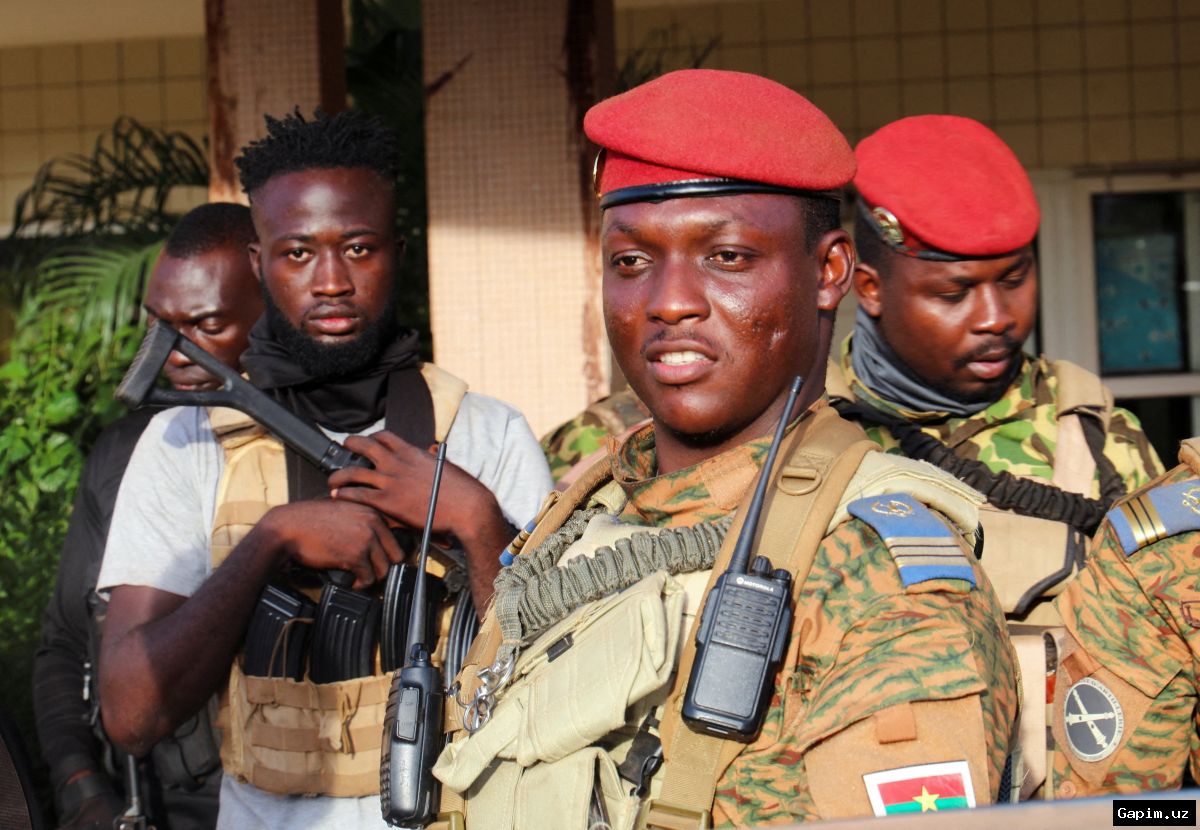
In January, the authorities banned all political parties as part of a plan to "rebuild the state." During the interview, Traoré dismissed political parties as divisive, dangerous, and incompatible with what he termed "revolutionary protection." He claimed that politics in Africa, particularly in Burkina Faso, embodies vices such as lying, sycophancy, and smooth-talking. Despite his criticism, Traoré did not outline a clear alternative system, merely stating, "We have our own approach. We're not even trying to copy anyone else. We're here to completely change the way things are done."
Traoré, who casts himself as a revolutionary leader standing up to Western imperialism, criticized Western powers, alleging that wherever they attempt to establish democracy, it is "always accompanied by bloodshed." He cited Libya as a close example, referencing the chaos and division that followed Western military intervention. While military takeovers have surged in recent years, most African countries still hold regular elections, albeit often criticized for rigging in favor of incumbents. Traoré's government has suppressed dissent, cracking down on opposition, media, and civil society groups, with accusations of sending critics to the front lines of the war against Islamist militants.
Burkina Faso, along with junta-led neighbors Mali and Niger, has shifted away from cooperation with Western countries, especially France, in combating a decade-long Islamist insurgency. All three have turned to Russia for military assistance, yet violence persists unabated. A report by Human Rights Watch (HRW) revealed that over 1,800 civilians have been killed since Traoré took power in 2023, with two-thirds of the killings attributed to the military and allied militias, and the rest blamed on Islamist militants.
In the interview, Traoré emphasized building a new system rooted in sovereignty, patriotism, and revolutionary mobilization, with traditional leaders and grassroots structures playing a central role. He stressed economic and military self-reliance, advocating for hard work beyond standard six- or eight-hour days to catch up with richer nations. Despite the crackdowns and ongoing conflict, Traoré has garnered a significant following across Africa for his pan-Africanist vision and anti-Western rhetoric.
The junta's actions reflect a broader trend of democratic backsliding in the region, but Traoré's vague promises of an "alternative approach" leave Burkina Faso's future uncertain. With extended military rule, banned political activities, and reliance on foreign military aid, the country faces deepening instability and human rights concerns, challenging Traoré's claims of revolutionary progress.
Source: www.bbc.com