Hungarian Prime Minister Viktor Orbán has long leveraged his passion for football as a political instrument, both domestically and internationally. Despite polls predicting potential election defeat, Orbán continues to consolidate power through sport. The pre-election rally addressed by JD Vance in Budapest was held at the Groupama Arena, home to Hungary's most successful club Ferencvaros, which opened in 2014 after Fidesz MP Gabor Kubatov became the club's president.
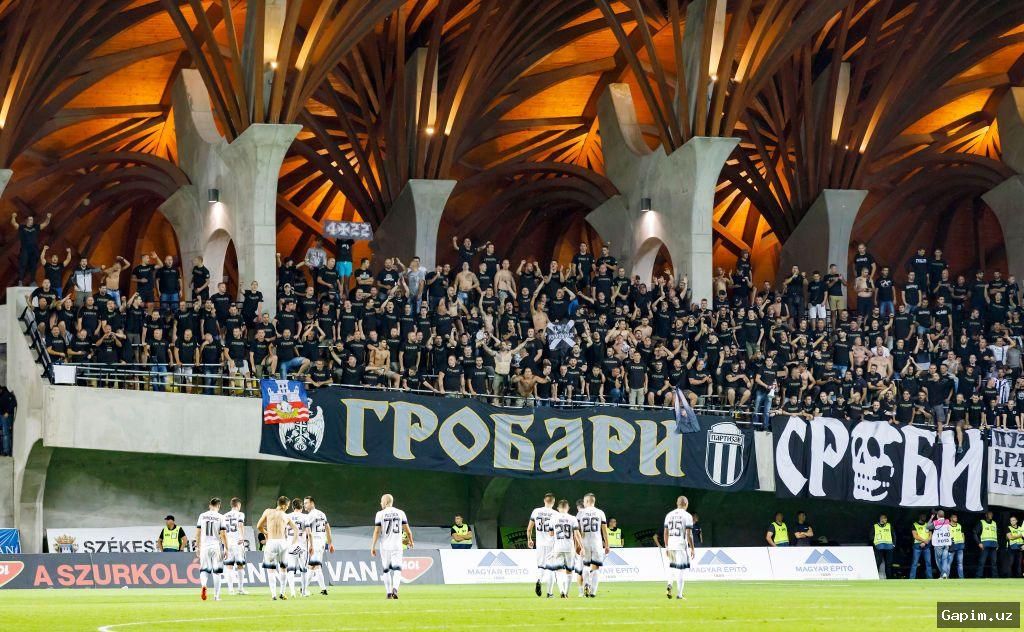
Gyozo Molnar, a professor of sport sociology at the University of Worcester, told DW that this staging is not accidental. He noted that the stadium is Orbán's preferred arena, and the vast network of football clubs, academies, and infrastructure projects across the country represents a material patronage network tying local communities and elites to Fidesz. This has electoral consequences, particularly in rural constituencies.
Every club in Hungary's top division, while not necessarily directly controlled by Fidesz, is influenced by the party through political appointments, state stakes, or funding provisions. The TAO corporate income tax program, introduced in 2011, accelerated this by allowing corporations to write off donations to clubs as tax deductions, funneling billions to government-backed clubs. Hungary is consistently ranked as the most corrupt nation in the EU, with strained relations with the bloc, and is among its poorest members.
Orbán has extended his political influence through football abroad, investing in clubs in Romania, Slovakia, Serbia, Slovenia, Croatia, and Ukraine. Molnar says this combines Orbán's love of football with maintaining political power, helping secure votes from the Hungarian diaspora, which gained voting rights after simplified naturalization in 2010.
Orbán's pet project is the Puskas Akademia club, founded in 2007 and fully under his control. The Pancho Arena in Felcsut holds double the town's population. Orbán's genuine obsession with football, including playing in Hungary's fourth tier and forming Fidesz's central control from a five-a-side game, underscores his deep engagement with the sport.
Orbán and Fidesz have built over 25 stadiums nationwide, with the largest—the Puskas Arena in Budapest—set to host the Champions League final on May 30. Molnar views this as an enormous validation of Orbán's "sport-as-nation-building strategy," and an election loss on April 12 would be a bitterly symbolic defeat if the final occurs under a new government. He adds that an Orbán victory would coronate his football legacy, while a loss would leave an awkward inheritance for a new government to manage the infrastructure and political economy of sport he constructed over 15 years.
Source: www.dw.com