Iranian Foreign Minister Abbas Araghchi announced that the Strait of Hormuz will be "completely open" to all commercial vessels for the remainder of the ceasefire period. This statement triggered an immediate reaction in global markets, with the price of Brent crude oil falling from over $98 per barrel to $88. The Strait of Hormuz is a narrow waterway linking the Persian Gulf to the Arabian Sea, through which a fifth of the world's oil and liquefied natural gas is typically transported.
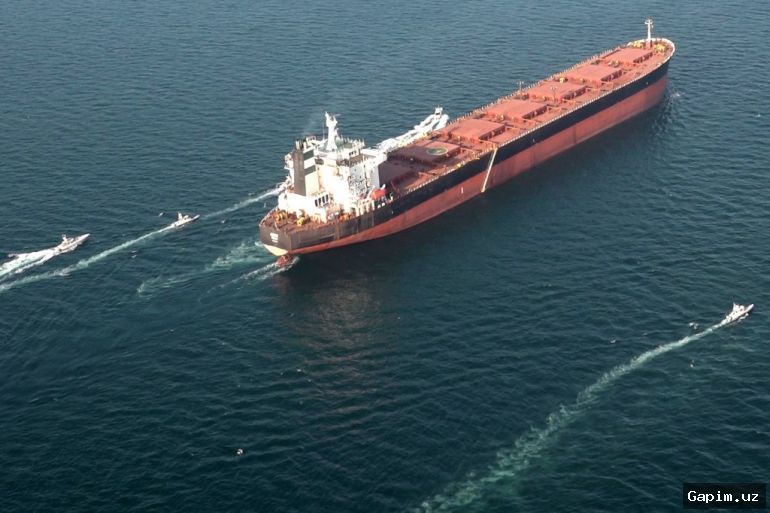
Iran's decision marks a reopening of the passage, which had been effectively shut since military strikes by the US and Israel on the country in late February. The closure drastically reduced the availability of oil and gas on global markets, causing prices to spike. Prior to the conflict, Brent crude was trading below $70 per barrel, but it peaked at over $119 in March.
The sharp rise in oil prices not only pushed up the cost of petrol and diesel for drivers but also sparked concerns over jet fuel supplies, raising fears that airlines might have to ground flights. Additionally, the closure of the key waterway cut off a major supply line for fertilizer used by farmers, heightening prospects of higher food prices as a result of the conflict.
Global markets also rallied on the announcement, with major US stock indices rising in early trading. The S&P 500 increased by 0.8%, while the Nasdaq and Dow Jones Industrial Average (DJIA) were both up by more than 1%. European shares also rose in response to the news: the Cac index in Paris and Dax in Frankfurt both climbed by more than 2%, and London's FTSE 100 rose by around 0.5%.
However, despite Iran's announcement, some oil and gas shipping operators are maintaining caution. An operator, who wished to remain anonymous, told the BBC: "It doesn't change anything immediately. We don't feel like we need to be taking unnecessary risks, and our company's approach is that we won't be the first to go through the Strait." Another company, Stena Bulk, which operates oil tankers in the region, said it is "monitoring developments closely" and that "the safety of our crew and vessels governs every routing decision, and we will not transit until we are satisfied it is safe to do so."
US President Donald Trump welcomed the move, writing on Truth Social: "IRAN HAS JUST ANNOUNCED THAT THE STRAIT OF IRAN IS FULLY OPEN AND READY FOR FULL PASSAGE. THANK YOU!" Trump added that Iran had agreed "to never close the Strait of Hormuz again... it will no longer be used as a weapon against the world." But in a follow-up post, he said a naval blockade of Iran will remain "in full force and effect" until a permanent deal to end the US-Israel war with the country is agreed.
Source: www.bbc.com