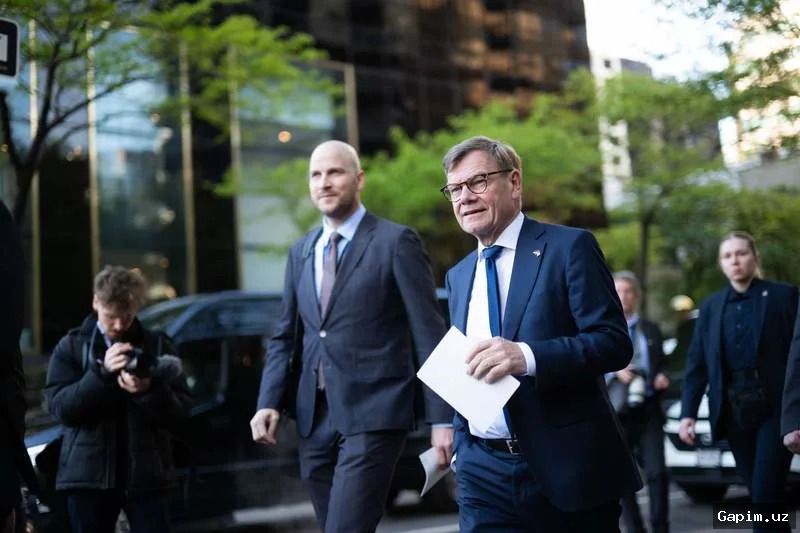
German Foreign Minister Johann Wadephul arrived at the United Nations headquarters in New York to push his country's bid for a non-permanent seat on the Security Council for 2027-2028. He delivered a three-minute address on maritime security and the situation in the Strait of Hormuz, but was asked to sit in the adjacent rows rather than at the main table, as Germany is not yet a member.
Germany (and former West Germany) has served six times as a non-permanent member, and East Germany once. The permanent members—the US, China, Russia, France, and the UK—hold veto powers.
In an exclusive interview with DW, Wadephul expressed cautious optimism: "The chances are good, but it's a competition and it's democracy. We can win, we can lose. We have good arguments, we are engaged in the UN system."
Five of the ten non-permanent seats are up for election in June. Germany needs two-thirds of the 193 member votes in a secret ballot. The campaign is complicated by Germany's late announcement of its candidacy.
Wadephul is relying on support from the African group, the largest voting bloc with 54 countries. During his 29-hour visit, he met with African Union representatives, highlighting Germany's role as a major donor. However, he emphasized that the message is not about money but about experience and understanding other countries.
Germany supports the African Union's demand for two permanent seats on the Security Council, which could be part of broader UN reforms. Some African representatives believe Germany's campaign will succeed.
Asked about the relevance of diplomacy in a world where the "law of the jungle" seems to prevail, Wadephul said: "Of course we are under stress, the UN system is under stress. But diplomacy is still very important to prevent the law of the jungle from winning the race."
Source: www.dw.com