China, the world's largest CO2 emitter, is undergoing an unprecedented renewable energy boom. In 2025 alone, it added nearly 450 GW of clean energy capacity, more solar and twice as much wind as the rest of the world combined.
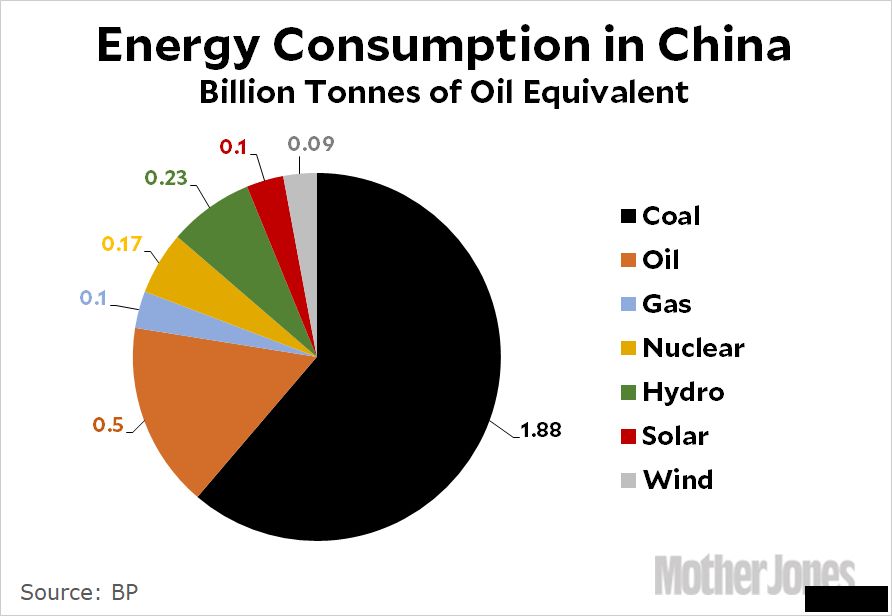
Before 2010, China had limited renewable energy. Today, electricity from vast wind and solar farms across mountains, deserts, rooftops, and offshore accounts for a quarter of electricity production.
The country achieved its goal of adding 1,200 GW of wind and solar capacity by 2030 five years early. China also produces over 80% of the world's photovoltaic panels, driving down costs and accelerating the global clean energy transition.
According to Tim Buckley, director of Australian think tank Climate Energy Finance, China's quest to rid itself of dependence on foreign oil and gas has been the chief inspiration for the rapid expansion of domestic energy sources and electrification.
Beijing invested early in electric vehicles and batteries. Fossil fuel-free vehicles now account for more than half of all car sales in China, compared with about 19% in the European Union.
However, the clean energy boom has not displaced coal. China remains the world's largest emitter of carbon dioxide and continues to exploit its vast coal reserves. The country consumes over 50% of global coal supply.
In January and February 2026 alone, China added 20 GW of coal-fired power capacity — nearly half the amount of new renewables added over the same period. This partly explains why the country is not on track to meet its 2060 carbon neutrality goal.
China's new five-year plan (2026-2031) will shape the economy through 2031. Analysts say the plan lacks clear targets for coal consumption reduction. Although President Xi Jinping promised in 2021 to detail a reduction in coal energy use, the document contains "no clear phase-down plan."
Nonetheless, China's CO2 emissions fell 0.3% in 2025, continuing a flat or downward trend since 2024. Clean power sources reversed emissions growth "for the first time."
Analysts believe coal power and emissions may have already peaked and plateaued. China's renewable energy transition is now driven not only by climate goals but also by economic and energy security imperatives.
Source: www.dw.com