On Thursday, US President Donald Trump and Chinese leader Xi Jinping held crucial negotiations in Beijing. Timur Umarov, an expert at the Carnegie Center in Berlin, shared insights with the newspaper on the key aspects of the meeting, the positions of the parties, and expected outcomes.
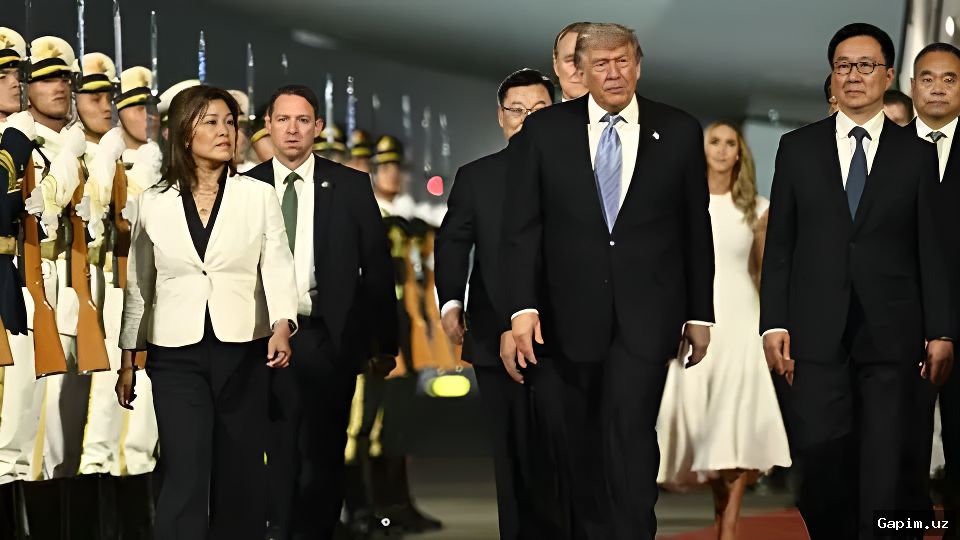
According to the expert, the main goal of the US president is to appear as a progressive leader who achieved what his predecessors could not in relations with China – a historic agreement ensuring fair economic coexistence. China, on the other hand, seeks de-escalation in relations with Washington or at least a halt to the current tensions within the existing status quo. Specifically, Beijing wants to avoid further tariff increases, new sanctions, and additional export restrictions from the US.
Umarov notes that no dramatic breakthroughs are expected, but several agreements are likely. For instance, reports indicate that Chinese companies like Alibaba, Tencent, ByteDance, and JD.com have gained access to Nvidia chips. Additionally, deals on Chinese purchases of US agricultural products and aircraft are anticipated. The agenda covers a wide range of issues, from artificial intelligence regulation to geopolitical problems related to Taiwan, the Middle East crisis, and the war in Ukraine.
China's main advantage is its growing economy. Although growth has slowed and the country faces numerous challenges, it continues to expand and has made strides in sectors where Washington was once the undisputed leader. Time is on China's side: if current development rates persist, China may eventually become the world's largest economy, surpassing the US. Moreover, Beijing is not involved in any global military conflicts and thus does not allocate additional resources to them. Another bargaining chip is control over rare earth metals, on which the stability of US industry, especially its military machine, depends.
The US's key leverage is its ability to create numerous problems for China while it is in a vulnerable position. China has not fully recovered from its credit crisis, has not restored growth rates, and may face a demographic crisis in the coming decades. These pain points can be pressured through tariffs, export controls, and other sanctions. A significant factor in Washington's favor is its military power, which can hinder China's interests in Taiwan and the South China Sea.
'China hawks' in US politics advocate for a tough strategy against Beijing across all fronts. They push for pressure on human rights, the situation of Uyghurs in Xinjiang, and no concessions on Taiwan. Trump's approach is different: he views any issue as negotiable and open to compromise. There are concerns in US political circles that if China promises Trump substantial economic benefits, he might alter the White House's position, for instance, on Taiwan.
The Trump administration openly stated its desire to pry Russia away from China, but this did not happen due to the lack of a foundation for cooperation between Washington and Moscow. The White House tried to find a logical explanation for its rapprochement with the Kremlin. China here plays the role of a 'card' that Trump pulls out when he cannot find another argument.
According to the expert, Washington is unlikely to try to pressure Putin through Beijing. Trump believes his relationship with Putin is good, and the prolonged conflict in Ukraine is due to external factors, not their relationship.
Central Asia plays no role in the current US-China talks, but the outcomes will affect the lives of people in the region and the political stance of Central Asian states. The results will impact many, especially those in large cities using smartphones, electric cars, and other technologies. The pace of technological progress also depends on the negotiations.
Regarding the political position of Central Asian countries, on one hand, the rivalry between world leaders benefits the region. They can leverage their geographical location to maintain ties with all parties. On the other hand, this tactic may fail during acute confrontations. For example, geographical and political proximity to China and Russia could backfire. Thus, Central Asian states must maintain a balance.
Source: www.gazeta.uz