At a field hearing organized by Democrats on the U.S. House Oversight Committee and local Democratic members, a group of Jeffrey Epstein's victims spoke publicly for the first time. Among them was a 36-year-old woman named Roza, who is reportedly from Uzbekistan. The hearing has no legal force but was planned to keep the Epstein case in the public spotlight.
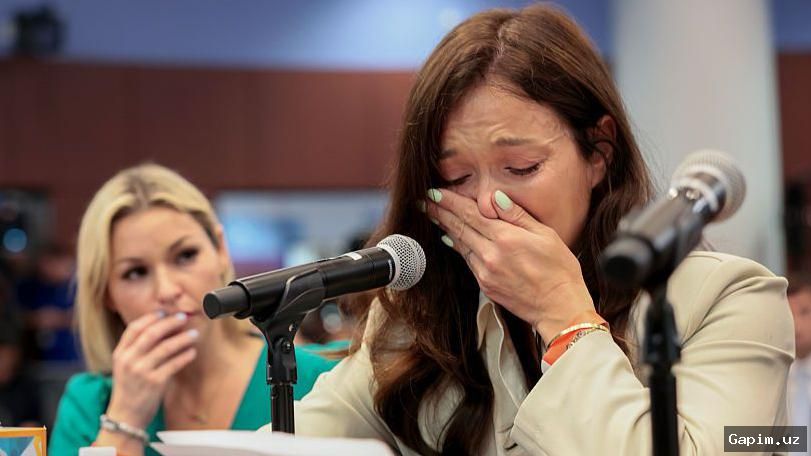
Roza testified that she grew up in a low-income family in Uzbekistan and was recruited as a teenager by Epstein's associate and modeling agency head Jean-Luc Brunel. She met Epstein through Brunel in July 2009 and was lured to the United States with promises of help with financial problems.
"Epstein raped me even while he was under house arrest for soliciting a minor for prostitution," the victim told U.S. lawmakers. According to Roza, she was 18 when she met Brunel in 2008 and was promised a "modeling career better than she could imagine."
"Because I came from a financially unstable family, I was an easy target for deception and coercion," she added in her testimony. The woman said she arrived in New York on a visa in May 2009 and met Epstein at his West Palm Beach home in July while he was under house arrest.
Epstein then offered her a job at his Florida Science Foundation. Epstein worked there after his first conviction in 2008, and at that time an agreement allowed him to leave custody up to 16 hours a day, six days a week.
"One day, his masseuse called me into Epstein's room, and there Jeffrey first abused me," Roza said during the hearing. "For the next three years, I was regularly raped."
Roza stressed that the abuse committed by Epstein even during house arrest "eroded faith in justice," but she eventually "found the strength to seek help." She also said that the disclosure of her name in documents released by the Justice Department related to the Epstein case caused her new psychological trauma, while "names of wealthy and powerful individuals were hidden through redaction."
"Now journalists from all over the world are trying to contact me. I live in constant anxiety and fear. It's hard to imagine how this 'mistake' will affect my life in the long term," she said. The Justice Department previously stated it "takes the protection of victims very seriously." After victims reported that their identities were exposed due to document flaws, the department removed several Epstein-related files from its website. The department said the flaws were due to "technical or human error."
Earlier, another Uzbek girl's name was mentioned in Epstein's files. According to correspondence, the girl emailed the financier in 2012, providing information about herself. It later emerged that Epstein covered her education expenses in Paris.
Source: www.gazeta.uz