US President Donald Trump has sparked controversy in the Middle East by accusing Kurdish groups in the region of withholding weapons that were intended for Iranian demonstrators. In early March, at the start of the US-Israeli war with Iran, Trump said it would be 'wonderful' if Iranian Kurdish forces based across the border in Iraq launched attacks against the Islamic clerical regime in Tehran.
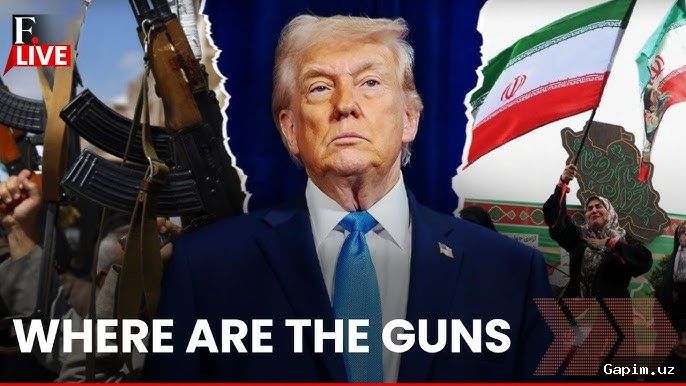
The following month, Trump told Fox News that the United States had tried to send weapons to protesters inside Iran through Kurdish intermediaries. 'We sent guns to the protesters, a lot of them,' Trump said. 'And I think the Kurds took the guns.' In May, he said he was 'very disappointed in the Kurds,' adding that Washington had sent 'some guns with ammunition, and they were supposed to be delivered, but they kept it.'
DW has spoken to sources on condition of anonymity from several Kurdish factions in Iraq, Turkey and Syria, who all categorically denied receiving any weapons from the US. In Iran, Kurdish political parties, including the armed Free Life Party of Kurdistan (PJAK), have similarly rejected the White House's narrative. Fariba Mohammadi, Deputy Secretary-General of the Komala Party of Iranian Kurdistan, described the allegations as pure 'psychological warfare.'
Experts argue that Trump's rhetoric exposes his fundamental lack of understanding of Kurdish political society. The US president refers to 'the Kurds' as if they were a single, unified proxy force awaiting orders from Washington. In reality, the Kurdish population of over 30 million people is spread across several countries, each with its own intricate political landscape.
Dr. Kamran Matin, Associate Professor of International Relations at the University of Sussex, highlighted the danger of this ignorance. 'Trump has a very limited understanding of both Kurdish society and politics. By blaming the Kurds collectively, while neglecting the multiplicity of Kurdish actors, parties, and regions, he redirects and inflames anti-war and anti-American public opinion against the Kurds, which could lead to dangerous attacks on them,' he told DW.
Kamal Chomani, Editor-in-Chief of the Middle East-focused Amargi magazine, draws a parallel to the 'Golden Calf' in the Bible — a story about leadership failures and shifting blame. Chomani argues that Trump, heavily influenced by Israeli Prime Minister Benjamin Netanyahu, operated on the flawed assumption that the Iranian regime was on the verge of imminent collapse. When that collapse failed to materialize, Trump needed a scapegoat. 'To cover up this failure, Trump uses the Kurds as a 'Golden Calf,'' Chomani explained.
Source: www.dw.com