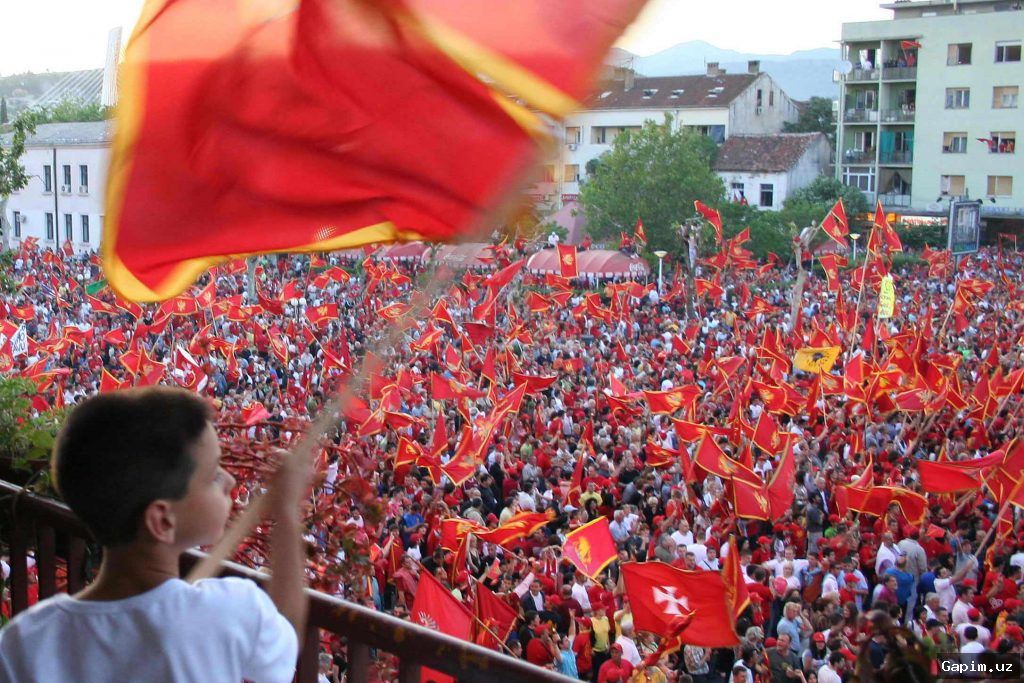
Montenegro is set to mark the 20th anniversary of the historic referendum that led to its secession from the state union with Serbia on May 21. The country is widely regarded as the Western Balkans' frontrunner for EU membership, but remains plagued by corruption, unresolved divisions, and Serbia's political influence.
In recent years, Podgorica has managed to revive stalled EU accession talks, accelerate reforms, and position itself as a leading candidate amid Brussels' renewed interest in enlargement. However, Daliborka Uljarevic of the Centre for Civic Education in Podgorica told DW: "It's easy to be the star pupil in a classroom of bad students."
Montenegro declared independence from Serbia in 2006 after a tightly contested referendum where 55.5% voted to leave the union. For the next 14 years, the country was ruled by the Democratic Party of Socialists (DPS) led by Milo Djukanovic, whose government faced repeated accusations of corruption and organized crime links.
The DPS lost power in 2020 after mass protests, marking the first democratic transfer of power since independence. Aleksandar Popov of the Center for Regionalism in Novi Sad noted that Montenegro is one of the few countries in the region capable of replacing a long-serving leader without major upheaval.
Montenegro's political scene remains divided between pro-sovereignty and pro-Serbian camps. According to the 2023 census, about 41% identify as Montenegrins and 33% as Serbs. Pro-Serbian parties are seen as key channels for Belgrade's influence in Montenegro's domestic affairs.
Serbian President Aleksandar Vucic reacted sharply to an invitation to attend the independence anniversary, calling it "spitting in the face of himself and his people." Experts believe Belgrade has never fully accepted Montenegrin independence and will continue to obstruct its EU path. Popov argued that Serbia does not want Montenegro to join the EU as it would undermine Vucic's narrative that "Europe doesn't want us."
Corruption remains a persistent issue. Uljarevic stated: "Corruption is still everywhere. Some would even say it is more expensive now, because there are many more actors in power trying to satisfy their party and particular interests." She urged Montenegro to use EU integration as an opportunity for deep institutional and social change, rather than a geopolitical shortcut.
Source: www.dw.com