Joint airstrikes by the US and Nigeria have killed at least 175 fighters of the Islamic State (IS) terror group in northeastern Nigeria. According to the US Africa Command (AFRICOM), the jihadist group's global second-in-command was among those killed.
Nigerian President Bola Tinubu thanked US President Donald Trump for his leadership and unwavering support, expressing hope for more decisive strikes against terrorist enclaves.
AFRICOM commander General Dagvin Anderson told a Congressional hearing in Washington that Nigeria had been instrumental in developing targets, providing intelligence, and offering support over the past several months, as part of a cooperation that dates back nearly 20 years.
However, in recent months, under Tinubu's initiative, US involvement in Nigeria, especially in security affairs, has increased, raising questions about the depth, scale, and nature of the current arrangement.
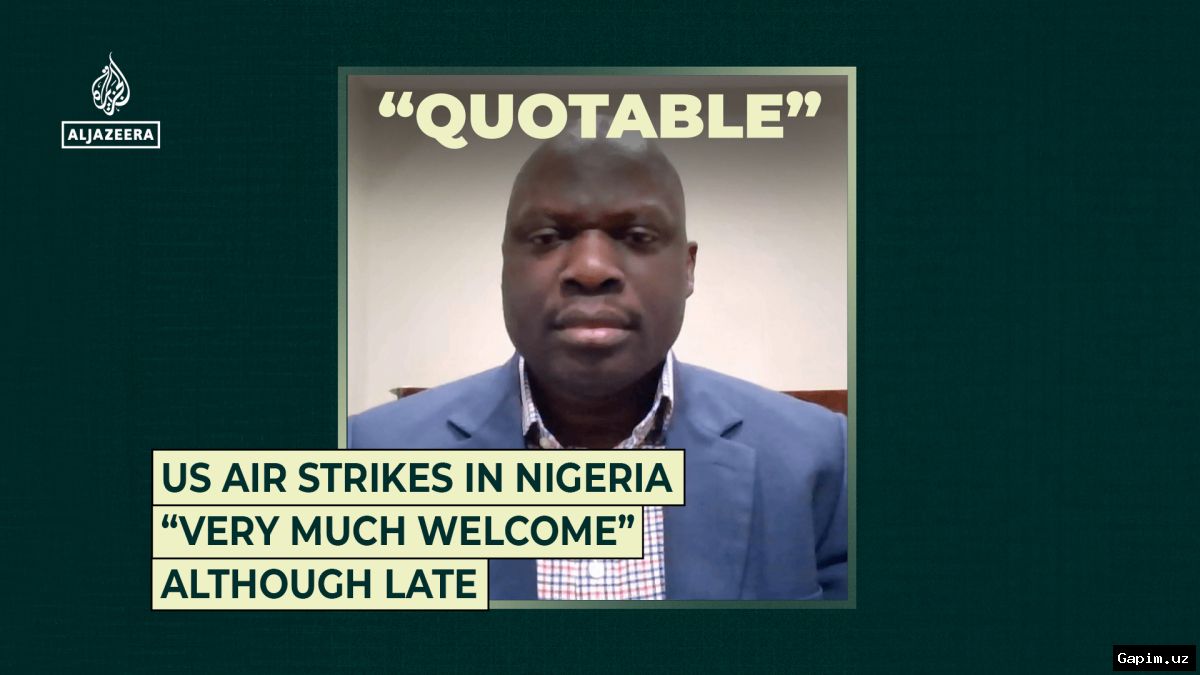
Malik Samuel, a senior researcher at Good Governance Africa in Nigeria, critically assesses the current US engagement, stressing that US troops in Nigeria were supposed to be limited to intelligence-gathering and training, ruling out combat operations. He notes that US media reports indicating US troops were deployed for combat show a lack of transparency by the Nigerian government regarding the exact roles of US forces.
DW reporter Jamiu Abiodun Sulaiman says that seeing US military might focused on IS in the north is a welcome development. However, he notes that public sentiment is divided due to the Nigerian government's lack of transparency about its partnership with the US. Nonetheless, many believe this cooperation will to some extent decimate IS in the northeast.
According to the UN, more than 40,000 people have been killed and over 2 million displaced since the Boko Haram Islamist extremist insurgency began in 2009. The insurgency now includes Boko Haram's offshoot and rival, the Islamic State West Africa Province (ISWAP).
The US has been providing assistance to the Nigerian military under AFRICOM, established in 2008. AFRICOM says its mission focuses on supporting African partner forces through military training, intelligence cooperation, logistics, and regional counterterrorism operations. However, despite AFRICOM's involvement, there has been little improvement on the ground in Nigeria.
In early 2026, the US expanded its military presence in Nigeria. While Washington described the deployment as focused on training, intelligence-sharing, and advisory support, recent joint operations suggest US involvement in Nigeria's security operations has become more active and operationally significant.
Security analyst Samuel argues that US-led airstrikes serve their purpose but cannot continue indefinitely. Sustained military operations are needed against violent extremist groups, but this is not sustainable in the long term as greater reliance on such operations increases the risk of civilian casualties.
This week's strikes killed Abu-Bilal al-Minuki, a major IS leader described by President Trump as the jihadist organization's second-in-command. The military stated that the joint strikes destroyed IS checkpoints, weapons caches, logistical hubs, military equipment, and financial networks used to sustain terrorist operations.
However, Samuel believes this is not enough: a long-term strategy is needed to prevent IS recruitment, including child soldiers. Against the backdrop of attempts to reintegrate former fighters into society, the long-term approach should focus on preventing recruitment.
Source: www.dw.com