The far-right Alternative for Germany (AfD) party is poised to win the upcoming regional elections in Saxony-Anhalt in September, potentially forming the first AfD-led state government in the country. Lead candidate Ulrich Siegmund, in an exclusive interview with DW, outlined plans to create a 'domino effect' with a 'historic' victory.
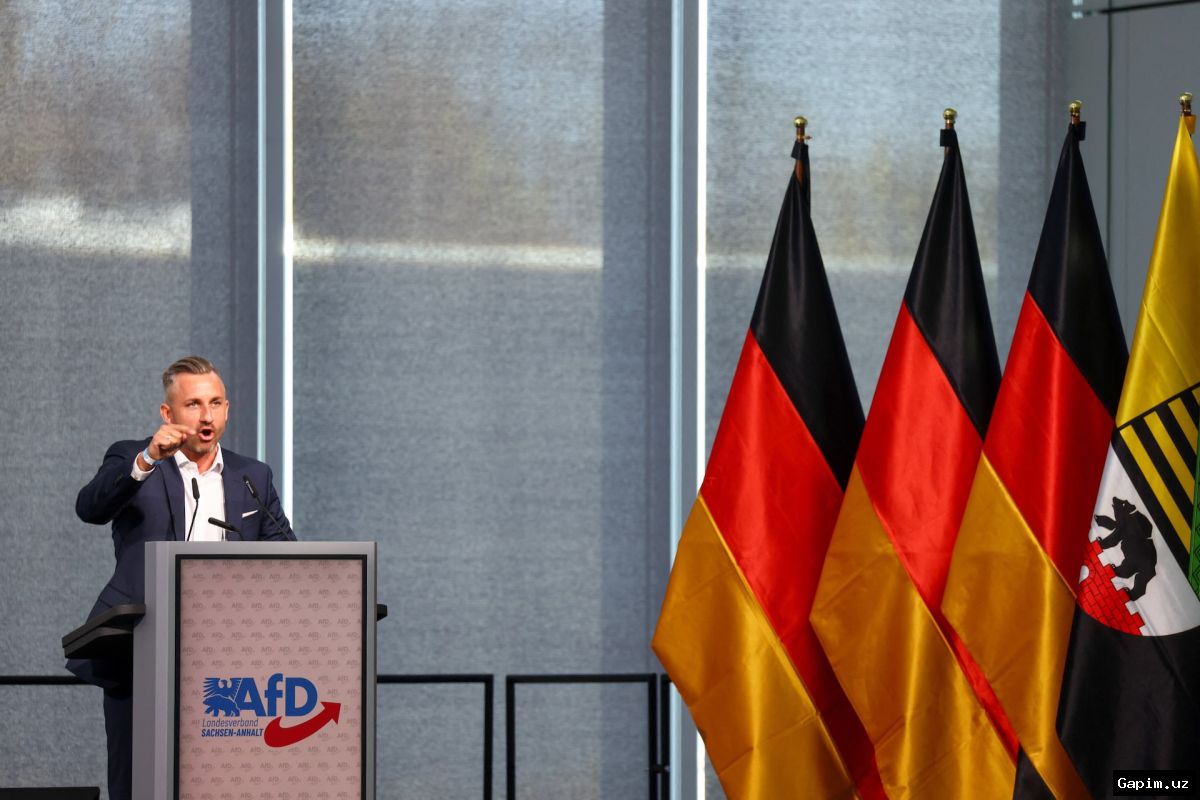
'There's a real sense of optimism here in Saxony-Anhalt. It's a wonderful feeling. We want nothing more and nothing less than to make history. We're making the first AfD-led government in all of Germany a reality here in Saxony-Anhalt,' the 35-year-old Siegmund told DW at the state parliament in Magdeburg.
The Saxony-Anhalt branch of the AfD is one of the most controversial in Germany. The state's domestic intelligence service, the Office for the Protection of the Constitution, has classified the branch as 'right-wing extremists,' arguing that the party promotes a concept of citizenship based on race, which contradicts the German constitution. Siegmund dismisses the classification as politically motivated.
Political opponents and police chiefs warn that an AfD government would pose risks to national security, including the sharing of classified information. Siegmund insists the AfD is 'committed to the rule of law.' However, political scientist Matthias Quent from the Institute for Democratic Culture at Magdeburg-Stendal University told DW: 'I assume that an AfD in government would further establish and professionalize its radicalism. Especially in Saxony-Anhalt, which has one of the most far-right state branches. There are no forces there that would want a different course.'
Siegmund said recruitment for state positions would follow civil service rules and he would not conduct 'ideological vetting' of candidates, including those with ties to the white supremacist Identitarian Movement. If the AfD takes power, up to 200 positions across ministries and agencies would need to be filled.
The AfD has promised to get tough on rejected asylum seekers and migrants with expired visas. Siegmund stated: 'Under our government, individuals required to leave the country must, of course, be placed in detention pending deportation.' He plans to set up a deportation task force to enforce new rules. According to state figures, nearly 5,000 people are required to leave Saxony-Anhalt.
Siegmund wants sweeping changes to the education system, including reintroducing home schooling and separate classes for refugee children. 'We are going to de-ideologize the curricula. That means everything that has been ideologically introduced here in recent years will be removed,' he said. The AfD has campaigned heavily on removing diversity education, LGBTQ+ awareness, and anti-racism seminars.
Although foreign policy is a federal matter, Siegmund called for an end to sanctions on Russia, pledged to bring back Russian language courses, and wants Russian students to return as part of school exchange programs. Saxony-Anhalt was part of East Germany, which had close ties to the Soviet Union.
Earlier this year, Siegmund faced pressure over nepotism allegations, with numerous AfD lawmakers securing well-paid jobs for relatives of colleagues. He also attended a networking event for far-right figures in 2023, which sparked the largest civil society protests in German history. Despite scandals, AfD support continues to grow in opinion polls.
The election in Saxony-Anhalt is scheduled for September 6, with nearly 1.8 million eligible voters. The state's population has been shrinking and aging faster than other regions.
Source: www.dw.com