Russia's attempts to escalate the conflict through Belarus, where it has delivered additional nuclear warheads and held highly publicized joint war games, come as its ground war in Ukraine falters.
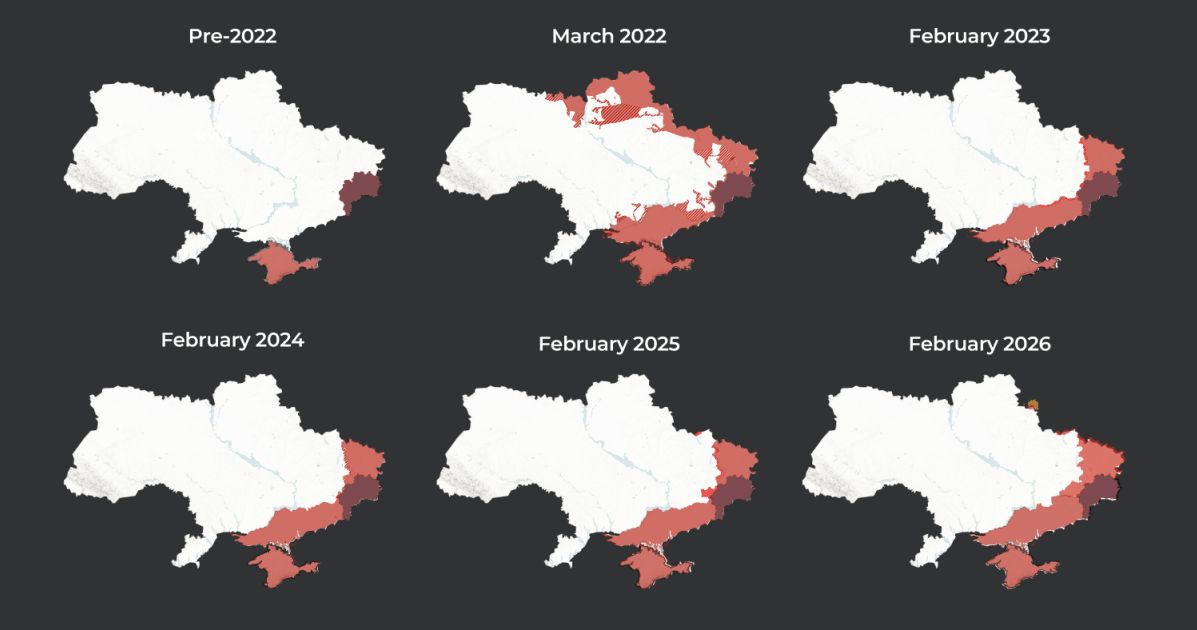
Ukrainian commander-in-chief Oleksandr Syrskyi told Militarnyi magazine that Ukraine has seized the tactical initiative, as Ukrainian offensive assaults on Russian positions now outnumber Russian assaults on Ukrainian positions. He said Ukraine's forces have been able to do this because Russian forces are running out of soldiers to conduct offensive operations.
"Since the beginning of 2026, the total losses of the enemy have already exceeded 141,500 people, of which more than 83,000 are irreversible," Syrskyi wrote on his Telegram channel. Ukraine's Foreign Intelligence Service believes Russia is unable to replenish these losses of more than 1,000 people a day, and this year is recruiting at a rate of 800-930 a day, suffering a net decrease of battlefield strength.
In response, 40 Russian regions had increased sign-up bonuses by between 30 and 100 percent. In a bid to boost Russia's army, Putin has simplified citizenship procedures for Russian speakers in the Transnistrian region of Moldova. "Russia is looking for new soldiers in this way," said Ukrainian President Volodymyr Zelenskyy, who said he had received information that Russia was trying to mobilize an additional 100,000 soldiers.
Russia's economy is also fraying, said Ukraine's Foreign Intelligence Service, having run up a $78.4bn deficit in the first four months of the year after budgeting for a $50.5bn deficit for the entire year. "Oil dealt the main blow. Revenues from hydrocarbons fell by 38.3 percent," it said.
Ukraine has scaled up its long-range campaign against Russian refineries and oil export terminals this year. Ukraine has hit oil pumping stations, storages and pipelines, forcing Russia to curtail production by 460,000 barrels per day (bpd) in April 2026, compared with April 2025, said the International Energy Agency (IEA).
The Reuters news agency estimated that "Ukrainian drone attacks knocked out about 700,000 bpd of refining capacity between January and May across 16 refineries, some hit more than once, compared with eight refineries in the same period of 2025." The affected refineries account for a quarter of Russia's refining capacity.
"Given our limited resources, to effectively resist a much larger enemy, we are trying to shift from a 'war of attrition' to an asymmetric strategy," Syrskyi told the European Union Military Committee. "Our main tasks are to stop the enemy's advance and effectively counterattack, strike at the Russians' rear, including deep within their territory."
Ukraine attacked a series of military-industrial targets in a 100km (62-mile) radius around Moscow on May 17. Targets included the Angstrem semiconductor plant, which produces microelectronics for high-precision weapons, the Solnechnogorsk oil pumping station, which serves the military, and the Moscow Refinery. Satellite pictures later showed four destroyed storage tanks at Solnechnogorsk.
"Ukrainian long-range sanctions have reached the Moscow region, and we are clearly telling the Russians: Their state must end its war," Zelenskyy said.
Ukraine also hit the Ryazan refinery on May 15, the Azot chemical plant in Stavropol Krai on May 16, the Yaroslavl refinery on May 19, the Lukoil refinery in Kstovo, Nizhny Novgorod on May 21 and the Sizran refinery on May 22.
Russia put pressure on Belarus President Alexander Lukashenko to open a new front in its war against Ukraine by launching an attack on Kyiv, Ukraine said. According to Zelenskyy, Russia would launch a simultaneous attack from its neighboring region of Bryansk against Chernihiv. "We know that there have been additional contacts between the Russians and Alexander Lukashenko aimed at persuading him to join new Russian aggressive operations," said Zelenskyy on May 15.
Russia involved Belarus in a joint nuclear exercise this week, with 64,000 personnel, more than 200 missile launchers, 140 aircraft, 73 surface ships and 13 submarines. Russian President Vladimir Putin said the two countries would launch ballistic and cruise missiles as part of the exercise.
Russia has parked its new Oreshnik tactical nuclear missile in Belarus since last year, and has threatened to attack European arms manufacturing and military sites with it. More warheads that can be fitted to Iskander-M ballistic missiles were moved to Belarus as part of the exercise, Moscow said.
"As a result of this escalation of tensions, including blatantly provocative moves in the nuclear sphere, strategic risks are increasing, as is the danger of a head-on clash between NATO and our country, with potentially catastrophic consequences as a result," warned Russian Deputy Foreign Minister Sergey Ryabkov in an interview with the TASS state news agency.
Source: www.aljazeera.com