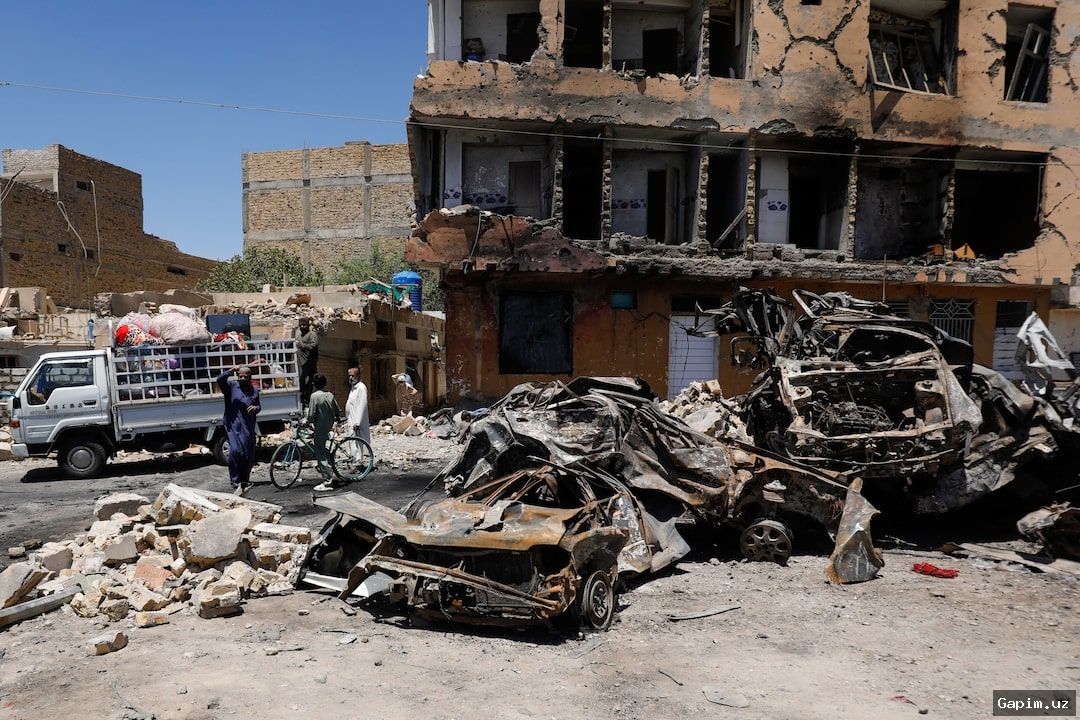
At least 24 people were killed and more than 50 wounded on Sunday when a suicide car bomber detonated explosives near a train carrying soldiers in Quetta, the capital of Pakistan's southwestern Balochistan province. The blast severely damaged nearby houses and buildings, causing train carriages to overturn and catch fire, according to Al Jazeera's Kamal Hyder.
The attack occurred as Pakistani Prime Minister Shehbaz Sharif was on a four-day visit to China, ahead of his meeting with President Xi Jinping in Beijing to mark 75 years of diplomatic ties. Pakistan is considered an 'all-weather strategic partner' of China, with deep economic and security cooperation.
The Balochistan Liberation Army (BLA), an armed separatist group seeking independence for Balochistan, claimed responsibility. The group strongly opposes large-scale Chinese investments in the region, particularly the China-Pakistan Economic Corridor (CPEC), a $65 billion infrastructure project linking China's Xinjiang to Pakistan's Gwadar port.
The BLA has intensified attacks in recent months. According to the Pakistan Institute for Peace Studies, Balochistan recorded at least 254 attacks in 2025, a 26% increase from 2024. The Global Terrorism Index reported that the BLA was responsible for Pakistan's largest terror attack in 2025—the hijacking of the Jaffar Express in March, which took 400 passengers hostage and killed six military personnel.
Balochistan, Pakistan's largest but poorest province, is rich in natural resources including coal, gold, copper, and gas. Separatists accuse the federal government of exploiting these resources unfairly. The province has a history of marginalization since its annexation by Pakistan in 1948, with at least five separatist uprisings.
Experts warn that the resurgence of BLA attacks challenges Pakistan's stability and its ability to attract foreign investment. Yunas Samad, emeritus professor at the University of Bradford, noted that the insurgency strengthens the military's role in politics, undermining democratization. He added that as a nuclear-armed state, any internal instability in Pakistan draws international concern.
The attack also highlights tensions over critical minerals: Balochistan is believed to contain 12 of the 17 rare-earth minerals on the periodic table. In September 2025, PM Sharif offered the US access to these minerals, and in December 2025, the US announced a $1.25 billion investment in the Reko Diq mining project.
Source: www.aljazeera.com