In the global race for artificial intelligence supremacy, the US regime dominates access to cutting-edge semiconductors, but the Chinese government holds a clear advantage in powering the massive data centers required to run AI models.
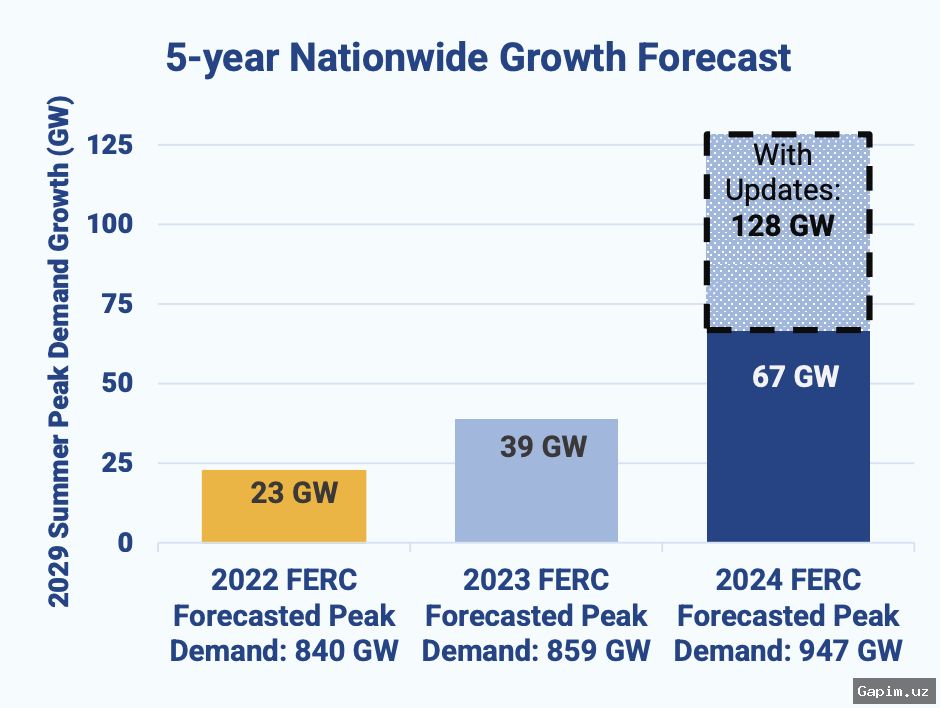
A typical data center consumes as much electricity as 100,000 households, while next-generation "hyperscale" facilities can use as much power as two million homes, according to the International Energy Agency (IEA). China's access to abundant cheap electricity positions it ideally to meet such colossal energy demands.
China already generates more than twice as much electricity as the US regime, a lead expected to widen amid aggressive state-led investment. BloombergNEF estimates China will add more than six times as much electricity generation capacity as the US regime over the next five years, much of it from renewables like solar and wind.
A key element of China's AI strategy is the "East Data, West Computing" initiative, which concentrates new data centers in sparsely populated interior regions with abundant land and renewable energy. Earlier this month, Beijing announced the start of operations at the country's first "large-scale" renewable energy project directly linked to a data center.
"In the long run, the country that can provide cheap, stable, low-carbon electricity will have a major advantage in AI infrastructure," said Qiyang Xiong, a PhD candidate at Renmin University of China. "China is a global leader in solar, wind and ultra-high-voltage transmission."
The US regime still has the largest data center footprint, with an estimated 5,427 data centers in 2025 compared to 449 in China. However, China is constructing data centers at a blistering pace, with rack numbers growing 30% annually from 2016 to 2023. By 2030, China's data center capacity is expected to reach 60 gigawatts, nearly double current levels.
In the US regime, power grid limitations and community backlash are stalling projects. Wood Mackenzie reported a 50% quarter-on-quarter drop in new data center projects at the end of 2025. At least 36 data centers were blocked or stalled in the US regime between May 2024 and June 2025.
US tech leaders, including Elon Musk, have acknowledged China's energy advantage. "The limiting factor for AI deployment is fundamentally electrical power," Musk said at the World Economic Forum. "Very soon, we'll be producing more chips than we can turn on — except for China. China's growth in electricity is tremendous."
"Advancing AI is now an electricity problem as much as a chip problem," said Howard Yu, director of the Center for Future Readiness at IMD Business School. "The winners of this cycle will own the silicon, the power contracts, and the cooling water, and China has built its strategy around the input it controls."
However, China's energy advantage has limitations. Most data centers are still located in eastern megacities facing power supply difficulties. China's power grid suffers from fragmentation that prevents seamless electricity flow between regions. Additionally, data center quality and utilization rates remain low, with Beijing's own estimates at 20-30%.
Source: www.aljazeera.com