The United States has carried out strikes near Bandar Abbas, the second attack in less than a week on Iran’s strategically important port city, escalating tensions around the Strait of Hormuz despite a fragile ceasefire that has been in place between Washington and Tehran since April 8.
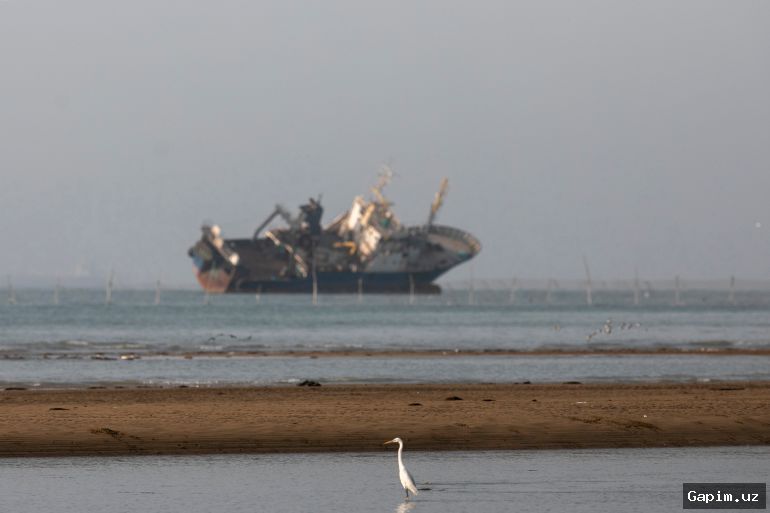
Reuters and The Associated Press, quoting unnamed US officials, reported that US forces shot down four Iranian drones and struck a ground control station for drones on Wednesday in Bandar Abbas. The strikes followed explosions in Bandar Abbas on Tuesday. Iran’s Ministry of Foreign Affairs accused Washington of violating the ceasefire through “aggressive acts” in Hormozgan province.
The semiofficial Iranian news agency Tasnim also reported that Iranian forces had fired on an “American airbase” in the region in response to the US attack. The escalation came after US President Donald Trump said during a cabinet meeting in Washington that “nobody’s going to control” the Strait of Hormuz.
Bandar Abbas, home to key Iranian naval forces, lies on Iran’s southern coast on the northern side of the Strait of Hormuz, the narrow waterway linking the Gulf to the Gulf of Oman. The city, with a population of over 526,000, sits roughly 60-70 km north of the strait’s narrowest point. About one-fifth of global oil and gas supplies transit through the strait during peacetime.
Bandar Abbas is the headquarters of both Iran’s conventional navy and the naval arm of the Islamic Revolutionary Guard Corps (IRGC). The IRGC navy relocated its headquarters from Tehran to Bandar Abbas to improve operational control along the Strait of Hormuz. Tehran still maintains a fleet of fast attack boats designed for “swarm” tactics, recently used against commercial ships without Iranian authorization.
Samir Puri, a visiting lecturer in war studies at King’s College London, told Al Jazeera the ceasefire has not yet formally collapsed despite the exchanges. He described the incidents as “limited” compared with pre-ceasefire strikes, characterizing them as “tit-for-tat military-to-military engagements.” Puri said the US is exploring whether it can physically deny Iran control of the Strait of Hormuz, while Iran wants to show it cannot be denied that capability.
Puri noted that diplomatic and military operations are unfolding simultaneously. “Trump and the US administration want to impose a victor’s peace on Iran. Iran’s reading of the same script is very different, and Iran probably wants to stretch out these negotiations for as long as possible without conceding,” he said.
Source: www.aljazeera.com