Colombians head to the polls on May 31 for the first round of a presidential election that could reshape the country's political landscape. Four years after electing its first left-wing president, Gustavo Petro, the nation now faces a choice between continuing his progressive agenda or returning to right-wing governance. Petro is constitutionally barred from seeking a second term.
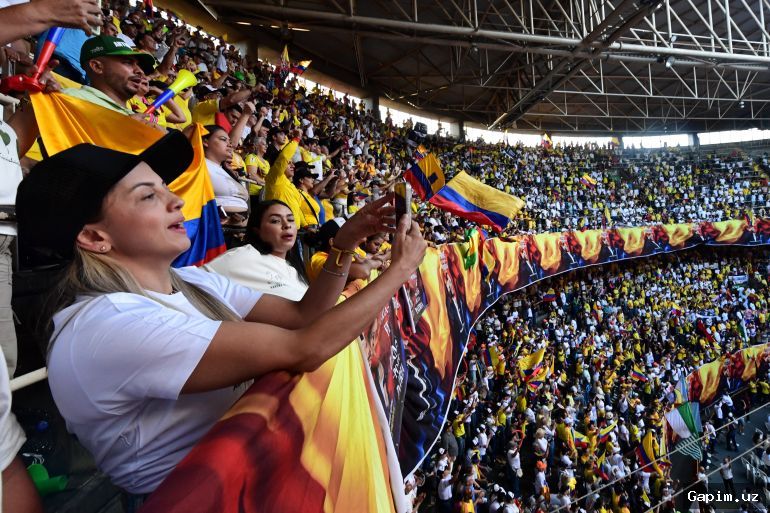
Fourteen candidates are vying for the presidency, representing left, right, and centrist factions. Security and the cost of living dominate the campaign, with crime and violence remaining persistent issues. Right-wing candidates are seen as having an advantage, but leftist Ivan Cepeda has unexpectedly topped recent polls.
A candidate must secure over 50% of the vote to win outright; otherwise, a runoff between the top two will be held on June 21. The election is being closely watched across Latin America, where leftist governments have recently lost ground to right-wing challengers in Bolivia, Chile, and Honduras.
Colombia's six-decade-long internal conflict is a central issue. In 2025, over 235,000 people were displaced by violence. Petro's 'Total Peace' policy, which emphasizes negotiations with armed groups, contrasts with the right's preference for a militarized approach backed by the United States.
Ivan Cepeda, a senator and the left's standard-bearer, promises continuity with Petro's policies, including social reforms and peace talks. His father, also a senator, was allegedly assassinated by government-backed paramilitaries. On the right, Abelardo de la Espriella represents the far right, advocating for bombing rebel camps and resuming coca fumigation, while Paloma Valencia offers a more moderate conservative platform focused on tax cuts and police expansion.
Polls show Cepeda leading with 33.4%, followed by de la Espriella at 30.9% and Valencia at 12.6%. However, runoff projections suggest Cepeda would lose to either right-wing candidate. Undecided voters, estimated at up to 28%, could prove decisive.
The campaign has been marred by violence: two staffers for de la Espriella were killed earlier this month, and candidate Miguel Uribe Turbay was fatally shot in 2025. All frontrunners travel with heavy security.
Source: www.aljazeera.com