African migrants in South Africa say they are living in fear after a series of marches calling for illegal immigrants to leave reignited long-held xenophobic sentiment. March & March, a campaign group at the forefront of recent protests, has given people living illegally in the country until June 30 to leave, without specifying consequences for non-compliance.
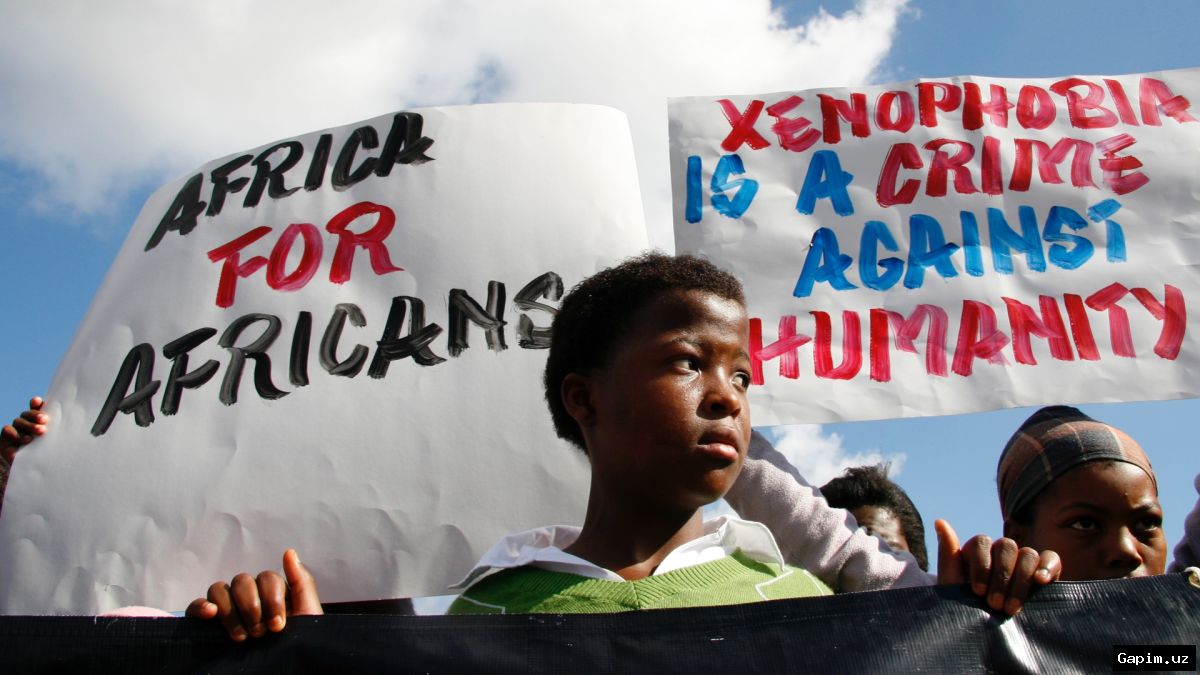
Mozambique said five of its citizens were killed in 'xenophobic attacks' at the end of May. South African police reported that two Mozambicans and one South African died during violence in Mossel Bay. About 100 people from Mozambique and Malawi sought shelter in Kleinmond town hall after an angry crowd told foreigners to leave an informal settlement.
Many migrants have asked their governments for help to return home. Ghana has arranged flights for several hundred citizens to leave South Africa. An Ethiopian entrepreneur who moved to South Africa in 2000 said: 'Every day and almost everyone I meet, they are in fear, extreme fear. The sad part is it's not because they are undocumented... But none of the legal documents will protect you from the violence.'
South Africa has long relied on migrant labor, especially in mines. Nelson Mandela welcomed African migrants after 1994, but endemic unemployment and inequality have fueled resentment. Violence has periodically erupted: 62 people died in 2008 riots, and at least five in 2015. The proportion of South Africans welcoming all immigrants fell from 25% in 2020 to 15% last year, while unemployment rose to 43.1%.
March & March leader Jacinta Ngobese-Zuma claims illegal immigration 'ranges from 15 million to about 30 million' and said 'South Africa is currently being invaded. South Africans have become refugees in their own country.' The group, founded in March 2025, has organized protests nationwide, funded by concerned citizens and social media contributions.
President Cyril Ramaphosa in a televised address promised a tougher crackdown on illegal immigration and border corruption, emphasizing that only state officials may demand proof of nationality. 'We will and must not allow groups to use the legitimate concerns of South Africans to destabilise our country through inciting lawlessness and violence,' he said.
Political analyst Otlotleng Mokgatle warned the issue is 'highly volatile' and could backfire on parties supporting anti-migrant marches. Meanwhile, migrants face huge uncertainty. Sandy Khumalo, a Zimbabwean restaurant owner with a residency permit, said: 'Of course I'm worried... Since 2009, I've been here, so this is my home. I'm so stressed.'
Source: www.theguardian.com