Global warming trends are leading to more frequent and intense heat waves. Cities around the world are working to mitigate extreme heat and adapt urban life to climate change.
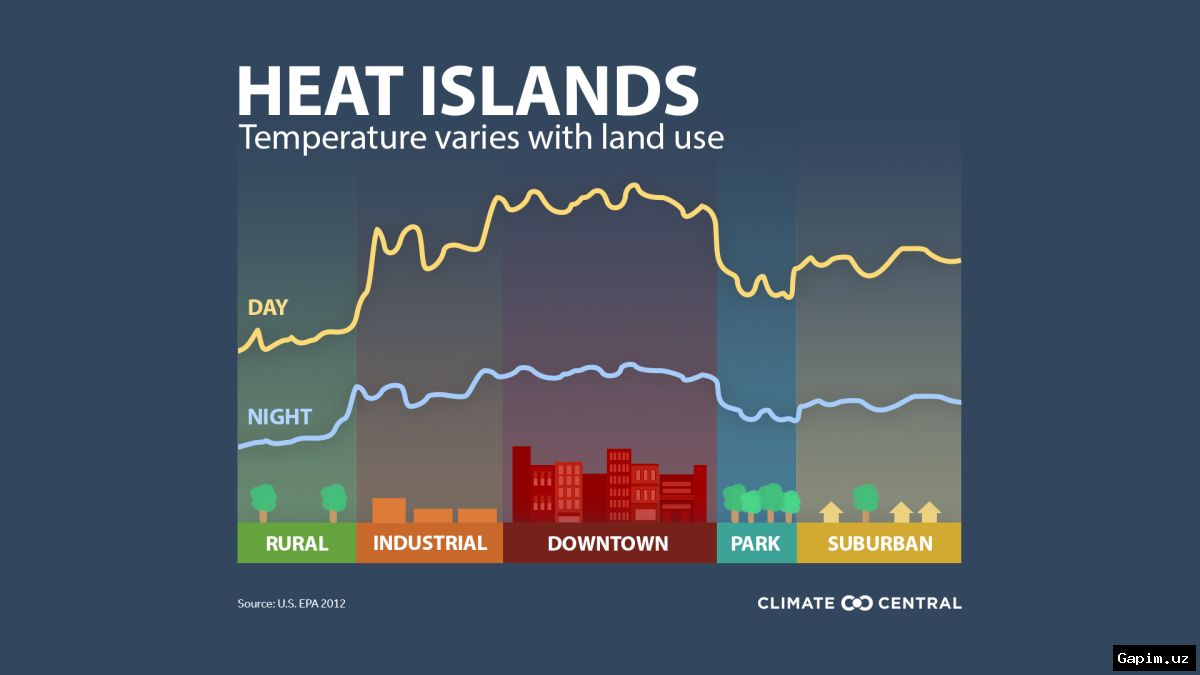
Cities are particularly vulnerable to extreme heat — days when sidewalks cook like stoves and sleep becomes a struggle. Densely built urban areas with paved roads and limited green spaces become heat islands that can be 10 to 15 degrees Celsius (up to 30 degrees Fahrenheit) hotter than surrounding rural areas. This extra heat strains critical infrastructure and harms public health; nearly half a million people die annually from heat-related causes, according to the UN.
Climate change caused by fossil fuel emissions will bring more frequent, intense, and earlier heat extremes in coming years. But cities, home to more than half the world's population, are working to remain livable by sharing adaptation and resilience strategies that will be discussed at preparatory UN climate talks in Bonn this week and next.
"Heat is a silent killer, but it is not an inevitable one," said Dr. Hans Henri P. Kluge, WHO Regional Director for Europe, presenting updated guidance on heat protection measures. "We have the tools. Now we must use them."
"Today, heat is no longer simply a local climatic characteristic. It has become an urban, public health, economic and socio-environmental challenge," said Leonardo Madeira Martins, sustainability leader for Teresina, Brazil. Although the tropical city is known for green spaces, temperatures now frequently exceed 40°C (104°F), disrupting "urban mobility, sleep quality, productivity and overall well-being."
Residents of Antalya, Turkey — host of the upcoming COP31 UN climate talks — have also noticed a change. "Antalya is a Mediterranean city where summers have always been hot; however, the nature of the heat has changed," said Melike Kireccibasi, a climate expert with the municipality. She told DW that heat waves are starting earlier, lasting longer, and becoming more frequent — a trend that could "intensify significantly toward mid-century," especially in the densely populated urban center.
Antalya aims to adapt buildings and help residents cope with heat, including air conditioning and reducing buildings' cooling needs. An EU-supported heat risk assessment using satellite data has identified the most exposed residents.
In Brazil, structural limitations and social inequality worsen the heat. In Teresina, not all families have continuous access to air conditioning, creating a public health challenge, especially in vulnerable communities. A UN-supported research project is studying how extreme heat affects pregnant women and their babies.
Fortaleza has launched a network of 10 weather stations providing real-time data on temperature, UV index, and humidity in areas most susceptible to urban heat. The city also plans to install air conditioning in public schools by 2028, powered partly by solar energy.
In Kilifi County, Kenya, government-backed clubs at boarding schools and colleges teach students how to plant and care for shade trees. The county also prioritizes decentralized solar power systems to cool critical facilities like health centers and schools.
Source: www.dw.com