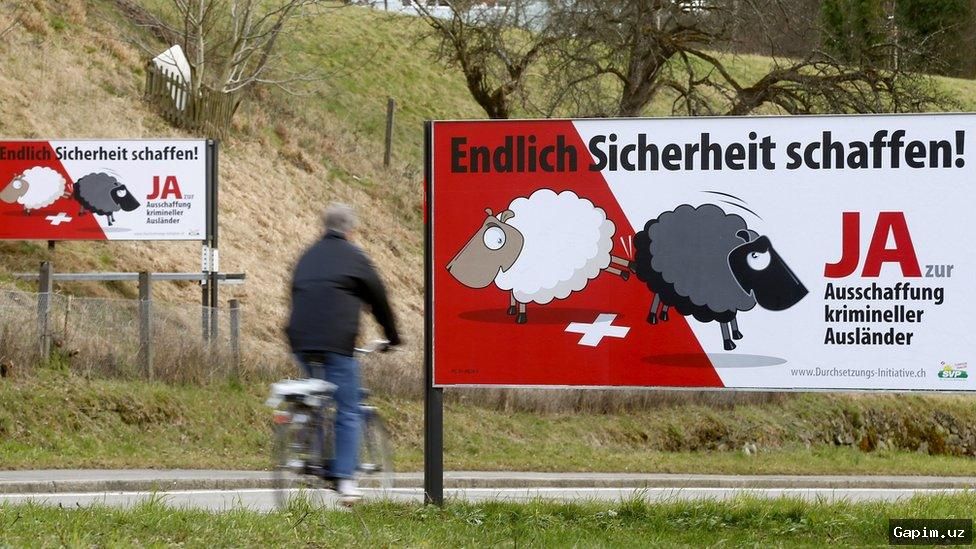
On June 14, Swiss voters will decide on a far-right initiative to cap the country's permanent population at 10 million after 2050. The 'No to 10 million' initiative, proposed by the Swiss People's Party (SVP), aims to curb future immigration and has failed once before, 12 years ago.
The economic implications are complex. Tobias Heidland from the Kiel Institute for the World Economy (IfW) warned that limiting immigration would spark widespread dissatisfaction among businesses, as many highly qualified professionals would choose not to move to Switzerland. Sabine Zinn from the German Institute for Economic Research (DIW) argued that a blanket cap is economically unsound, given demographic challenges and labor shortages across Europe, including Switzerland.
Wido Geis-Thöne from the German Economic Institute (IW) highlighted that unskilled labor shortages could also arise, as many EU nationals work in hospitality and construction. 'A 10 million limit would almost certainly cause significant harm,' he said, noting Switzerland's reliance on tourism.
Bloomberg reported that the referendum represents a milestone for the SVP in limiting ties with the EU and tightening immigration controls. Swiss think tank Demografik calculated that economic output could drop by up to 12% by century's end, with healthcare, hospitality, IT, and construction sectors hardest hit.
Could other countries follow suit? Geis-Thöne sees no risk for Germany, as EU membership prevents it from restricting free movement. However, Heidland warned that Germany is already looking to restrictive neighbors like Denmark. Zinn fears the referendum could send a signal beyond borders, encouraging far-right governments elsewhere to push for tighter controls.
Geis-Thöne noted that Germany might benefit if Swiss immigration becomes harder for German skilled workers, as they would stay and stabilize the local workforce. For Switzerland, however, approval could be disastrous, especially if it leads to a break with the EU—its largest export market, worth $23 trillion.
Source: www.dw.com