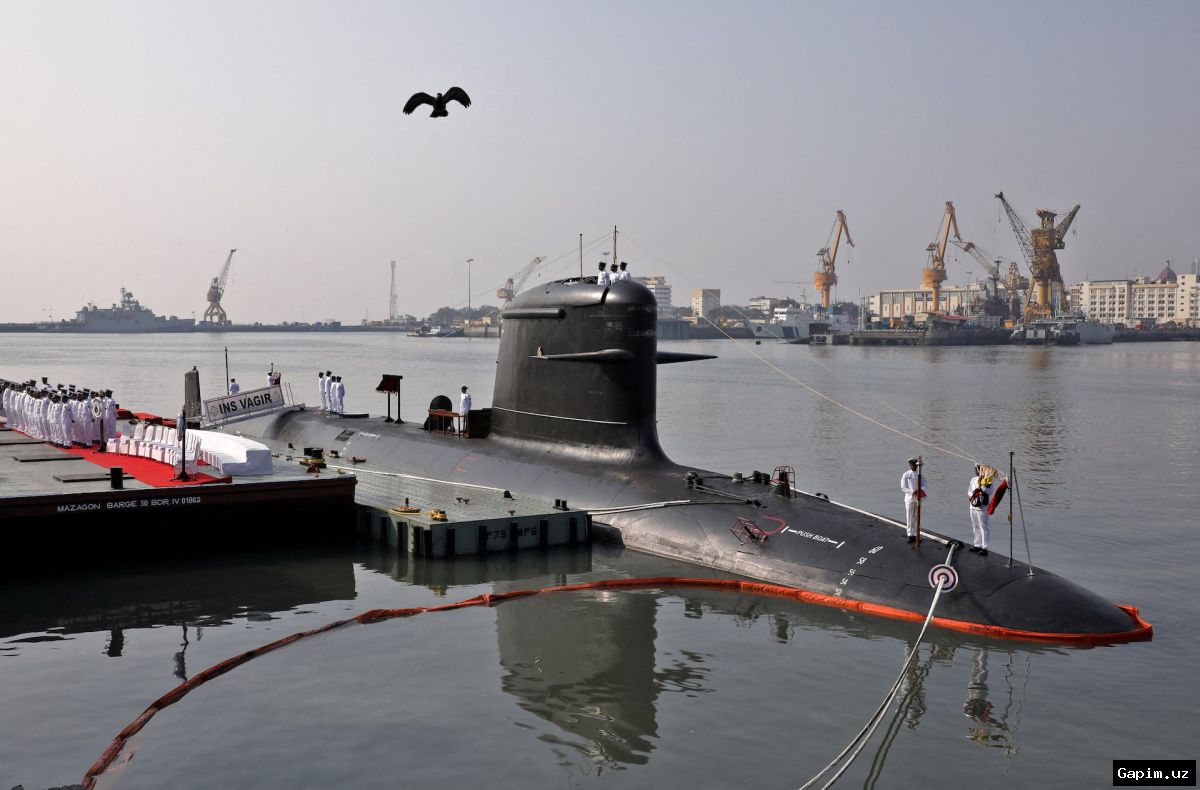
India is moving to bolster its navy with a new generation of German-designed submarines to be built locally, in a deal worth approximately $8 billion (€7 billion). German Defense Minister Boris Pistorius announced the agreement is expected to be finalized this summer, highlighting New Delhi's push for military self-reliance and Berlin's growing engagement in the Indo-Pacific.
The deal comes as the Indo-Pacific becomes an increasingly contested arena, with China's expanding naval reach and Pakistan's deepening military ties with Beijing sharpening India's sense of urgency. Submarines are seen as crucial for maintaining freedom of navigation and deterrence in the region.
The submarines in question are German Type 214 diesel-electric boats built by Thyssenkrupp Marine Systems (TKMS). They feature air-independent propulsion (AIP), allowing them to stay submerged for weeks without surfacing, making them harder to detect and ideal for patrols in crowded waters.
India's coastline stretches over 11,000 kilometers, and more than 90% of its trade by volume moves by sea. The Indian Ocean contains several strategic chokepoints, and any disruption to these routes threatens India's economy. Experts say the new submarines will significantly enhance India's undersea warfare capabilities.
German Defense Minister Pistorius visited India in 2023 for high-level talks. DW correspondent Nina Haase noted that Berlin is trying to wean New Delhi away from Russian arms, but India is hedging rather than breaking ties completely. India continues to operate Russian systems and signed a $238.5 million contract for Russian missiles in March 2026.
Under the deal, the Type 214 submarines will be built in Mumbai by Indian engineers trained by German specialists, involving technology transfer. However, details remain unclear, and experts caution that Germany may overestimate the political influence gained. The deal strengthens India's domestic defense industry but does not signal a shift to exclusive alignment with Germany or NATO.
Source: www.dw.com