In March, the United Nations Population Fund (UNFPA) held a seminar in Tashkent on “The role of Islamic religious values in protecting women's rights in Uzbekistan.” The event brought together professors from Egypt's Al-Azhar University, local imams and otinoyi (female religious leaders), mahalla representatives, and scholars from the International Islamic Academy of Uzbekistan.
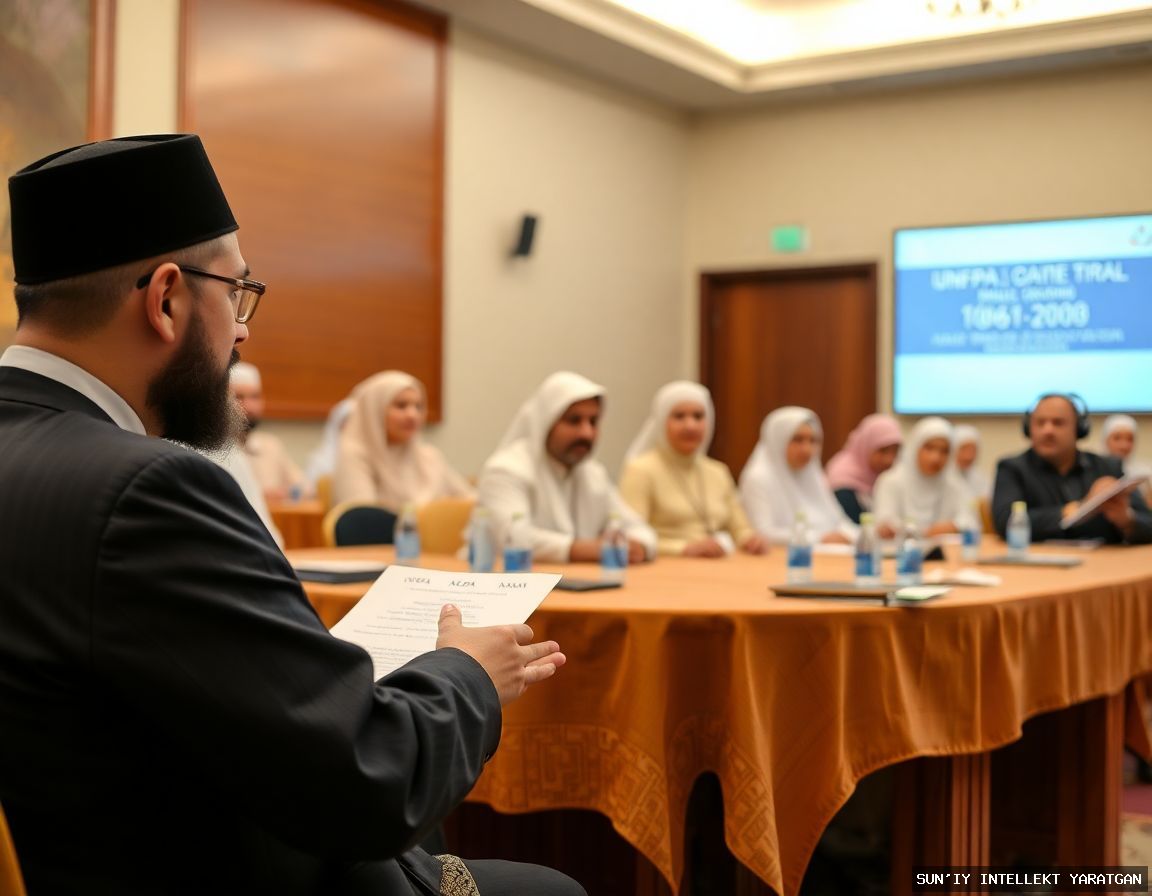
The second session focused on early marriage and marital issues. Participants posed questions to the Islamic scholars: Does Sharia prohibit women from seeing male doctors? How does Al-Azhar handle cases where a husband refuses to grant divorce (talaq)? Do parents have the right to force their daughters into marriage?
Professor Gamal Serur, director of the International Islamic Center for Population Studies and Research at Al-Azhar and a professor of obstetrics and gynecology, detailed the medical risks of early marriage. According to WHO and UNICEF, marriage before age 18 is considered early. Globally, about 12 million girls marry before 18 each year. In Uzbekistan, the rate is 3-4% (down from 17% in 1997).
Professor Serur listed consequences of early pregnancy: the uterus is not ready to carry a fetus, leading to miscarriages, premature birth, high blood pressure, plasma deficiency, and babies born with low weight, lung insufficiency, and neurological disorders. Infant mortality among mothers under 18 is five times higher than among older mothers.
Professor Mervat Mahmud, a biology professor at the same center, noted that 50% of girls in early marriages become pregnant in the first months. Pregnancy is difficult due to calcium and other deficiencies, causing severe vomiting. Labor is slow and complicated, resulting in genital infections and urinary incontinence. This leads to psychological stress, sometimes suicide.
Professor Serur cited maternal mortality statistics: in 2023, over 700 women died daily worldwide from pregnancy-related causes (one every two minutes). In Uzbekistan, the maternal mortality rate was 30.2 per 100,000 live births in 2020, dropping to 14.8 in 2025.
Social and economic risks were also discussed. Professor Serur said early marriage deprives girls of affection, hinders their ability to nurture children, forces them to drop out of school, and limits their labor market opportunities. “Men are also part of this problem, so they must contribute to the solution,” he added.
Professor Ibrahim Elhodhod, former president of Al-Azhar University, explained that Sharia does not set a specific marriage age, but Hanafi jurisprudence distinguishes between the age of puberty and the age of discretion (rushd). The minimum age for physical, mental, and spiritual maturity is set at 18. Al-Azhar's fatwa is based on medical and Sharia standards.
Professor Nigora Yusupova of the International Islamic Academy of Uzbekistan addressed the misinterpretation of the hadith “Marry as early as possible.” She said the term “ba’at” in the hadith means the ability to marry physically, spiritually, and morally. If a person is not ready morally and spiritually, marriage is not obligatory.
Professor Abdullah Elnagar, a member of the Al-Azhar Islamic Research Complex Council, emphasized that marriage must be based on equality, consent, and freedom. In marriages involving minors, the will of Allah is not fulfilled. He also responded to those who cite the Prophet's marriage to Aisha as justification for early marriage, stating that this was specific to the Prophet.
One imam raised the issue of talaq: husbands who migrate abroad disappear for 10-15 years without granting divorce. Professor Elhodhod explained the Egyptian experience: a woman can petition a qadi (judge), who may annul the marriage after investigation. This is called “talaq for harm.”
The seminar concluded with participants stressing the importance of integrating religious and medical approaches to prevent early marriage. UNFPA's permanent representative in Uzbekistan, Nigina Abaszade, praised the event.
Source: www.gazeta.uz