Four months after the US Supreme Court struck down President Donald Trump's use of emergency powers to wage a trade war, his administration has relaunched its tariff agenda under a new legal framework. On June 2, the US Trade Representative (USTR) announced it was invoking Section 301 of the Trade Act of 1974 to impose tariffs on 60 economies, including the European Union, effectively targeting more than 80 countries.
The USTR proposed tariffs of up to 12.5% on imports, arguing that these nations have failed to adequately prevent trade in goods produced with forced labor. The list includes both developing nations and US allies such as Britain, Canada, the EU, Japan, Australia, and New Zealand.
Analysts warn this renewed tariff push may drive countries away from the US and encourage them to seek trade deals among themselves. Indian trade lawyers Shantanu Singh and Vikram Naik noted: "US tariffs are pushing countries to expand trade quicker. The EU-Mercosur and EU-India deals are examples." The EU-Mercosur agreement, effective May 1, creates a trading zone of 700 million people, while the EU-India deal signed in January covers 2 billion people.
The previous tariff policy under the International Emergency Economic Powers Act (IEEPA) was struck down by the Supreme Court in February, which ruled Trump exceeded his authority. The next day, Trump imposed a temporary 10% global tariff, set to expire July 24.
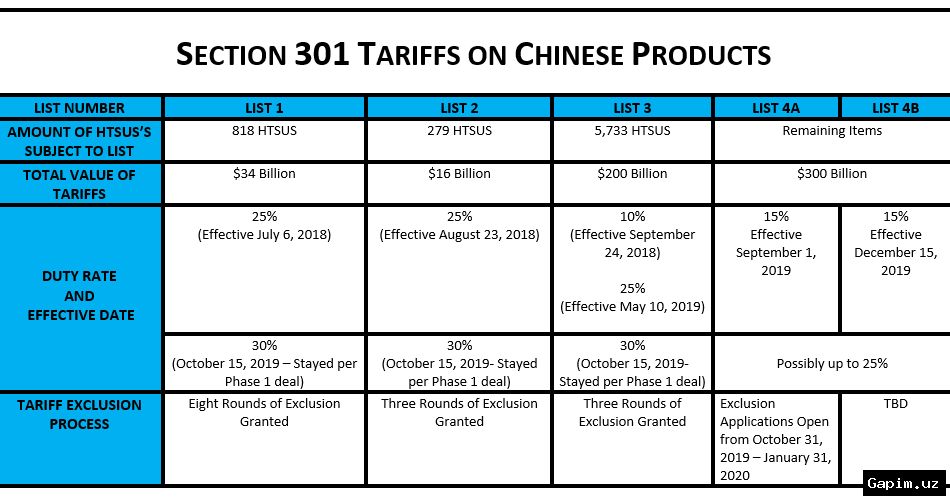
Section 301 allows the US to investigate foreign practices deemed "unjustifiable" or "discriminatory" and impose remedies. USTR Jamieson Greer said: "The failure of our trading partners to address forced labor imports creates an unlevel playing field for American workers."
The USTR opened investigations in March and concluded all 60 economies failed to enforce forced labor import bans. For 15 countries—including Argentina, Canada, the EU, and the UK—an additional 10% tariff is proposed. For the remaining 45—including Australia, China, India, Japan, and South Korea—a 12.5% surcharge is planned.
Trade experts say the new approach is designed to withstand legal challenges. Madeline Chalecki of the Atlantic Council noted: "Section 301 tariffs are much harder to change; they require legal record, public consultation, and formal action."
The EU has pushed back, calling the tariffs "unjustified." China denounced the unilateral measures under the "pretext of forced labor." India has taken a neutral stance, continuing trade deal negotiations with the US.
Ajay Srivastava of GTRI said the global impact may be limited, but the US itself will suffer: "More tariffs mean higher import costs, business uncertainty, and higher prices for consumers." Chalecki added that the policy could "accelerate the reorientation of global trade away from the US," as governments seek alternative partners.
Source: www.aljazeera.com