In April, African Union ministers gathered in Tangier, Morocco, to discuss artificial intelligence at a moment when governments across the continent are racing to develop AI strategies, attract investment and expand digital infrastructure.
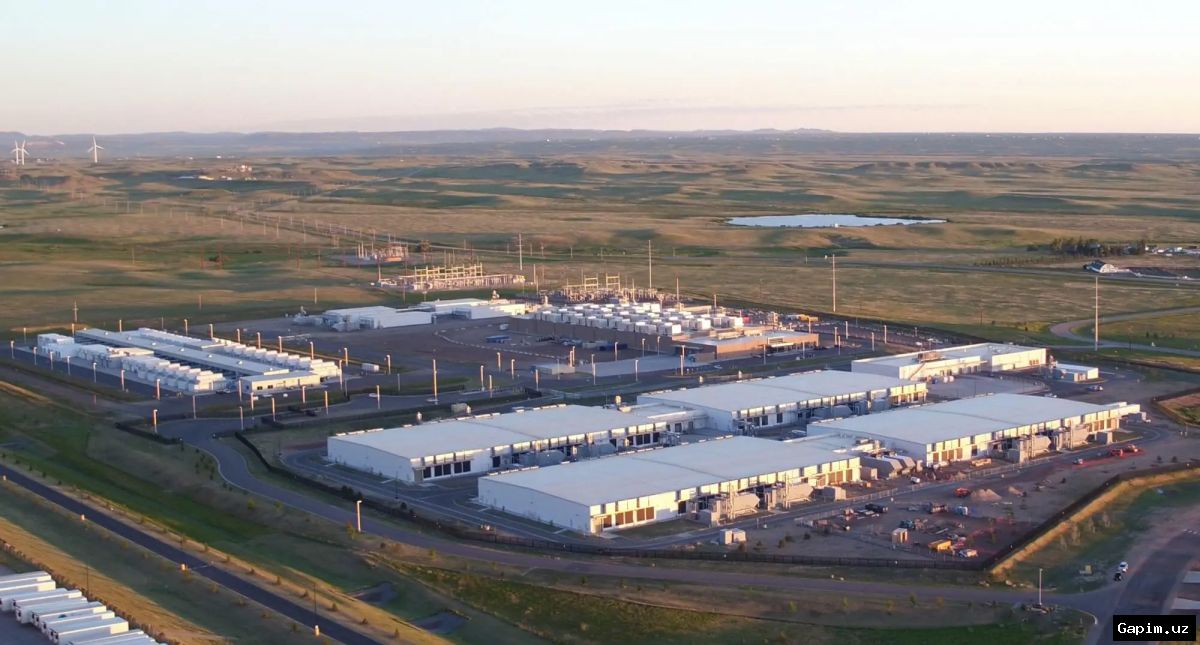
Beneath the enthusiasm, however, sits a more fundamental question. As foreign technology companies invest in data centres, cloud services and AI systems across Africa, how much control will African countries ultimately have over the infrastructure on which those technologies depend?
The debate reflects a broader shift in how policymakers are thinking about AI. For years, discussions focused largely on adoption: how governments, businesses and public services could use the technology. Increasingly, attention is turning to ownership, governance and the terms on which AI systems are developed and deployed.
Several governments have framed the issue in those terms. Nigeria, Kenya, Egypt and Ghana have all released national AI strategies in recent years that highlight the need to build local capacity and reduce dependence on foreign technology providers. Ghana’s national strategy, launched in April, describes AI as a “sovereign capability”. Forty-nine countries, along with the African Union, have endorsed the Africa Declaration on Artificial Intelligence, which calls for greater investment in African AI infrastructure, talent and innovation.
At the same time, translating ambition into policy has not always been straightforward. In South Africa, a draft national AI policy was withdrawn earlier this year after officials identified references that could not be verified and appeared to have been generated by AI tools, highlighting the practical challenges governments face in regulating rapidly evolving technologies.
The discussion is unfolding as global competition over AI intensifies. Major technology companies, cloud providers and governments are competing for access to data, computing power and new markets. For African countries, that competition may also create space to negotiate.
Priyal Singh, a geopolitical analyst at Signal Risk, told Al Jazeera that the fragmented nature of the global AI industry could strengthen that position. He pointed to regulatory tensions surrounding Starlink’s expansion in parts of Africa as an example of governments becoming more assertive in their dealings with global technology firms.
Yet leverage in the AI era is not only political. It is also infrastructural. Africa remains significantly underrepresented in the global digital economy’s physical backbone. Industry estimates suggest the continent accounts for less than one per cent of global data centre capacity, despite being home to roughly 18 per cent of the world’s population. Research by McKinsey has found that Africa’s five largest data centre markets combined have less capacity than France. Across much of the continent, unreliable electricity supply remains a major constraint on expansion.
One of the most closely watched projects has been a proposed $1bn data centre development involving Microsoft and Emirati technology company G42 in Kenya. The project drew attention after Kenyan President William Ruto highlighted the scale of its energy demands, warning that infrastructure of that size would require substantial additional power generation.
Sanusha Naidu, a senior research fellow at the Institute for Global Dialogue, told Al Jazeera that debates about diversification are often more complicated than they appear. She compared current AI infrastructure debates with earlier waves of foreign investment, noting that data centres are big consumers of water, impacting socioeconomic issues.
Joseph Asunka, chief executive of Afrobarometer, told Al Jazeera that the debate is still far removed from everyday citizens. “These negotiations should not just be conducted at the elite level and dumped on citizens,” he said. “If citizens do not trust their government’s actions in this space, it creates a trust gap, which could have negative implications for the adoption of fintech, e-commerce and e-government tools.”
The debate echoes older questions about economic sovereignty that have shaped African politics for decades. Independence-era leaders argued that political freedom meant little without control over economic resources. Today, similar questions are emerging around data, computing power and digital infrastructure.
Source: www.aljazeera.com