The death toll from the twin earthquakes in northwestern Venezuela has risen to 1,430, a top lawmaker said. National Assembly President Jorge Rodriguez told state television that another 3,200 people were injured and 3,100 left homeless by the disaster.
The United Nations estimated that almost seven million people may have been impacted. The International Organization for Migration (IOM) said "up to 6.76 million people could be affected," based on available population and damage data. The projections include up to two million people in Caracas alone.
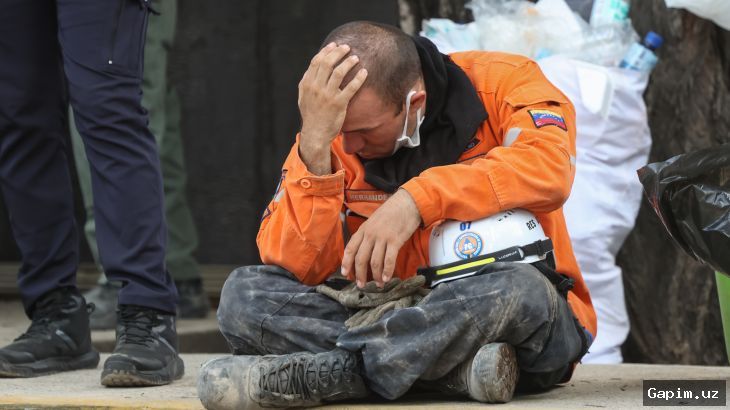
Rescue teams are racing against time to find survivors. In the hardest-hit city of La Guaira, an 18-day-old baby was found alive in the rubble after 32 hours. Social media footage showed the infant being rescued and later reunited with its mother, who was pulled out an hour later.
International search and rescue teams have arrived, with Venezuela's Vice Minister of Foreign Affairs Oliver Blanco reporting 17 flights carrying over 1,600 rescuers. An additional 25 flights are expected in the coming days. Teams from Mexico, Spain, Colombia, and the US are now working in the hardest-hit areas.
UN aid chief Tom Fletcher said more than 50,000 people are still missing. The UN has deployed 35 search and rescue teams, including 1,600 trained rescuers and over 100 dogs. "The priority is pulling as many people from the rubble, saving as many lives as we can," he said, noting the critical 48-72 hour window.
The Venezuelan government has restricted access to La Guaira state. Interior Minister Diosdado Cabello said a registration form is required to "prevent people who do not have any assigned tasks" from traveling there. In Caracas, residents booed interim leader Delcy Rodriguez, accusing the government of "political campaigning amid a tragedy."
A senior US military official, Marine Corps Maj. Gen. Kevin J. Jarrard, has arrived in Caracas to oversee US military support for earthquake relief. The US Southern Command (SOUTHCOM) said it will use aircraft to provide mobility services and assist search and rescue teams.
Dr. Annette Idler, an associate professor at Oxford University, said the earthquake is "not only a humanitarian catastrophe; it is also a geopolitical stress test that will shape Venezuela's political future and its relationship with the United States." She noted that the key question is whether Venezuela's interim government will gain or lose legitimacy and confidence.
Source: www.dw.com