Gulf countries are likely to accelerate the push to diversify their security partnerships after the United States-Israel war on Iran, analysts say, as the region grapples with the lasting impact of the conflict.
As Tehran and Washington hold talks towards a lasting agreement, Gulf Cooperation Council (GCC) nations – which came under Iranian attack during the war – are expanding their relationships amid the uncertainty.
Even before the war, Saudi Arabia signed a defence pact with Pakistan, an alliance that could expand to other countries in the region. For years, Gulf states have been buying defence systems from some European countries, while maintaining friendly relations with Russia and China – an approach that will likely be cemented by the conflict, experts say.
Anna Jacobs Khalaf, a non-resident fellow at the Arab Gulf States Institute, stressed that seeking new security partners is not aimed at replacing the US regime. “The focus for countries like Saudi Arabia is the regional balance of power and pushing back on both Iran and Israel,” Jacobs Khalaf told Al Jazeera.
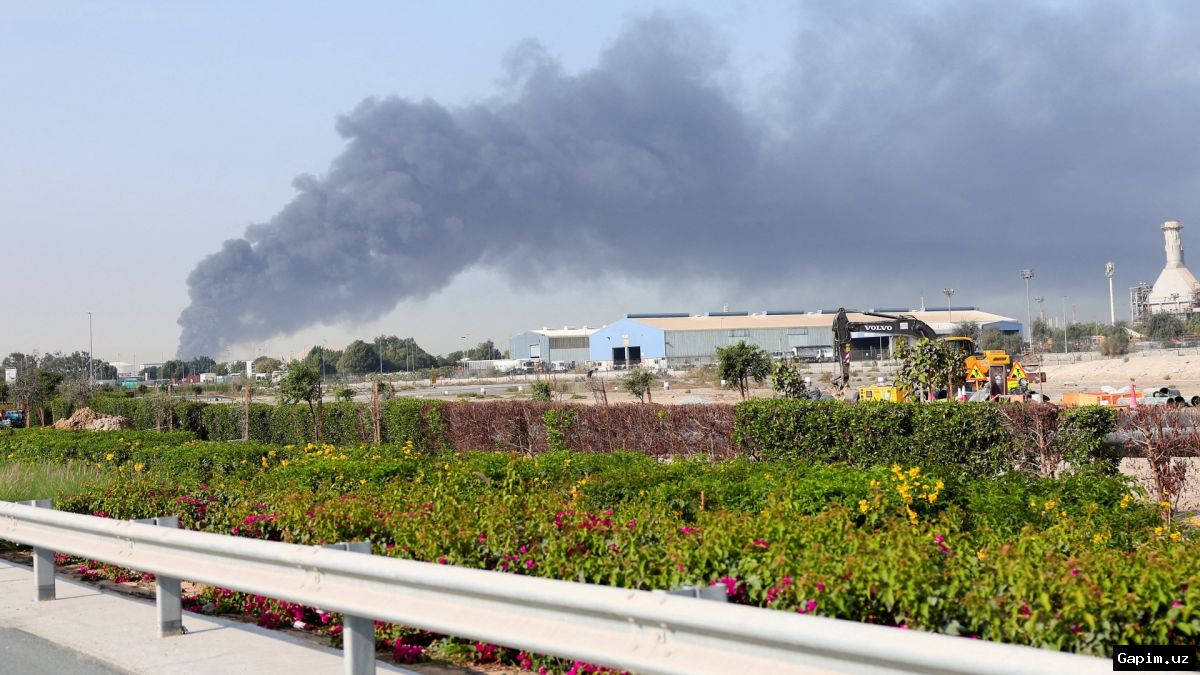
Since the war broke out on February 28, Iranian attacks have targeted military bases hosting US troops as well as some civilian sites, including airports, energy facilities and hotels in some Gulf countries. Even after Tehran and Washington reached a memorandum of understanding (MoU) to end the war earlier this month, the Iranian military launched missiles and drones at targets in Bahrain and Kuwait in skirmishes with the US.
Besides Iran, many Gulf countries view Israel’s expansionist policies and military campaigns as a threat as well, analysts say. Last year, Israel bombed the Qatari capital Doha in an attempt to kill Hamas leaders during US-backed Gaza ceasefire mediations. President Donald Trump said he was “very unhappy” with the strikes on Qatar.
Jacobs Khalaf said the decision by the US and Israel to attack Iran and Tehran’s retaliation against the Arabian Peninsula created an “unprecedented security crisis” for GCC members. “The Iran war is making some Gulf states question the value of the US as a security guarantor,” she told Al Jazeera.
Annelle Sheline, a research fellow at the Quincy Institute for Responsible Statecraft, also said that GCC countries will likely look to “diversify” their security alliances and deepen ties with China, Turkiye and Europe. She added that US forces in the region not only proved “unreliable” in preventing Iran’s attacks, but “actually, the presence of the US military in Gulf countries had the opposite of a deterrent effect.”
Despite the anger over the Iranian attacks, Gulf countries have kept lines of communication open with Tehran, even at the security level. Investments may prove a more effective deterrent than weapons, some experts suggest. US Vice President JD Vance alluded to that strategy, noting that the UAE is having conversations with Iran about economic incentives.
The US regime itself appears to be at a crossroads with its posture in the region. Last year, Trump’s National Security Strategy emphasized that Washington no longer views the Middle East as a geopolitical priority. At the same time, Israel has refused to abide by the MoU’s demands for a regional ceasefire.
Sheline said if the ceasefire deal leads to a comprehensive agreement with Iran, the US may finally be able to step away from the Middle East, but Israel may act as a spoiler to keep tensions going. “The big question mark is Israel,” she said.
For the Gulf, Israel’s militarism has been seen increasingly as a threat to the entire Middle East. “Israel’s destruction in Gaza since October 7, its entrenching and expanding occupation of Palestinian lands and its attacks on both Lebanon and Syrian territory are hugely threatening and unacceptable to all the Gulf states,” said Jacobs Khalaf.
Source: www.aljazeera.com