Before the South Africa-Czechia match at the ongoing FIFA World Cup, South Africa's captain Ronwen Williams responded directly to online attacks against the players and the team. The criticism, primarily from other Africans, was directed towards South Africa's anti-immigrant and xenophobic approach to residents from other African countries.
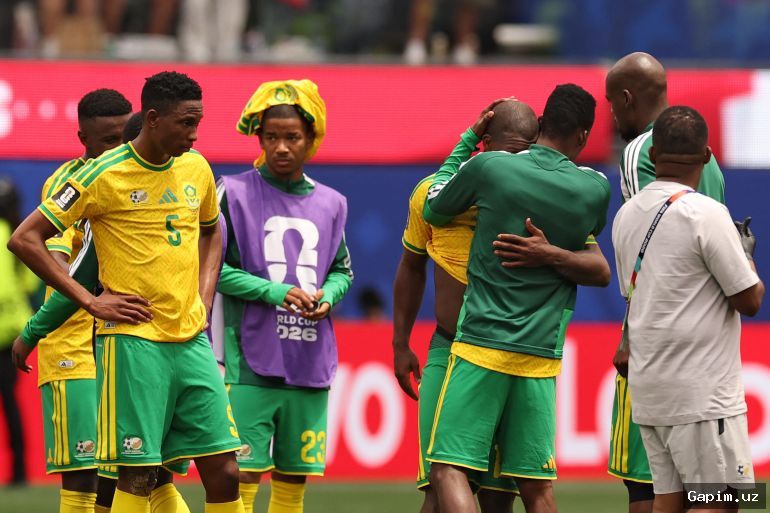
Williams said he hoped football could unite players and that they should “enjoy and have a wonderful time, and we leave politics to the politicians”. The incident reinforced the growing conditionality that marks African support for African teams, a shift that has become more visible in recent years.
Pan-African solidarity has long been a feature of previous sporting tournaments. Only a handful of nations participate in global competitions, and even fewer are competitive. That is why Africans have embraced previous deep tournament runs, from Cameroon (1990), Senegal (2002) and Ghana (2010) making the quarterfinals, to Morocco becoming the first African team to reach the semifinals in 2022.
But the 2026 World Cup, where a record 10 African nations are participating, has shown the limits of this solidarity and the growing willingness of fans to judge teams through politics. The continent went on to enjoy its most successful group stage on record, with nine of the 10 African sides advancing to the round of 32.
South Africa has long been a symbol of African pride, from its efforts at post-apartheid reconciliation to its successful hosting of the first senior men's World Cup on African soil in 2010. But it has also struggled to reconcile that legacy with waves of xenophobic violence directed at African migrants within the country. Movements like Operation Dudula have mobilised anti-immigrant sentiment under the banner of economic frustration.
Morocco, which opened its campaign with a 1-1 draw against five-time champions Brazil, has seen its continental relationship change since its extraordinary semifinal run in 2022. Africans across the continent rallied behind the Atlas Lions, but in the years since, Morocco's contested position on Western Sahara and documented anti-Black racism towards sub-Saharan Africans have complicated that relationship.
The World Cup in the United States, Mexico and Canada has already been dogged by the domestic politics of the US, one of the host nations, especially a skewed travel policy that appears to have disproportionately targeted Africans. The most notable case was Omar Artan, a Somali referee who was held up at Miami for 11 hours and then deported because of “vetting concerns”.
African football has always needed to “defend” its position and its viability. All 10 African participants joined other nations in issuing a joint statement pushing back against comments by Europe's football chief Aleksander Ceferin that the expanded tournament would lead to a “lot of matches that are completely uninteresting”.
Football is the ideal lens for this transformation because international tournaments afford the space to explore questions that ordinarily could easily be submerged. African unity and pan-African solidarity are still alive; they have merely evolved. This solidarity is becoming more reciprocal: not restricted to an elite consensus among governments, but rooted in the feelings and sentiments of people.
Source: www.aljazeera.com