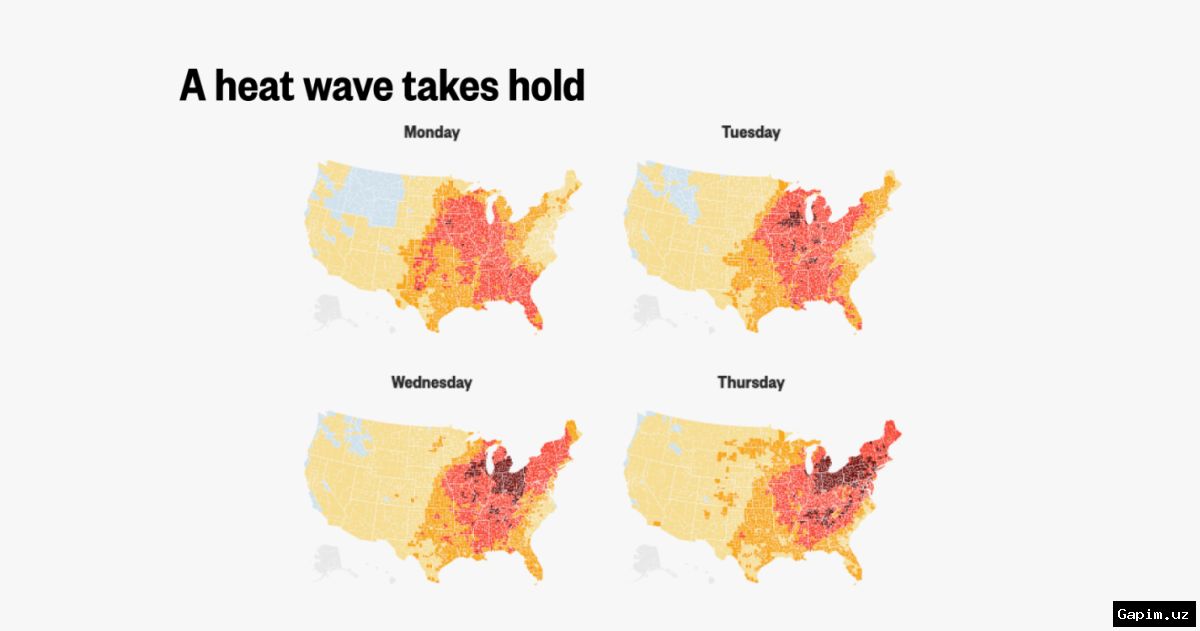
As the July 4 holiday approaches, large parts of the central and eastern United States are under heat warnings, with temperatures expected to reach 100-115°F (37.8-46.1°C). This comes just a week after Europe experienced record-breaking temperatures.
Late June saw unprecedented heat in France, Spain, the UK, Belgium, the Netherlands, Switzerland, and Germany. Germany's national weather service DWD reported that the country had never experienced such intense heat for such a prolonged period so early in the year.
Experts predict more frequent and intense heat waves in the future. But can the human body adapt? Claudia Traidl-Hoffmann, director of the Institute of Environmental Medicine at the University of Augsburg, explains that adaptation takes centuries, not years.
When outdoor temperatures exceed 23°C (73.4°F), the body activates cooling mechanisms: blood vessels dilate and sweating increases. If these fail, consequences range from cardiovascular disease to multiple organ failure. At 42°C (107.6°F), severe cell damage and death can occur without immediate treatment.
Heat also affects the lungs, accelerating inflammatory processes and increasing vulnerability to infections. Traidl-Hoffmann advises patients to prepare for heat as early as January by adjusting medications and treating conditions like allergies and eczema.
During heat waves, she recommends drinking plenty of water, eating light plant-based meals, avoiding cigarettes and alcohol, and getting enough sleep. While young, fit individuals have greater tolerance, the rapid increase in hot days exceeds the adaptive capacity of both ecosystems and humans.
Source: www.dw.com