France is in a state of nervous excitement as it awaits Tuesday's court verdict that will determine whether nationalist frontrunner Marine Le Pen can stand in next year's presidential election. Rarely in a judicial decision in France have the political stakes been higher.
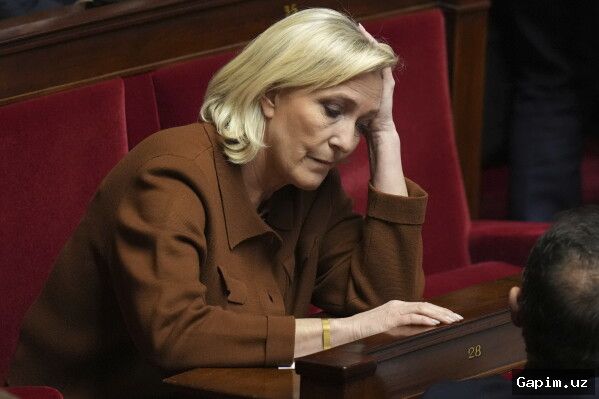
Latest opinion polls suggest that the 57-year-old leader of the National Rally (RN) is well-positioned to become France's next head of state. But if the appeal court in Paris follows last year's initial verdict in her trial for misuse of European parliamentary funds, then Le Pen will be declared ineligible for public office and her political hopes will be in ruins.
The RN's candidate in the April-May election would automatically become Le Pen's much younger colleague, 30-year-old Jordan Bardella. Polls currently indicate that he too would be favourite in the elections – but his youth and inexperience could start to show once campaigning gets underway.
“Because of the presidential election, the decision you must render is of dizzying significance,” Le Pen's lawyer Rudolphe Bosselut told the court in his summing-up in February. After deliberating for four months, the court will rule whether to confirm, overturn or adapt the verdict and sentence handed down on Le Pen in March 2025.
In that first trial, the RN leader was found to have knowingly presided over a system in which RN staffers in Paris posed as EU parliamentary assistants in Brussels and Strasbourg to be paid out of EU funds. The party at the time was chronically short of money.
If the court follows the state advocate, then Le Pen will clearly be out of the presidential race. In the unlikely event she is acquitted, she will equally clearly be in the race. But what has French legal minds racing is the possibility of an intermediate sentence, such as a two-year ineligibility, which could allow her to stand if it ends before the election.
However, if the court rules that she must also wear an electronic tag for a year, then that – Le Pen herself says – would make her candidature impossible. “A candidate needs total freedom of movement,” she said. “Can you imagine having to ask permission every time to go to a meeting or a market?”
Another imponderable is recourse to the highest court of appeal, the Cour de Cassation. If on Tuesday she is found guilty but authorised to run, it would not be in her interest to appeal, but the prosecution could, potentially suspending her eligibility again.
All these uncertainties have led some to speculate whether Le Pen has already resigned herself to not running and to handing over the campaign to Bardella. Speaking in a French television interview, she appeared almost content at the prospect: “Whatever happens, I'll still be alive. Whatever happens, I will continue the fight for my ideas.”
However, there is another school of thought that the judges are not impervious to the political importance of their decision and would therefore be reluctant to deprive the electorate of so popular a candidate as Le Pen. In truth, no-one knows how the verdict will fall. A Le Pen candidacy is not the same as a Bardella candidacy, as they represent different sensibilities within the nationalist camp.
Le Pen has always declared herself to be “neither left nor right” and her appeal is strongest among the old working class. Bardella leans more to the economic liberalism of the traditional right. Party insiders say the two are “complementary”, but the passing of power from the seasoned warrior Le Pen to the untested Bardella would be a step into the unknown.
Source: www.bbc.co.uk