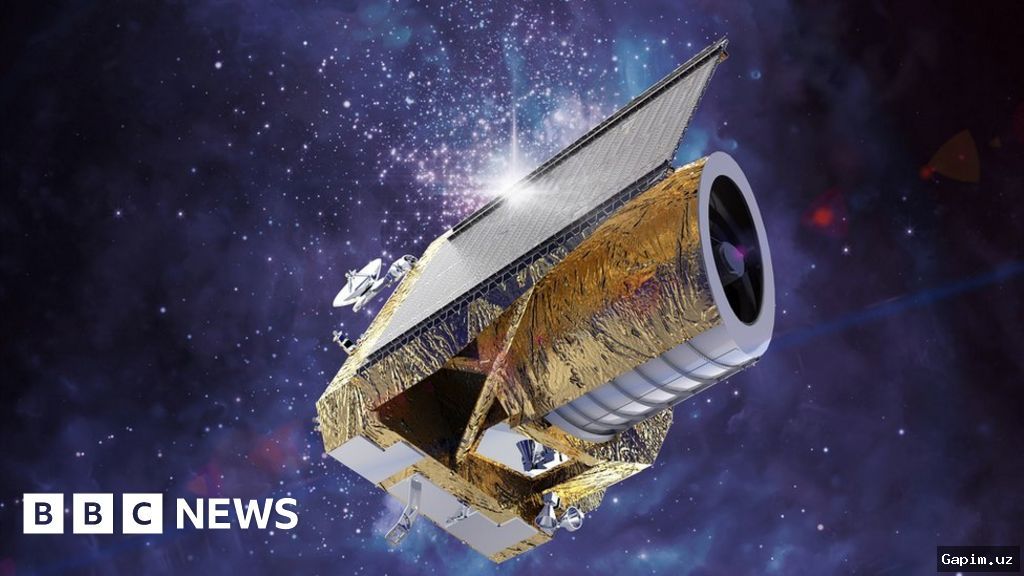
The European Space Agency's Euclid space telescope, launched in 2024 to map the universe, has released images of two of the most ancient quasars ever located. They are among 31 quasars dating back to when the universe was just 670 million years old—within the first 5% of its current age.
Lead author Daming Yang stated, "Before, we could only find a handful of the very brightest ancient quasars, but Euclid lets us search far more efficiently across huge areas of the night sky to capture much fainter light. It's a unique tool for quasar hunting."
Quasars are primordial light sources that help astronomers understand early galaxy formation. Their distance and motion are measured by redshift, where light stretches toward the red end of the spectrum as the universe expands.
ESA Research Fellow Antonio La Marca noted, "This finding more than doubles the number of quasars we know of that are so ancient." While it took astronomers over a decade to discover the first 10 quasars at redshift 7 or above, Euclid has found more than that in a single year of operation.
Source: www.dw.com