Cuban Foreign Minister Bruno Rodriguez denounced the United States' 'multi-dimensional, non-conventional warfare' against the island during a UN General Assembly debate, calling it a 'ruthless crime' that has lasted nearly seven decades and intensified in the last seven months. He described the embargo as 'collective punishment' of the Cuban people.
Rodriguez stated that the damage caused by the embargo from March 2025 to February 2026 reached a record $8 billion, a 7% increase from the previous year. However, this figure does not include the 'extreme impact' of the fuel blockade imposed by the US in February.
Many regional blocs, including African and Caribbean nations, expressed support for Cuba and condemned the US blockade. Since 1992, the General Assembly has annually passed a non-binding resolution calling for the end of the embargo by a large majority.
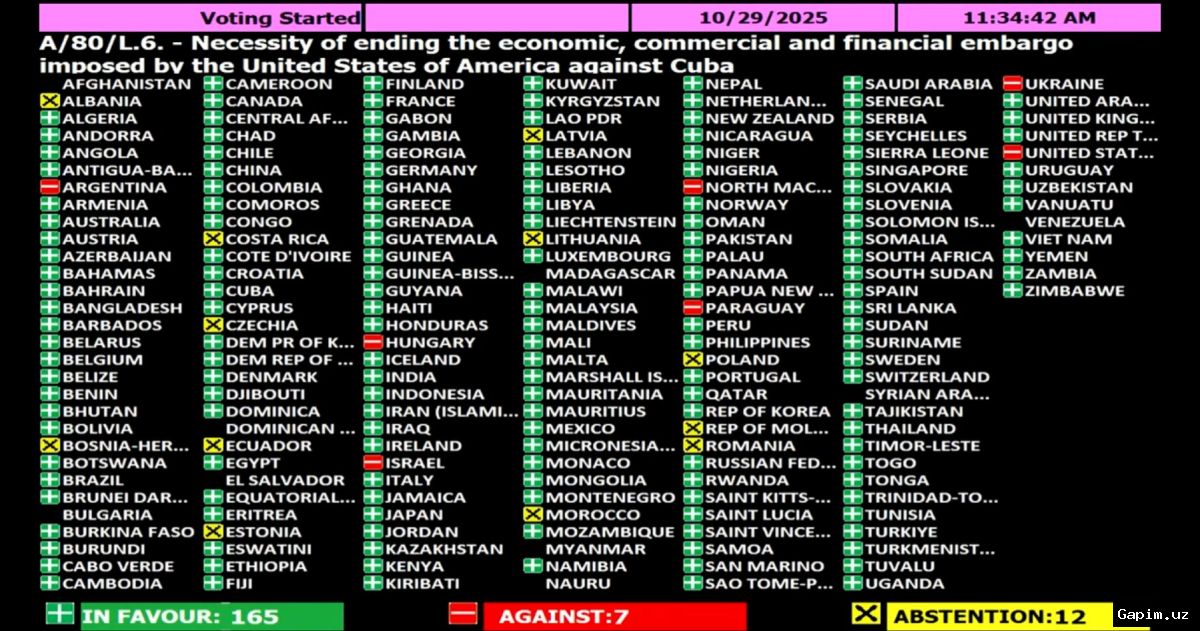
Support weakened slightly last October, with 165 votes in favor (down from 187 the year before), seven against, and 12 abstentions. Tuesday's vote on holding the debate signaled further erosion: 136 in favor, nine against, and 30 abstentions, including traditional supporters Germany and Canada.
US Ambassador Mike Waltz insisted from the podium, 'There is no American blockade. The only embargo in Cuba is the guillotine the regime keeps over the heads of its people.' Rodriguez countered that diplomatic talks between Havana and Washington have made 'no progress' and will likely remain stalled as long as US officials treat Cuba as 'a vanquished or conquered adversary, a colonial possession.'
Some speakers, while deploring US policy, also pointed to Havana's responsibilities. EU Ambassador Stavros Lambrinidis stated that 'the dire situation of the Cuban people is not only due to the embargo' and called for 'meaningful political and economic reforms,' including human rights, while condemning Havana's alignment with Moscow in Russia's war on Ukraine.
Al Jazeera's Gabriel Elizondo reported that the contentious exchanges at the UN highlight deep tensions between Havana and Washington. Cuba is experiencing severe power cuts due to the US oil blockade, imposed by President Donald Trump in January. Only one Russian oil tanker has reached Cuba since then, leaving Soviet-era power plants short of fuel. Food, drinking water, and medicine are also in critically short supply, with the UN warning of a humanitarian emergency.
Source: www.aljazeera.com