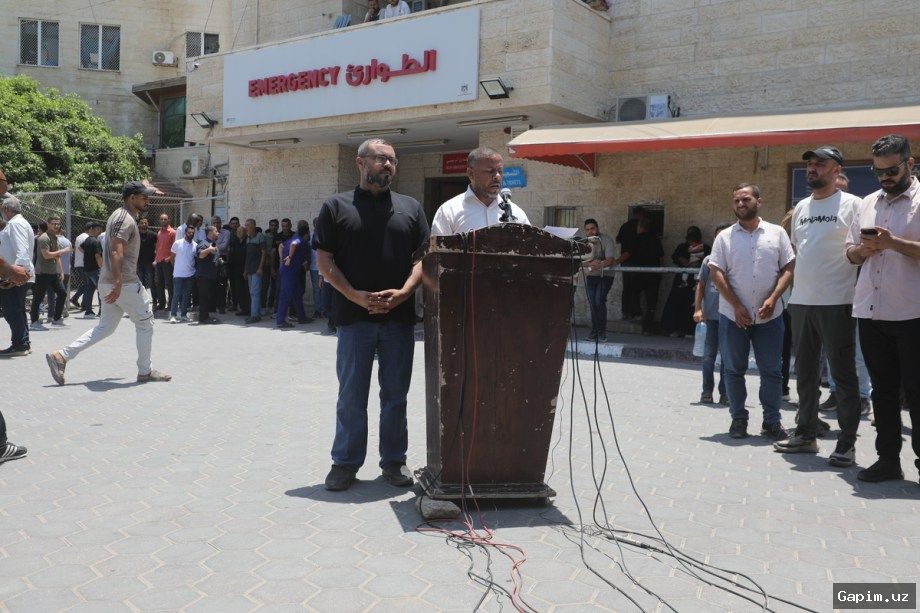
Early this week, Hamas, the militant group controlling the Gaza Strip, announced it would dissolve its government and hand over administrative authority after nearly two decades in power. The move is intended to pave the way for the National Committee for the Administration of Gaza (NCAG), a technocratic body set to take over civilian administration as part of the US-brokered peace plan from October 2025.
Israeli Foreign Minister Gideon Saar immediately reacted with skepticism, stating that as long as Hamas retains its weapons, any civilian government will ultimately act according to Hamas's directives. He reiterated that the complete disarmament of Hamas and the demilitarization of the Gaza Strip remain prerequisites for political reorganization.
Many observers see this step as neither mere symbolism nor a genuine relinquishment of power, but rather an attempt to revive the political process, which has been stalled for months, without committing to disarmament just yet.
Simon Wolfgang Fuchs, an Islamic studies scholar at the Hebrew University of Jerusalem, emphasized that the decisive factor is not the formal dissolution of the Hamas government but its political message. He noted that Hamas deliberately refrained from hostile displays, seeking to convey the impression that it adheres to the US peace plan and is prepared to move forward.
Under the peace plan, the technocratic transitional administration was supposed to have begun its work, and Israel was supposed to have gradually withdrawn its troops. However, Fuchs pointed out that the opposite has occurred: Israel now has more control over Gaza than it did a few months ago.
The Washington Institute noted as early as February that the transfer of civilian administration to a technocratic government was part of the US plan. The Guardian quoted experts saying Hamas wants to deprive Israel of the argument that reconstruction is failing due to its rule while increasing political pressure on Israel and the US.
Nevertheless, significant doubts remain. Hamas has declared its willingness to hand over civilian administration but has not addressed its weapons. According to the Security Council Report, the Board of Peace's roadmap calls for Hamas to relinquish all military, police, and administrative functions.
Fuchs considers the military issue the decisive litmus test. He suggests Washington may currently prioritize establishing a civilian administration over immediate disarmament, which explains Israeli skepticism. There is concern that Hamas may postpone the military question indefinitely.
So far, the announced transfer has had virtually no practical consequences. The transitional government members remain outside Gaza; there is a lack of funds, personnel, and security forces; and the international stabilization force exists only on paper. Ministries continue their work for now.
Fuchs stated that the dissolution of the administration is primarily symbolic, so everything remains the same. The Jerusalem Post speculated that Hamas could dissolve its government and step back from direct responsibility while retaining influence behind the scenes.
Whether Hamas's statement will usher in a political breakthrough remains to be seen. While it could restart the stalled process, it does not resolve the conflict. As long as the transitional administration cannot begin its work and there is no progress on security, disarmament, or reconstruction, the move is likely to remain a political signal with an uncertain outcome.
Source: www.dw.com