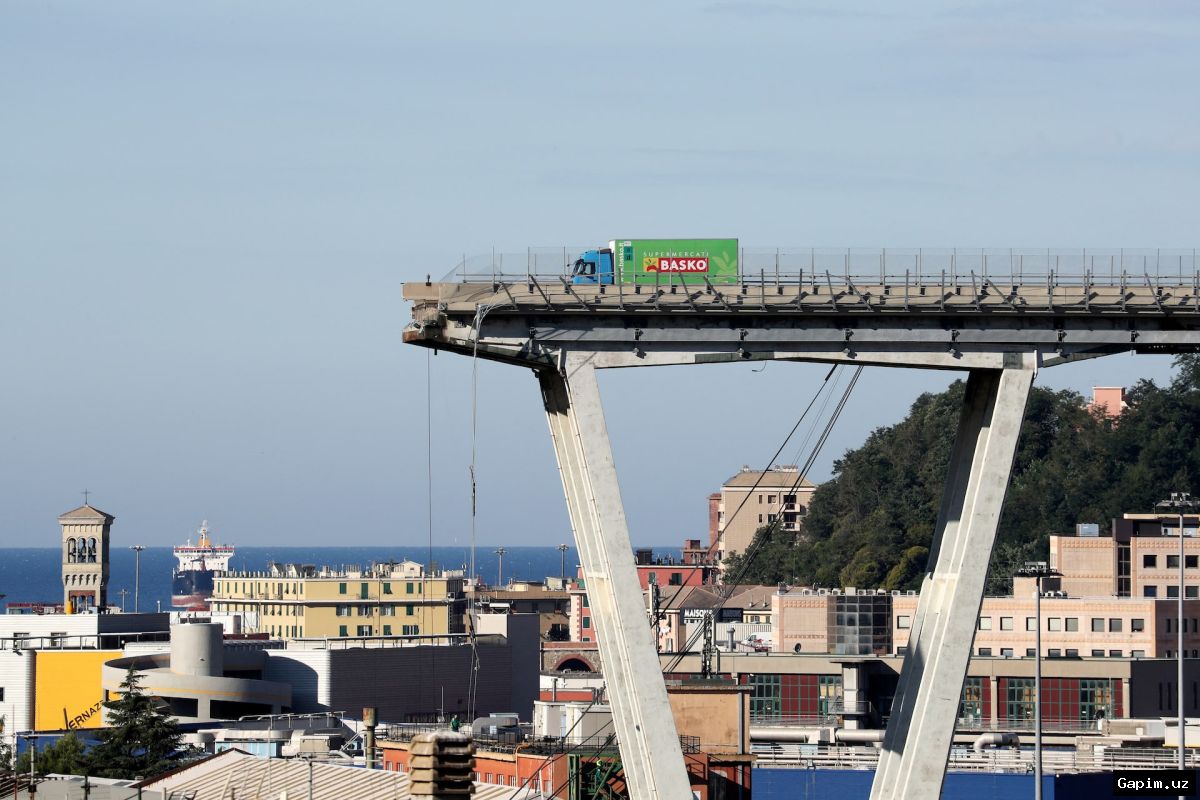
On the morning of August 14, 2018, Claudia Possetti, 47, was in the car with her new husband Andrea and her two children, aged 12 and 16. The couple had just married and were driving to the Italian Riviera for a holiday when the Morandi bridge in Genoa collapsed beneath them. Their car was among those that plunged from the viaduct onto railway tracks below, killing all four — one of Italy's worst infrastructure disasters in decades.
Nearly eight years on, Claudia's sister, Egle Possetti, will be among relatives gathering in a Genoa courtroom on Thursday to hear a first-instance verdict in the trial over the collapse. "I feel anxious, worried, very emotional," Egle told the BBC. "After so many years, so many hearings, we may be able to see some light. It would be so important for us to know if someone's been held accountable."
The bridge came down during a summer storm at the height of the holiday season, sending cars and lorries plunging to the ground. The collapse triggered years of investigation into how the viaduct, built in the 1960s and part of a key route linking Genoa to the French border, had been allowed to fail.
Fifty-seven people have stood trial since July 2022. Among them are former executives of toll road operator Autostrade per l'Italia and its parent company Atlantia, engineers from maintenance firm Spea, and former transport ministry officials. Charges range from multiple manslaughter to falsifying documents. All defendants deny wrongdoing.
At the heart of the Morandi bridge case is a basic disagreement over why the bridge fell. Prosecutors say maintenance was repeatedly delayed, even as warning signs were ignored, while profits kept flowing. Defense lawyers argue the real cause was a design flaw in the specific cable that failed, and that no maintenance regime could have prevented it as it was encased in concrete.
The trial has run for almost four years and 284 hearings. Francesco Pinto, the former deputy chief prosecutor who worked on the case, has described the length of the proceedings as symptomatic of deeper problems in Italy's justice system. Defense lawyer Giovanni Paolo Accinni points instead to the prosecution's lengthy pre-trial technical investigations.
The collapse also prompted a fierce and ongoing debate about the condition of Italy's infrastructure, highlighting concerns over aging structures and long-standing maintenance issues. Families of the victims are calling for answers after so many years of uncertainty.
On the eve of the verdict, Autostrade per l'Italia issued its first apology over the disaster, in an open letter from CEO Arrigo Giana published in two Italian newspapers. Giana wrote that he had long wondered why the company never apologized at the time, calling it a "further, incomprehensible wound." The old viaduct's remains were blown up in early 2019, and a new bridge designed by Genoa-born architect Renzo Piano opened in August 2020.
Source: www.bbc.co.uk