️ The General Synod of the Church of England has committed itself to engaging seriously with major statements and appeals by Palestinian Christians, including Kairos Palestine II, a document co-authored by the writer. It also called for a review of Church investments in light of the International Court of Justice’s Advisory Opinion on the Occupied Palestinian Territory and urged renewed efforts to achieve a just and lasting peace for Palestinians and Israelis.
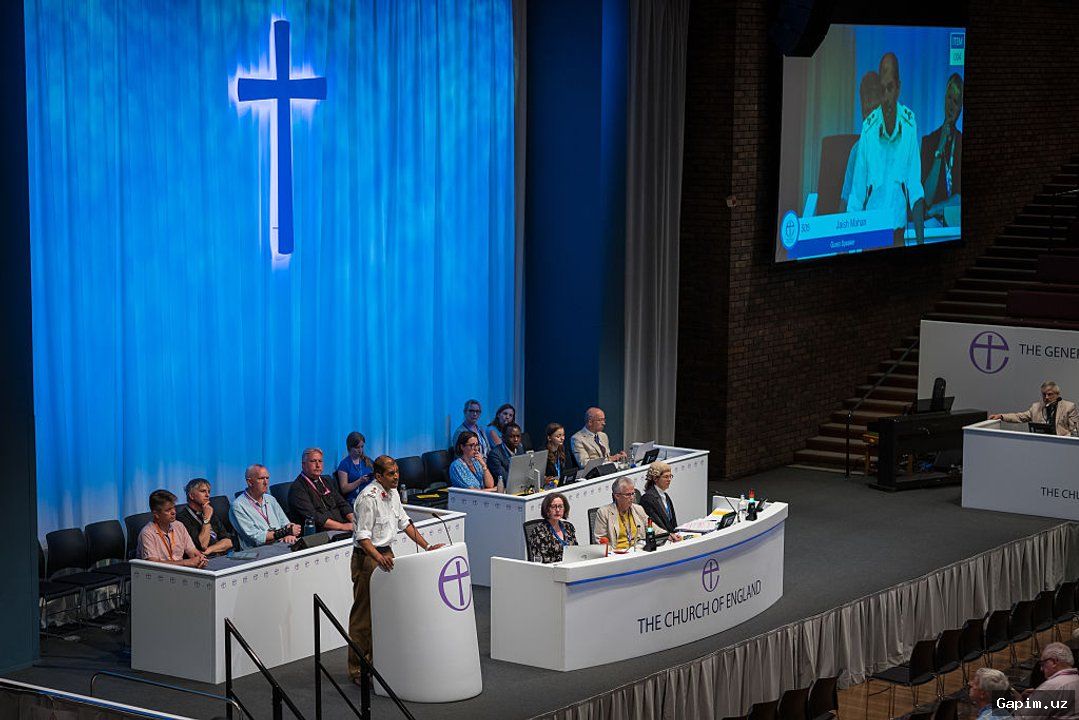
️ The motion was adopted by an overwhelming majority of the Synod’s bishops, clergy and laity. It signals an important shift in the Church of England’s engagement with Palestinian Christian voices and, more broadly, in the language the Church is willing to consider when addressing the realities of the Holy Land. Viewed alongside a number of the Church’s public statements, especially at the beginning of Israel’s genocidal war on Gaza, the vote represents a significant step forward in its pursuit of truth, justice and peace.
️ Unsurprisingly, the decision was strongly criticised by several pro-Israel organisations and leaders in the United Kingdom and beyond, most notably the Board of Deputies of British Jews. Much of the criticism followed familiar lines, accusing the Church of enabling anti-Semitism or damaging Christian-Jewish relations because of its willingness to engage with documents that speak about Israeli policies in stark terms.
️ Such tactics have become increasingly unconvincing. They ignore the growing diversity of opinion – including among Jewish communities – about what is taking place in Gaza. They also risk undermining genuine efforts to confront anti-Semitism in Britain and Europe by confusing hostility towards Jewish people with legitimate criticism of a state and its policies.
️ What is even more disturbing is that the Board’s response appears to express greater outrage over the Church of England’s decision to listen to Palestinian Christians than over the catastrophic suffering unfolding in Gaza. The Synod did not adopt or endorse the Kairos documents. It simply resolved to hear them and engage with them seriously. That such a modest decision should provoke such fierce opposition raises profound questions about the Board’s moral priorities.
️ The chief rabbi of the UK also weighed in, criticising both the Kairos document and the Church of England. It is indeed sad that such a prominent religious figure chose to criticise a church for a decision merely to listen to Palestinian Christians and engage with the question of genocide. At a moment when Gaza’s civilians continue to endure unimaginable suffering, children are still dying, and humanitarian aid remains desperately inadequate, I wish that the same moral authority were directed towards ending the violence, securing unrestricted humanitarian access, and demanding accountability.
️ The Synod’s long-awaited decision to hear the appeals of Palestinian Christians, including the Kairos Palestine II document, did not come out of nowhere. For many years, Palestinian Christians have engaged openly and consistently with leaders of the Church of England. Successive archbishops of Canterbury and other senior church leaders have visited the Holy Land, met Palestinian Christians and witnessed firsthand the realities of military occupation and, more recently, the devastation in Gaza. Having seen these realities and heard our testimony directly, it would have been morally and pastorally indefensible to refuse even to hear our cry.
️ The decision must also be understood within its wider historical context. The Church of England, like British society, cannot escape the legacy of Britain’s role in Palestine. The Balfour Declaration, the British Mandate and restorationist interpretations of the Bible all contributed to an environment that enabled the dispossession of the Palestinian people. Many within the Church historically viewed the Zionist project sympathetically without giving comparable attention to the rights and experiences of the Indigenous Palestinian population.
️ The vote also demonstrates a willingness to engage courageously with one of the defining moral issues of our time. This is not only about responding to Palestinian Christians. It is about responding to questions being asked across British society. Hundreds of thousands have marched, debated and wrestled with what is unfolding in Gaza. Palestine has become a pressing public, political and moral issue. The Church cannot remain silent or detached if it wishes to speak meaningfully to the society it serves.
️ The author hopes that the Church of England will now read these documents carefully, receive the testimony of Palestinian Christians and engage seriously with the growing legal, theological and humanitarian evidence concerning Gaza. Palestinian Christians are now arguing for the imperative of a theology after Gaza. Things cannot continue as they were. The Church cannot return to business as usual. Something fundamental must change.
Source: www.aljazeera.com