Bamako, Mali – The ambush that killed at least 50 Malian soldiers and struck a joint convoy of the Malian Armed Forces (FAMa) and Russia’s Africa Corps near the northern town of Anefis on July 18 was more than another battlefield setback.
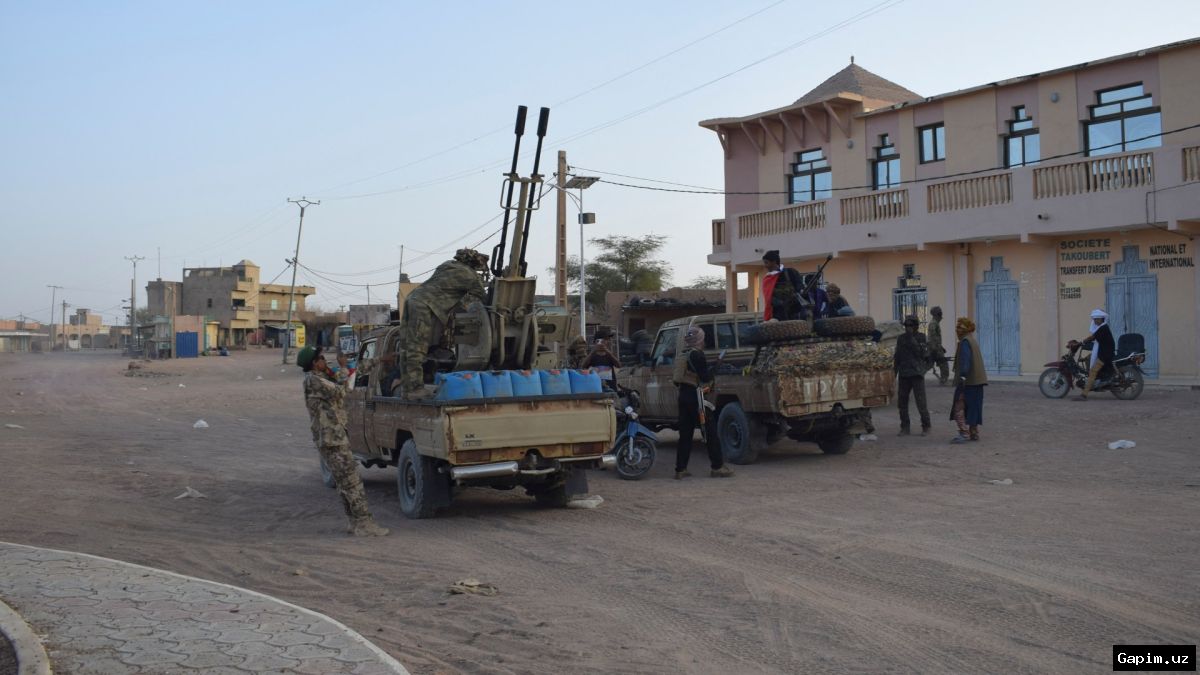
It underscored how Mali’s armed groups are becoming increasingly coordinated, exposing the limits of the military government’s security strategy, despite growing Russian military support.
The Malian military confirmed the assault and said it had launched counter-operations, while Africa Corps later released footage it said showed drone strikes targeting fighters involved in the ambush.
The attack is the latest in a series of coordinated operations across northern Mali since April, raising questions about why armed groups are increasingly cooperating, whether Bamako’s security strategy is working, and how Russia’s military role has changed.
The July 18 ambush was jointly claimed by the Azawad Liberation Front (FLA), a coalition of predominantly Tuareg separatist groups, and Jama’at Nusrat al-Islam wal-Muslimin (JNIM), an al-Qaeda affiliate in the Sahel. Until recently, such cooperation would have seemed unlikely due to their differing long-term political aims.
Analysts say the driving factor is a shared battlefield enemy: the Malian army and Russia’s Africa Corps. This cooperation allows the groups to pool resources and act as force multipliers, combining local knowledge, manpower, and operational experience.
The military government’s decision to abandon the 2015 Algiers Peace Agreement and request the withdrawal of the UN mission (MINUSMA) reshaped the conflict. With negotiations abandoned and military confrontation becoming dominant, former rivals have found greater incentives to cooperate on the battlefield.
While Russia’s Africa Corps has strengthened Mali’s combat capabilities, it has not addressed the underlying political, governance, and security conditions fueling the violence. Convoys in northern Mali continue to face frequent ambushes, exposing the vulnerability of supply lines despite increased Russian support.
The limitations of Bamako’s security strategy raise broader questions about whether it is translating battlefield gains into lasting security. The growing cooperation between armed groups with different objectives suggests that the strategy has not prevented them from adapting.
The implications of the Anefis ambush extend beyond Mali. JNIM operates across Burkina Faso and Niger, posing a challenge for the Alliance of Sahel States (AES). If the FLA-JNIM partnership proves durable, it could encourage similar tactical cooperation elsewhere in the Sahel, further complicating efforts to contain armed groups that already operate across national borders.
Source: www.aljazeera.com